
Best External Waterproof Sealant in 2026

Rain finds every small gap in gutters, flat roofs, window frames and outdoor metal. The best external waterproof sealant in 2026 fills those gaps and stays flexible through wet British weather. This 2026 guide compares UK waterproof sealants for leak repair, masonry and moving joints, so you can match the formula to the surface and the job.
External waterproof sealants vary in flexibility, adhesion and resistance to changing weather conditions, making formulation important across different repair scenarios. For a broader comparison of formulations and applications, the guide to the best waterproof sealant covers options suited to a range of waterproofing and sealing requirements.
Discover the Best External Waterproof Sealant in 2026 - Jenolite.
What Makes a Strong External Waterproof Sealant

A strong external waterproof sealant does more than look dry on day one. It has to stick, flex, and keep water out after weeks of rain. The best external waterproof sealant in 2026 forms a continuous film over cracks, joints and tired roofing felt, then stays rubbery when the temperature swings.
British weather is the real test. Rain arrives sideways. Frost follows a wet day. Sun then bakes the same joint. A seal that goes hard will split. A seal that stays soft can bridge small movement in gutters, soffits and metal edges.
Match the product to the job:
-
Leak sprays coat gutters, flat roofs, felt, uPVC and metal in thin layers.
-
Frame sealants fill the joint around windows, doors and trims.
-
Masonry creams soak into brick and stone and shed rain while the wall still breathes.
-
Epoxy repair sticks rebuild a hole, a split pipe or a missing chunk before a coating goes on.
Water and rust travel together on outdoor metal. A leak at a gutter bracket or a roof edge often leaves orange staining below it. Many people treat that metal with a rust converter before they seal, so the new film is not sitting on loose scale.
Why Seal Outdoor Surfaces in the UK
Concrete, brick, pavers and natural stone are full of tiny pores. Rain does not sit on the face. It soaks in. On a UK wall that stays damp for days, that water brings a short list of problems.
-
Fine cracks that open after frost
-
White salts on brick, often called efflorescence
-
Green growth in shaded joints
-
Faded colour on patios and stone
-
Oil marks that will not lift
-
Weeds in wet sand between pavers
A waterproofing sealer is the first barrier. Penetrating types soak in and repel water while the material still breathes. Film-forming types sit on top, darken the colour and block stains, but they wear faster under foot traffic. Outdoor metal is different again. Water does not soak into steel. It sits in seams, lifts paint and starts rust. A flexible leak film, or a clear metal lacquer on sound metal, is the closer match there. Sealing also makes later cleaning easier. Dirt has less to grip. Moss has less damp pore to live in. The surface still needs a wash. It just stays cleaner for longer between washes.
Types of External Waterproof Sealant
Not every external waterproof sealant works the same way. Picking the type matters more than picking a colour.
Penetrating sealers soak into concrete, brick and stone. They repel water from inside the pore and leave a natural look. They suit driveways, pool copings and house walls. Stain resistance is limited, and they will not bridge a crack.
Acrylic and film sealers leave a skin. Matte, satin or wet-look finishes are common on decorative patios and pavers. Colour looks richer. The film wears under shoes, car tyres and UV, so it needs a fresh coat sooner than a penetrating sealer.
Epoxy and polyurethane coatings are the hard end of the range. They resist chemicals and suit garages more than open patios. Outdoors they can turn slippery when wet, so a textured finish matters.
Flexible leak sealants are the missing type in most patio guides. Gutters, felt, flashings and uPVC joints need a rubbery film, not a masonry cream. That is the lane for a spray-on leak sealer and for a gunned frame bead.
|
Type |
Best outdoor use |
Look after cure |
Main limit |
|
Penetrating sealer |
Brick, stone, concrete |
Natural, almost invisible |
Will not fill gaps |
|
Acrylic film |
Patios and pavers |
Matte or wet look |
Wears sooner |
|
Epoxy or polyurethane |
Garages, heavy floors |
Thick, hard film |
Can be slippery outside |
|
Flexible leak sealant |
Gutters, felt, frames, metal |
Rubber skin or bead |
Not a breathable wall cream |
How UK Weather Tests an External Seal
An external seal in the UK spends most of the year damp. Coastal salt, road spray and leaf mould all sit on the same surfaces. A film that only works in dry summer weather will fail by the first long wet spell.
Look for these traits before you buy:
-
Flexibility after cure, so the seal moves with metal, plastic and timber.
-
Grip on more than one material, because gutters meet uPVC, felt, tile and steel in one run.
-
Weather resistance, including rain, UV and temperature change.
-
A clear job fit. A cream for brick is not a filler for a split downpipe.
Movement is the quiet failure. A porch roof expands in sun and shrinks at night. A rigid bead cracks at the edge. A flexible external waterproof sealant spreads that stress along the film. Breathability matters on walls, not on a leaking gutter. Brick and stone need to let vapour out. A film-forming seal on a whole wall can trap moisture. A cream that soaks in and stays clear is the better match for masonry. A spray or bead is the better match for a joint, a crack or a felt patch.
Preparation decides the result. Dust, moss and flaking paint stop any sealant from gripping. Wire brush loose material, wash off dirt, and let the area dry when the product asks for a dry surface. On bare steel, a rust protection spray can sit under or beside the seal so water does not restart corrosion at the edge.
Best External Waterproof Sealant in 2026
1. Jenolite Stop Leak Sealer Spray - Best External Waterproof Sealant
External waterproof sealant from Jenolite is built for the jobs British homes actually throw up: a weeping gutter, a tired felt roof, a cracked downpipe, a shed roof that drips after every storm. Made in Britain by a family-owned firm in Letchworth, with roots going back to 1939, this 400ml spray aims and builds a rubberised film in light coats. It grips plastic, tile, metal, uPVC, concrete and roofing felt, and it is sold in clear, black or white so the repair can blend or stand as a full coat. Use it on gutters, flat roofs, drain pipes, garages, porches, soffits, fascias, waste pipes, caravans and motorhomes. The film stays flexible after cure, so it can cope with heat, cold and UV without turning brittle. Two or three light coats, with a short wait between them, beat one heavy pass. It is a fast outdoor fix for small cracks and leaks, not a product for ponds, bird baths or pressurised plumbing.
Stop Leak Sealer Spray | 400ml | Leak Sealer for Gutters and Flat Roofs

Description (Stop Leak Sealer Spray | 400ml | Leak Sealer for Gutters and Flat Roofs):
-
ULTIMATE WATERPROOF SEALANT: JENOLITE Stop Leak Sealer Spray is a ready-to-use waterproofing spray built for instant leak sealing on gutters, flat roofs, downpipes and similar exterior surfaces. It is made for fast-fix repairs where a flexible, long-lasting barrier is needed, including guttering, shed roofs, drain pipes, garages, sheds, extensions, porches, bay windows, soffits and fascias, waste pipes, caravans, motorhomes and more.
-
VERSATILE USAGE: JENOLITE Stop Leak Sealer Spray is formulated for multi-surface leak repair and bonds to plastic, tile, metal, UPVC, concrete, roofing felt and other common building materials. Use it as a leaking gutter seal, a felt-roof patch, or a protective coating on conservatories, sheds and similar structures that need a waterproof finish.
-
WEATHER-RESISTANT DURABILITY: This waterproof sealant spray is engineered to stay flexible under UV exposure, heavy rain and extreme temperatures. Once cured in layers, the leak sealer holds its seal so gutters and roofs stay protected through the seasons.
-
QUICK & EASY APPLICATION: Aim and spray directly onto the leak or crack, then build up several coats for a stronger seal. The waterproofing spray is a practical choice for small cracks and non-pressurised leaks. Do not use it on bird baths, ponds, central-heating systems or pressurised plumbing.
-
MADE IN BRITAIN: JENOLITE Stop Leak Sealer Spray is developed in Britain by specialists in surface treatment and protection, combining proven formulation know-how with a professional-grade waterproof seal for reliable, lasting repairs.
-
AVAILABLE IN CLEAR, BLACK OR WHITE
-
IMPORTANT USAGE INFORMATION: JENOLITE Stop Leak is not suitable for bird baths, ponds, central-heating systems or pressurised plumbing. Use only on appropriate non-pressurised leak-repair and sealing jobs.
Pick The Best External Waterproof Sealant.
Discover Also:
2. Everbuild External Frame Sealant
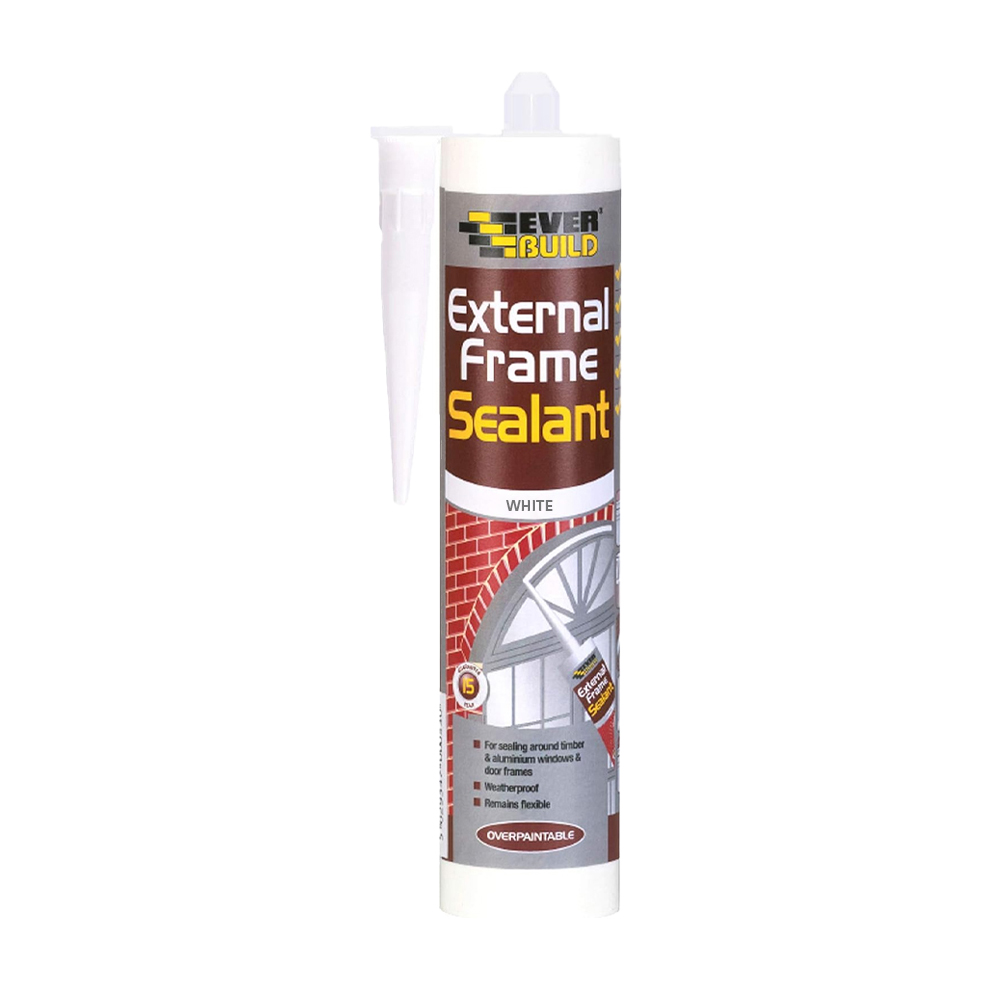
Everbuild External Frame Sealant is an acrylic bead made in Leeds for the gap around timber and metal window and door frames, and for fine cracks in brick, stone and concrete. It is permanently flexible once cured, mould resistant, and it can be painted, which suits a neat finish on a house front.
The working range starts at about 4°C, so a freezing morning is a poor time to gun it. Movement sits in the low to medium band expected of a frame acrylic, which means a wide, working roof joint is a stretch. Tack free time is often 15 to 60 minutes, depending on bead size, temperature and humidity.
Elongation at break is above 200 percent, and Shore A hardness is around 30, so the cured bead is soft enough to move with a frame but firm enough to tool. It sticks to most common building surfaces and cleans up with water before it skins. It is a tidy seal for perimeters and hairline cracks in masonry. It is a weaker match for a broad felt roof, a split gutter sole or a leak that needs a sprayed film rather than a single bead.
-
Acrylic frame sealant for internal and external joints.
-
Overpaintable after cure, with mould resistance.
-
Adheres to most common building surfaces.
-
Facts and Information: Shore A hardness around 30, elongation above 200 percent, movement in the low to medium band, tack free in roughly 15 to 60 minutes.
3. CT1 Sealant and Adhesive

CT1, from C-TEC in the United Kingdom, is a tribrid polymer that seals and bonds in one cartridge. Coloured grades are sold for internal and external work, and the formula will grip wet surfaces and even cure under water. That is why fitters use it on gutter leaks, roof details, boats and joints that never fully dry between showers.
Service temperature runs from about -40°C to 120°C. It holds on metals, including lead, plus glass, wood, tile, concrete, fibreglass and most plastics, though not polyethylene, polypropylene or PTFE. Shore A sits around 60, so the cured bead is firm as well as flexible, and it resists vibration without shrinking back. Fungal and mould resistance is part of the spec, and water-based paints can go over it once cured.
Chemical resistance is good against water, seawater, oils, greases and diluted acids, and more moderate against strong solvents. It carries UKCA and CE marking. It is a strong joint product for a leaking union or a flashing edge. It is not a wide-area roof coating, so a long run of cracked felt still needs a film-forming sealer.
-
Tribrid polymer sealant and adhesive in one cartridge.
-
Works on wet surfaces and under water.
-
External use on coloured grades.
-
Facts and Information: service range about -40°C to 120°C, Shore A around 60, UKCA and CE marked, grips most building materials except polyethylene, polypropylene and PTFE.
4. Stormdry Masonry Waterproofing Cream

Stormdry Masonry Waterproofing Cream comes from Safeguard Europe, based in Horsham. It is a colourless cream for exterior brick, concrete, stone, mortar, sandstone and granite. One coat soaks into the face and leaves a breathable water-repellent zone, which is the right idea for a solid wall that must still dry inward.
It carries long BBA approval for exterior masonry sealing, and many surveyors specify it where rain drives through porous brick. The cream stays clear, so the wall does not take on a shiny plastic skin. It will not fill a hole, bridge a failed joint or patch a felt roof. Open pointing and cracks still need mortar or a separate bead first.
On a wall that is already sound, it is a quiet way to cut rain intake without changing the look. Coverage is lower on dense stone than on open brick, and a dirty or salted face should be cleaned before the cream goes on. It is a masonry treatment, not a gutter or frame sealant.
-
Single-coat masonry cream for exterior walls.
-
Colourless once cured, for brick, stone, mortar and concrete.
-
Breathable water repellent, not a surface film.
-
Facts and Information: BBA approved for exterior brick sealing, made in Horsham, best on sound masonry after repointing if joints are open.
5. Kingfisher Extreme Climate Water Seal

Kingfisher Extreme Climate is a UK masonry water seal aimed at harsh sites, including coastal and upland walls. One coat, by brush or spray, is sold as a breathable barrier for brick, sandstone, limestone and granite.
It is pitched at penetrating damp on vertical masonry, coping stones and steep stonework, and it is meant to dry clear on most faces. Kingfisher also sells it as a dirt-shedding treatment, so rain has less salt and grime to pull into the pore. A long exterior life is claimed, in the region of 10 years, with coverage of a few square metres per litre depending on how open the face is.
Like other creams and water seals, it cannot rebuild a missing joint or stop a drip from a split gutter. Walls with open cracks still need mortar or a sealant bead first. It is a strong match for exposed brick that already lets weather through, and a poor match for felt, lead flashings or a moving frame joint.
-
One-coat water seal for exposed masonry.
-
Brush or spray application on vertical walls and copings.
-
Breathable, clear finish on most stone and brick.
-
Facts and Information: sold for coastal and upland weather, coverage in the band of a few square metres per litre, long service life claimed for exterior use.
6. Bond It WP70 Neutral Cure Silicone
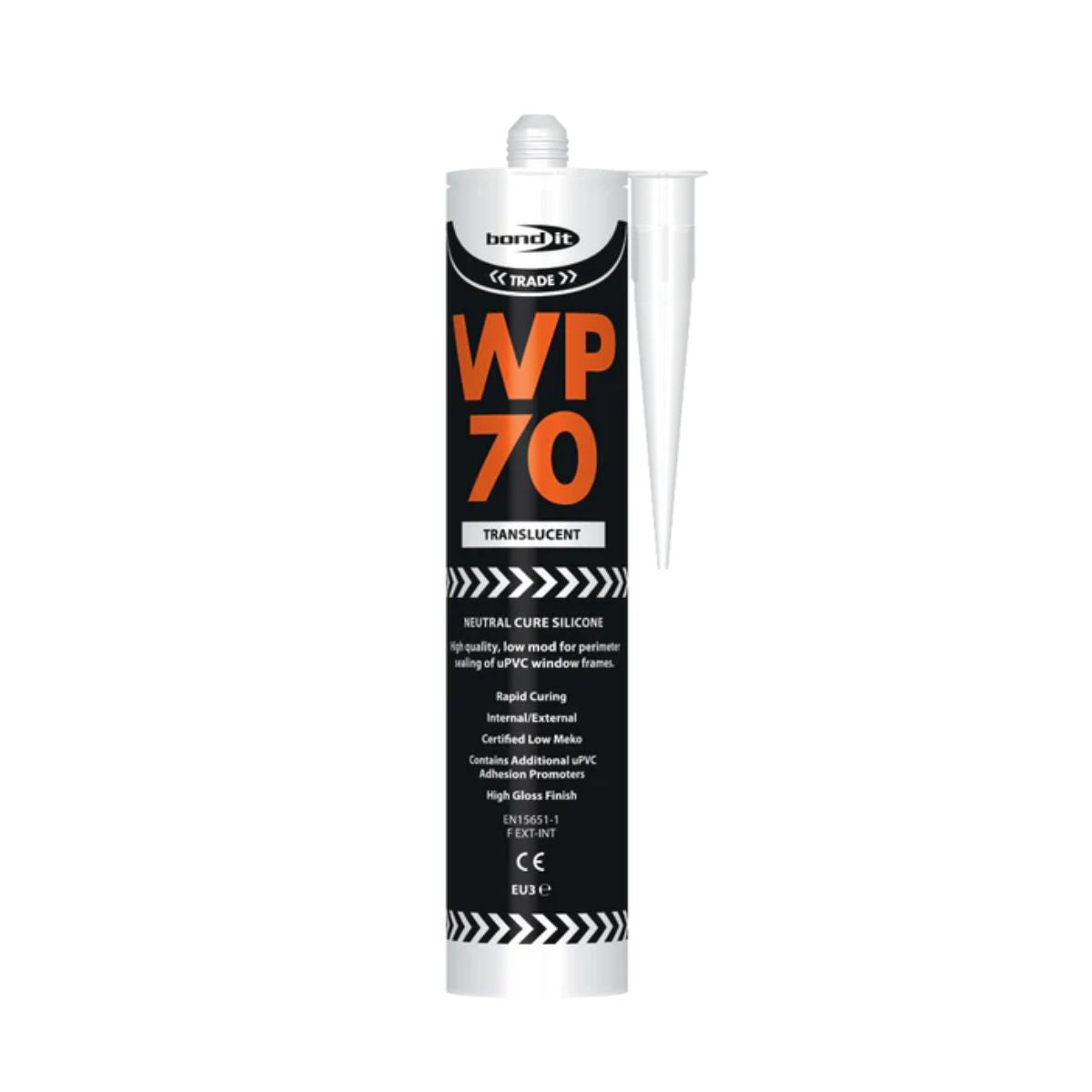
Bond It, based in Elland, West Yorkshire, makes WP70 as a neutral cure silicone for external wood, aluminium and uPVC door and window frames. Neutral cure is the kinder chemistry around metals and finished timber, because it does not throw off the acid linked with some acetoxy silicones.
It stays flexible outdoors and suits the perimeter joint where a frame meets masonry. A steady bead, tooled before the skin forms, is the normal job. Silicone of this type is hard to paint, so the colour has to be right at the start. It is a joint seal, not a coating for felt, concrete floors or a wide roof patch.
Dust, old mastic and damp edges weaken the bond, even on a flexible formula. Used on a clean, dry frame line, it gives the elastic bead many fitters already know. It will not stop rain soaking into porous brick beside the frame. That face still needs a breathable masonry treatment if the wall itself is taking water.
-
Neutral cure silicone for external frames.
-
Suited to wood, aluminium and uPVC.
-
Flexible outdoor joint seal from a UK maker in Elland.
-
Facts and Information: low odour compared with acetoxy silicones, poor paint grip, a bead product rather than a spray film for roofs.
7. Safeguard Raincheck Water Seal
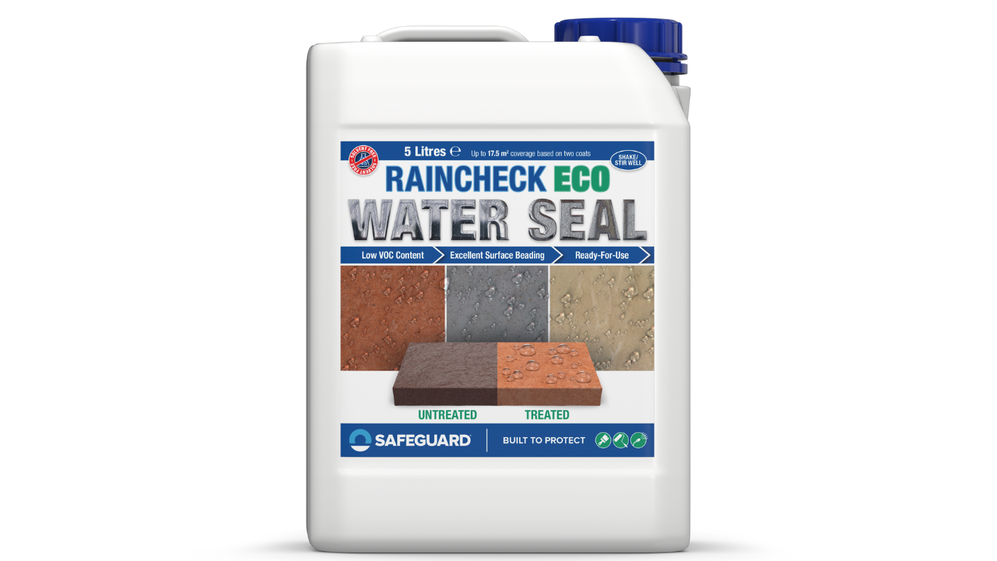
Raincheck, also from Safeguard Europe in Horsham, is a clear, breathable water seal for exterior brick, stone, mortar and concrete. It is the thinner, liquid cousin of a masonry cream, and it is often used where a simple rain check is enough on porous walls. The finish is meant to stay invisible and let vapour pass, which helps a wall dry between storms.
Coverage is broader on open brick and lower on dense stone. It will not bridge cracks, seal a lead flashing or stop a leak at a gutter union. Those spots still need a flexible sealant or a leak spray. A dirty, mossy or salted wall should be cleaned first, or the liquid sits on the grime instead of the masonry.
On a sound wall, it is a practical way to shed driving rain without a wet-look film. It is not a substitute for repointing, and it will not fill the gap around a window. Pair it with a frame bead if the joint, not the brick, is the leak.
-
Clear liquid water seal for exterior masonry.
-
Breathable treatment for brick, stone, mortar and concrete.
-
Invisible look once dry, on most faces.
-
Facts and Information: made by Safeguard Europe in Horsham, best after the wall is cleaned and cracks are filled, not a joint sealant or roof patch.
8. Evo-Stik Window and Door Frame Sealant
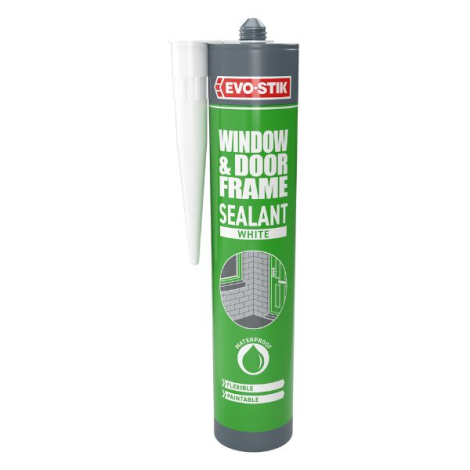
Evo-Stik, a Bostik brand long sold through UK trade counters, offers a window and door frame sealant for external perimeter joints. The bead is waterproof and flexible, and it can be painted, which matters when the frame colour has to match the rest of the front.
A long outdoor life is claimed on surrounds that stay within normal frame movement. It suits timber, metal and similar details where a decorated finish matters more than a pure silicone look. Movement is in the frame-sealant class, so it is happier in a controlled joint than across a wide, shifting roof crack.
Cold, wet application still weakens the bond. Clean both sides of the joint, gun a steady bead, and tool it before a skin forms. It will not coat a felt roof or a long gutter split. Those jobs need a film. Used on a sound perimeter, it gives a paintable line that blends once the topcoat goes on.
-
Waterproof, flexible frame sealant.
-
Overpaintable, for a decorated finish.
-
Sold for window and door surrounds.
-
Facts and Information: long outdoor life claimed on frames, better in a designed joint than on a broad roof, needs clean edges and fair weather to cure well.
9. Geocel The Works Sealant

Geocel has supplied UK builders with sealants and coatings for decades. The Works is a hybrid sealant used on roofs, gutters, lead, flashings and general external joints. It is pitched as a grab-and-seal product that copes with damp surfaces better than a basic acrylic.
That helps on a gutter that never quite dries between showers. It stays flexible and is often chosen where one cartridge has to touch metal, masonry and plastic in the same run. It is still a bead, so a large area of cracked felt is slow work compared with a spray film. Lead and fresh bitumen need a compatibility check before a long run, because some coatings soften under a new seal.
A tooled bead at a flashing edge is the sweet spot. Flooding a wide crack with a thick sausage of sealant can skin on the outside and stay soft underneath. It is a versatile joint product for mixed roof details, not a breathable cream for a whole brick wall.
-
Hybrid external sealant for roofs, gutters and flashings.
-
Used on damp surfaces more readily than basic acrylics.
-
Flexible bead across mixed materials.
-
Facts and Information: familiar on UK trade counters, slow for wide-area felt repairs, check the surface when sealing over fresh bitumen or lead.
10. UniBond Outdoor Window and Door Frame Sealant

UniBond’s outdoor frame sealant is a silicone bead sold across the UK for window and door surrounds. It is waterproof and weather resistant, and it is offered in colours such as white and brown to match common frames.
Silicone stays elastic in a moving joint, which is why fitters still reach for it on uPVC and timber. Paint will not sit happily on it, so the colour chosen on day one is the colour that stays. It is the wrong tool for a porous brick face or a felt roof. A sound bead needs a dry, dust-free joint and a nozzle cut to the gap.
Too wide a bead wastes product and cures more slowly. For a frame edge, it is a proven outdoor seal. For a leaking roof or a rusted gutter sole, a film-forming leak sealer is the closer match. The brick beside the frame can still take rain if only the joint is sealed. A masonry water seal is the separate step for that face.
-
Silicone sealant for outdoor window and door frames.
-
Waterproof and weather resistant.
-
Sold in frame-friendly colours, including white and brown.
-
Facts and Information: stays elastic in a moving joint, poor paint acceptance, a joint product rather than a masonry cream or roof coating.
Where Water Gets Into UK Homes
Most external leaks start at a change of material. A metal gutter meets a plastic joint. Felt meets a flashing. A timber sill meets brick. Those edges move at different rates, and a tired seal opens a path for rain.
Common weak spots:
-
Gutter unions and outlets, where a drip stains the wall below.
-
Flat and shed roofs, especially where felt has cracked.
-
Soffits, fascias and porch roofs, after wind has lifted an edge.
-
Window and door perimeters, when an old bead has shrunk back.
-
Downpipes and waste pipes, at collars and freeze splits.
-
Outdoor metal, where water sits and rust lifts the coating.
A small split can soak timber, stain plaster and feed corrosion on nearby steel. On vehicles and trailers, the same logic applies under the floor. A flexible bitumen undercoat is often used on chassis and wheel arches, and it can also patch a leaking gutter or a small roof spot. Hidden box sections need a different film. A wax oil spray creeps into seams, drives moisture off the metal and leaves a self-sealing skin.
|
Job |
Better seal type |
What it should do |
|
Split gutter or felt crack |
Flexible leak spray |
Bridge the gap and stay rubbery |
|
Window or door joint |
Frame sealant or silicone |
Fill the bead line and allow movement |
|
Porous brick or stone |
Breathable masonry cream or water seal |
Shed rain without trapping vapour |
|
Hole in metal, plastic or a pipe |
Epoxy repair stick, then a coating |
Rebuild the missing section |
|
Bare steel after rust removal |
Converter, then a barrier coating |
Stop oxygen and water reaching the metal |
Holes are a different problem from hairline cracks. A spray film can cover a fine split. A missing chunk needs body. Epoxy putty repair sticks can be kneaded and pressed into steel, copper, aluminium, plastic or even wet surfaces, then sanded and painted once cured. The underwater grade is made for damp and submerged repairs, including tanks, pools and leaking gutters.
How to Apply an External Waterproof Sealant
A good product still fails if the coat is wrong. Homeowners who come back unhappy often sealed a damp face, flooded the surface, or trapped moisture under a shiny film. Thin, even coats win.
-
Wash off dirt, algae, moss and oil. A pressure wash helps on patios and paths.
-
Let the surface dry. Many masonry sealers want a full dry day, sometimes longer after washing.
-
Fill real holes first. A cream will not bridge them. An epoxy putty can rebuild a missing chunk on metal or plastic.
-
Apply by pump sprayer, roller, brush or aerosol, as the tin says. On gutters, hold the can about 15cm to 25cm off the face.
-
Avoid puddles. Extra product on stone can dry patchy or hazy.
-
Keep rain and foot traffic off until the cure window has passed. A skinned repair is not a cured repair.
Finish is a choice, not an accident. A natural penetrating sealer should disappear. A wet-look acrylic will darken pavers. A black leak spray will show on a pale gutter, so a clear grade is the quieter option on visible uPVC.
Common Mistakes When Sealing Outdoor Surfaces
Most poor results come from the day of the job, not from the tin.
-
Sealing dirty concrete, dusty metal or old mastic
-
Coating a face that is still damp from washing
-
Working under hot midday sun, so the film skins too fast
-
Using a patio sealer on limestone, lead or felt
-
Ignoring coverage and flooding the surface
-
Piling on heavy coats instead of thin ones
-
Painting a silicone bead that will not hold paint
-
Sealing bare, flaking steel without a rust treatment first
White haze and dark spots often mean moisture was trapped under a film. On metal, the matching fault is sealing over loose rust, then watching the edge lift after the next storm. Treat the steel, then seal. Sound painted metal only needs a clean, dry face. More on barrier coatings sits in the Jenolite notes on underbody coating and rust protection products.
How to Prepare Surfaces Before Sealing
A sealant is only as good as the face it lands on. Loose rust, dust and old mastic should come off before any new product goes down. On steel, that often means a rust remover or a rust converter, then a dry wipe, then the seal.
A simple order works on most outdoor jobs:
-
Scrape and brush off loose material.
-
Clean off dirt, salts and moss.
-
Let the surface dry if the product needs a dry face.
-
Treat bare steel so rust is stable.
-
Apply thin coats or a steady bead, rather than one thick load.
-
Keep rain off the repair until the skin has formed.
Outdoor metal that must keep its colour can take a clear metal lacquer after the rust is treated. That lacquer is a weatherproof barrier for bare metal, paint and ornaments, and it resists heat up to 180°C. It is not a gap filler. Use it where the shape is already sound and the risk is fresh corrosion.
Painted finishes sit in a different lane. Once a leak is sealed and the film has cured, many direct-to-rust and multi-surface coatings from the paints and primers range can dress the repair. On cars, bikes and trailers, motor care coatings cover underbodies, trims and chassis seams that see salt and spray. Project kits that pair a treatment with a finish are grouped in the project kits range.
External Waterproof Sealant Questions
What Is the Best External Waterproof Sealant for Gutters?
A weeping gutter, a flat roof crack or a tired felt edge needs a flexible film, not a masonry cream. A leak sealer spray can cover metal, uPVC, plastic, tile, concrete and roofing felt in light coats. A frame bead only seals the joint beside the gutter. It will not coat a long split as quickly. Loose dirt comes off first, then each coat sets before the next. Ponds, bird baths and pressurised pipes sit outside this kind of repair.
Can You Use the Same Sealant on Roofs and Window Frames?
Sometimes, but not always. A hybrid bead or a repair product film can touch a roof detail and a nearby trim. A masonry cream stays on brick and stone, where the wall still needs to breathe. A neutral cure silicone is happier in a frame joint than across a felt roof. The surface list on the tin shows the match. A joint that moves a lot needs a flexible seal. A wall that must dry inward needs a cream or water seal, not a thick film.
Do You Need to Treat Rust Before Sealing Outdoor Metal?
Flaking metal needs a stable face before any seal goes on. Paint and sealant over loose rust tend to lift again after rain. A rust converter or remover holds the corrosion, then a leak sealer, bitumen undercoat or clear lacquer keeps water and air off the steel. Sound painted metal only needs a clean, dry face. Fresh rust at a gutter bracket is a sign the joint has been wet for a while, so the leak and the stain belong in the same job.
How Soon Can an External Seal Face Rain?
It depends on the product and the day. A spray-on external waterproof sealant can be touch dry in about half an hour, with a full cure over one to two days. Frame acrylics can skin in under an hour, then need longer before a hard shower. Cold, damp air slows every cure. A light mist on a skinned repair is less risky than rain on a wet bead. The full cure is what stands up through a storm.
Is a Waterproof Sealant the Same as a Masonry Sealer?
No. A waterproof sealant fills a gap, a joint or a crack and stays flexible. A masonry sealer soaks into brick or stone and sheds rain while vapour can still leave. One will not do the other job. Felt, gutters and outdoor metal need the film. Porous walls need the breathable treatment. Where steel is already rusty, a rust protection step sits before either coating, so the new layer is not lying on loose scale.
Read Also:
Discover the Best External Waterproof Sealant in 2026 - Jenolite.



