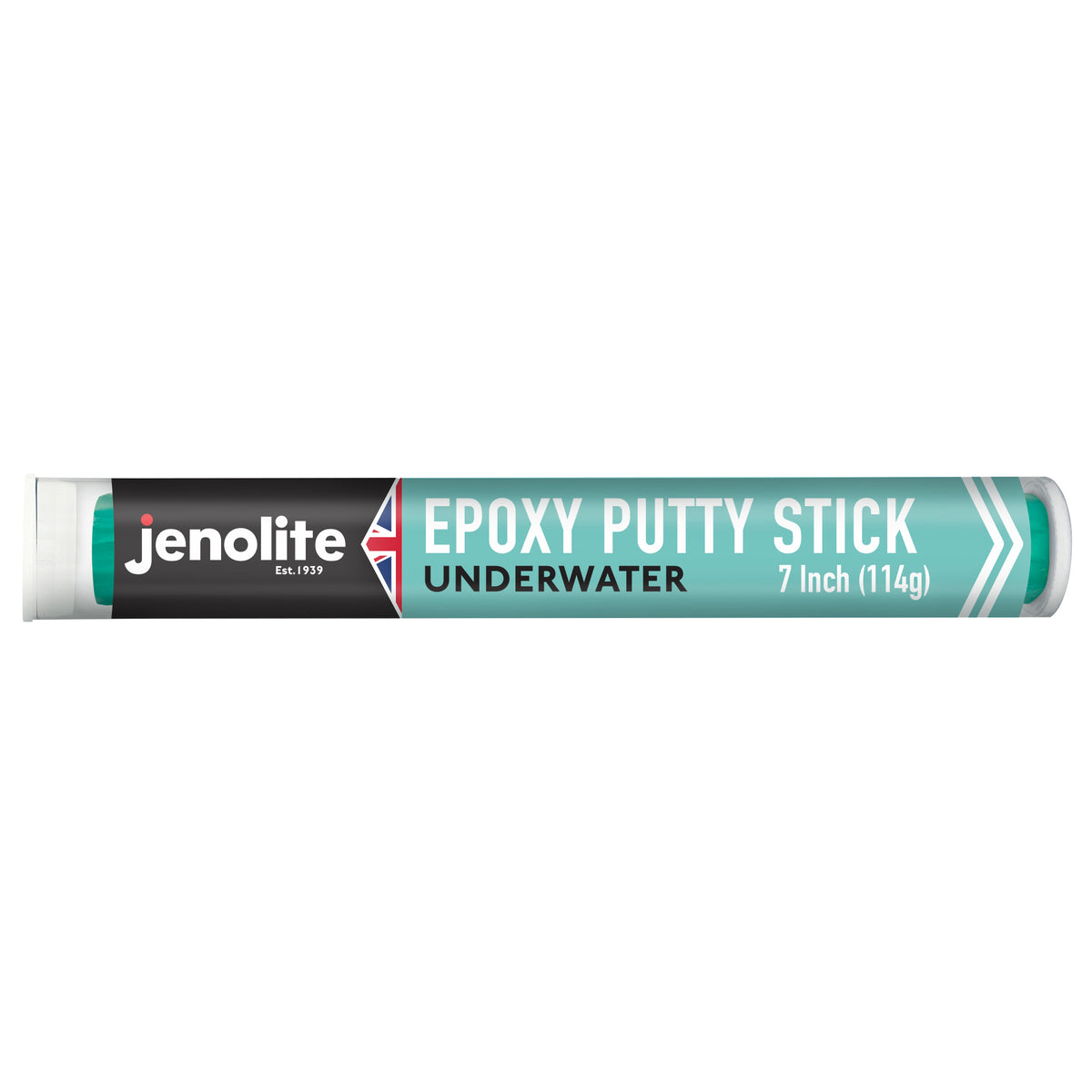
Bâtons de Réparation de Mastic Époxy

£15.99 GBP Soldes Économisez
Version Plastique
  • SIMPLE À UTILISER : Mastic époxy en deux parties qui peut être mélangé et appliqué à la main
  • Action rapide : prêt à l'emploi en quelques minutes, généralement entièrement fonctionnel en 60 minutes (consultez la fiche technique pour connaître les horaires exacts).
  • APPLICATIONS MULTI-SURFACES : Métal / Plastique / Fibre de verre / Céramique / Etc.
  • UTILISATION INTÉRIEURE ET EXTÉRIEURE : Convient pour une utilisation intérieure et extérieure
  • RÉSISTANT AUX INTEMPÉRIES ET À LA CORROSION : Résistant à l'eau, aux produits chimiques et aux températures extrêmes
  • FACILE À UTILISER : Facile à mouler pour assembler, reconstruire et réparer la plupart des surfaces
  • DURABLE : Une fois durci, il est entièrement imperméable et peut être poncé et peint
  • FABRIQUÉ EN GRANDE-BRETAGNE
Les bâtons de mastic époxy JENOLITE sont une gamme de bâtons époxy en deux parties qui peuvent être utilisés pour reconstruire et réparer la plupart des métaux, plastiques, fibre de verre, céramique, etc. Les bâtons faciles à utiliser peuvent être mélangés à la main pour créer un composé polymère qui peut être moulé, emballé ou utilisé pour assembler des composants ou pour construire et réparer à peu près n'importe quoi. Une fois complètement durci, il est complètement imperméable et peut être poncé, scié, percé et peint.
  • MASTIC ÉPOXY EN PLASTIQUE : Le bâton de mastic époxy en plastique est un bâton époxy à deux composants, qui peut être utilisé pour réparer et reconstruire la plupart des plastiques. Le mastic de résine époxy à prise rapide et facile à mélanger forme une liaison durable avec la plupart des principaux types de plastique. Après mélange, il crée un composé polymère qui peut être moulé, enroulé ou utilisé pour construire et réparer à peu près tout ce qui est fabriqué à partir de plastique rigide ou semi-flexible.
  • MASTIC ÉPOXY TITANE : Un mastic en résine époxy renforcé de titane, antirouille, qui répare ou reconstruit rapidement tout ce qui est en métal. Idéal pour réparer le métal fissuré, cassé et troué, il offre une solution de résistance industrielle. Convient pour une utilisation à haute température – jusqu'à 280°C. Fonctionnel après 60 minutes, une fois complètement durci, il est complètement étanche et peut être percé, taraudé, usiné, meulé, limé et même peint.
  • MASTIC ÉPOXY ALUMINIUM : Un mastic époxy renforcé d'aluminium, antirouille. Ce mastic répare ou reconstruit rapidement tout ce qui est en métal. La résine époxy en deux parties peut être mélangée à la main et appliquée directement sur la zone à réparer ou à reconstruire. Idéal pour réparer le métal rayé, ébréché et fissuré. Une fois complètement durci, le mastic peut être percé, taraudé, usiné, meulé, limé et même peint. Facile à utiliser et essentiel pour l'armoire d'un magasin de mécanique !
  • MASTIC ÉPOXY EN ACIER : Un mastic époxy renforcé d'acier, antirouille, qui répare ou reconstruit rapidement tout ce qui est en métal. La résine époxy en deux parties peut être mélangée à la main et appliquée directement sur la zone à réparer ou à reconstruire. Idéal pour réparer le métal rayé, ébréché et fissuré. Il offre une solution de qualité industrielle pouvant résister à des températures allant jusqu'à 149°C. Fonctionnel après 60 minutes, une fois complètement durci, il est complètement étanche et peut être percé, taraudé, usiné, meulé, limé et même peint.
  • MASTIC ÉPOXY DE CUIVRE : Un bâton de résine époxy à deux composants, qui peut être utilisé pour réparer les tuyaux, les réservoirs, les tuyaux chauds et les récipients en laiton, cuivre, bronze et autres métaux non ferreux. Idéal pour les coudes de plomberie, les robinets d'évier et les chauffe-eau. Permet également de sceller les bris de gel dans la tuyauterie. Le mastic époxy à prise rapide, mélangeable à la main, forme une liaison durable qui, après mélange, crée un composé polymère qui peut être moulé pour s'adapter. Une fois complètement durci, il est complètement imperméable et peut être poncé et peint. Idéal pour les urgences de plomberie telles que la réparation de lignes chaudes qui fuient. Parfait pour les applications de réparation de canalisations et de plomberie, le bâton de mastic époxy en cuivre de Jenolite est l'époxy essentiel du plombier. Les applications incluent les coudes de plomberie, les éviers, les robinets et les chauffe-eau. Il peut être utilisé sur le laiton, le cuivre, le bronze et d'autres métaux non ferreux.
  • MASTIC ÉPOXY SOUS-MARIN : Un mastic époxy spécial mélangeable à la main pour les réparations des zones humides et mouillées et des surfaces sous-marines. Après mélange, la résine époxy forme un composé polymère qui peut être appliqué sous l'eau (eau douce ou salée) et adhèrera avec ténacité aux substrats tels que la fibre de verre et le béton. Idéal pour les réparations marines et les réparations de surfaces humides et sous-marines, telles que les trous, fissures, fuites et gouges dans les ponts et les coques, les piscines, les spas, les spas, les équipements récréatifs, ainsi que les fuites de réservoirs et de gouttières. Entièrement fonctionnel après 60 minutes, une fois complètement durci, il est complètement étanche et peut être percé, taraudé, usiné, meulé, limé et même peint.

1. What is JENOLITE Epoxy Putty Repair Stick?

JENOLITE Epoxy Putty is a versatile, high-strength repair compound that bonds to metal, plastic, and other surfaces. It is ideal for filling, repairing, and rebuilding damaged or worn materials. Available in multiple formulations, each designed for a specific material or application:

  • 89025 Plastic – For general plastic repairs
  • 89026 Steel – For metal and steel repairs
  • 89027 Underwater – Can be applied underwater for wet repairs
  • 89028 Copper – Specially formulated for copper repairs
  • 89181 Aluminium – For aluminium surfaces
  • 89182 Titanium – For high-strength titanium repairs

2. What are the key features of JENOLITE Epoxy Putty?

  • Rapid curing – Functional in 60 minutes, fully cured in a few hours depending on thickness.
  • Industrial strength – High mechanical strength suitable for professional and DIY use.
  • Heat resistant – Withstands temperatures up to 280°C.
  • Waterproof – Can be used in wet environments (especially 89027 Underwater).
  • Mouldable – Easily shaped to fill gaps, cracks, and holes.
  • Paintable & sandable – Once cured, surfaces can be sanded and painted to restore aesthetics.
  • Multi-surface adhesion – Bonds to metals, plastics, ceramics, wood, and concrete (depending on variant).

3. How do I use the JENOLITE Epoxy Putty?

Step 1: Surface Preparation

  • Clean the area thoroughly, removing oil, grease, rust, loose paint, or contaminants.
  • Roughen smooth surfaces for better adhesion (sandpaper or file).
  • Ensure the surface is dry unless using the Underwater variant.

Step 2: Mixing & Moulding

  • Cut off the required amount of putty.
  • Knead thoroughly until the putty achieves a uniform colour.
  • Shape and apply directly to the damaged area.

Step 3: Curing

  • Functional in 60 minutes.
  • Full cure occurs within 4–6 hours for thin layers; thicker applications may require longer.
  • Once cured, sand, drill, or paint as needed.

4. Can I use it underwater?

Yes, the 89027 Underwater variant is specifically formulated for wet conditions and can be applied directly to submerged surfaces. Other variants should be applied to dry surfaces for optimal adhesion.

5. What materials can JENOLITE Epoxy Putty bond to?

  • Plastic (89025) – Polyethylene, polypropylene, PVC, ABS, and other plastics.
  • Metal (89026 Steel, 89181 Aluminium, 89182 Titanium, 89028 Copper) – Steel, aluminium, copper, titanium, brass, and other metals.
  • Ceramics & concrete – Most variants can bond to ceramic, concrete, or masonry.
  • Wood – Can be used to repair or fill gaps in wooden surfaces.

6. Is it safe to use on potable water pipes or food-contact surfaces?

JENOLITE Epoxy Putty is industrial-grade and not certified for drinking water or direct food contact applications. Use only for structural, repair, and decorative purposes.

7. Can I paint or finish over the cured putty?

Yes, once fully cured, the surface is:

  • Sandable – Smooth out edges or shape as needed.
  • Paintable – Compatible with most paints, including oil-based and water-based.

8. How long does it last once cured?

Once fully cured, the putty provides a long-lasting repair. It is:

  • Resistant to water, oil, and many chemicals
  • Heat resistant up to 280°C
  • Suitable for indoor and outdoor use

9. Can I use it on hot surfaces?

Yes, the putty withstands temperatures up to 280°C. For continuous exposure near this limit, ensure the surface is clean and free of moisture.

10. Storage & Shelf Life

  • Store in a cool, dry place.
  • Keep the tube tightly sealed.
  • Typical shelf life is 2 years from the date of manufacture.

11. Coverage & Application Guidelines

  • Each 112g (7 inch) tube can repair medium-sized cracks or holes.
  • Mould thickness should ideally not exceed 25mm per layer. For deeper repairs, apply in multiple layers, allowing partial cure between layers.

12. Can it be drilled, tapped, or machined?

Yes, once fully cured, the putty can be:

  • Drilled
  • Tapped
  • Sanded
  • Filed
  • Painted

This allows for full restoration of structural and cosmetic integrity.

13. Tips for Best Results

Knead thoroughly for consistent curing.

Apply to roughened or clean surfaces for maximum adhesion.

Avoid applying extremely thick layers in a single application.

For underwater repairs, ensure continuous contact and pressure while curing.

14. Can I use it on moving parts?

JENOLITE Epoxy Putty is suitable for structural repairs, but constant friction areas (e.g., moving hinges or shafts) may require mechanical reinforcement or other high-performance adhesives.

1. Preparation
Before applying, roughen and clean the area to be repaired. Wear impervious gloves when mixing or handling uncured Putty. Then follow these easy steps.

2. Only Use The Required Amount
Cut or twist off required amount, putting the remaining epoxy back in the tube and reseal with the cap.

3. Mix Well
Wearing gloves, hand mix the epoxy by kneading with the fingers until a uniform colour is formed. If mixing is difficult, warm putty to room temperature or slightly above.

4. Apply To Surface To Be Repaired

89025 Plastic:
Does not adhere to polyethylene, polypropylene or some other plastics. Test for adhesion first. Apply to surface within 10 minutes of mixing. Force into any cracks or holes and extend the patch at least 1 inch beyond the area being repaired. When applying to a damp, wet or slowly leaking area, work the mixed material forcefully into the surface and apply pressure until adhesion begins to take effect. With a tool or finger moistened with clean water. Functional cure occurs in 2-3 hours.

89026 Steel, 89028 Copper, 89181 Aluminium, 89182 Titanium: Ensure to apply within 2 minutes of mixing. Force into any cracks or holes and strike off excess material, preferably with a tool moistened with clean water. When applying to a damp, wet or slowly leaking area, work the mixed material forcefully into the surface and apply pressure until adhesion begins to take effect. Functional Strength is achieved after just 60 minutes.

89027 Underwater:
After mixing, Underwater Epoxy Stick has a 20-25 min work life. After mixing, it forms a polymer compound that may be applied underwater (either fresh or salt water). Force into any cracks or holes and strike off excess material, preferably with a tool moistened with clean water. When applying to a damp, wet or slowly leaking area, work the mixed material forcefully into the surface and apply pressure until adhesion begins to take effect. Functional Strength is achieved after just 60 minutes.

For best results: Use damp fingers for easier mixing, application, and a smooth appearance of the cured compound. Remove excess material before hardening begins.

Consult the safety data sheet for additional information.