


Chrome paint for auto parts offers a practical way to refresh trim, grilles, wheel accents and engine bay details without the expense or complexity of traditional replating. Many vehicle owners look for this finish when they want a bright metallic look that suits both classic restorations and modern custom touches.
The key lies in matching the product to the part, the expected wear and the UK climate, where damp air and winter road salt speed up corrosion on unprotected metal. A versatile chrome spray paint designed for multiple surfaces often delivers the balance of ease and performance many seek. For those dealing with existing corrosion, effective rust converter products make the surface stable before any topcoat goes on. Specialist paints and coatings from established UK suppliers give consistent results when the groundwork is done properly.
Why Chrome Paint Makes Sense for Auto Parts

Chrome paint for auto parts serves mainly decorative and light protective roles. It brings back shine to faded brightwork, adds contrast in engine bays and updates plastic or metal trim pieces that no longer look fresh. Real chrome plating remains harder and more durable for high-contact areas, yet it demands specialist equipment, chemicals and often removal of the part. Paint finishes sidestep those barriers while still giving a strong visual upgrade.
UK drivers face extra challenges. Road salt in winter and frequent rain mean any finish must resist moisture and corrosion. A good chrome paint for auto parts includes built-in resistance to UV fading and light abrasion when applied correctly and sealed. It suits non-structural components where the priority is appearance rather than load-bearing strength. Many people working on automotive projects choose these finishes for visible trim and accessories.
Parts that respond well include interior and exterior trim, radiator grilles, mirror housings, wheel lip accents (away from heavy brake dust) and valve covers or air cleaner lids in the engine bay. High-heat zones, such as exhaust manifolds or brake components, usually need different coatings rated for sustained temperature. Choosing products with proven rust protection helps the finish last longer in British conditions.
Different Types of Chrome Paint and Their Suitability in the UK
Three broad approaches exist for achieving a chrome-style finish on vehicle parts. Aerosol sprays remain the most accessible for home or workshop use. They require minimal equipment, dry relatively quickly, and cover irregular shapes evenly when applied in light passes. Many formulations adhere to metal, rigid plastic and some composite surfaces common on modern vehicles. A quality aerosol chrome paint for auto parts fits this approach well for most DIY work.
Brush-on or airbrush versions suit small details and touch-up work. They give more control on intricate badges or fine trim but demand steady hands and often a gloss black base coat for the brightest effect. These products work well for hobbyists restoring instruments or small fittings.
Professional multi-stage spray systems produce closer to true mirror reflectivity. They usually involve a base, a reflective layer and a protective clear topcoat. While the end result can look exceptional, the process needs controlled conditions, proper ventilation and more steps, making it less practical for most DIY vehicle projects. For the majority of auto part refreshes, a quality aerosol chrome paint for auto parts strikes the best compromise between appearance, ease and durability when paired with thorough preparation.
What to Look for When Choosing Chrome Paint
Several practical factors guide the decision:
Surface compatibility matters first. Confirm the paint bonds to the actual material, whether bare metal, previously painted surfaces or plastic trim. Some formulas need a primer on bare or porous areas; others claim direct adhesion after cleaning. Using a suitable automotive primer often improves results on difficult surfaces.
Weather and corrosion resistance prove vital in the UK. Products that include UV stabilisers and corrosion inhibitors maintain their appearance longer when exposed to rain, salt spray and sunlight. A clear protective lacquer applied over the chrome layer adds another barrier against dulling and helps the finish withstand road conditions.
Heat tolerance limits where the paint can go. Many general chrome paints handle temperatures up to around 90°C, enough for most exterior trim and some engine bay accents. Parts closer to exhaust or turbo heat usually require specialist heat-resistant paint instead.
Ease of application and drying time affect the finished quality. Fast touch-dry formulas reduce dust contamination between coats, while products that need long curing periods increase the risk of imperfections in a typical garage setting.
Finish character also varies. Some deliver a bright metallic silver, others a closer mirror effect. Testing on a hidden area or scrap piece reveals how the product performs on your specific surface and under your lighting conditions.
Getting the Surface Ready - The Most Important Step
Preparation determines whether the finish lasts months or years. Any existing rust must be stabilised because active corrosion continues underneath paint and eventually causes bubbling or flaking.
Begin by cleaning the part thoroughly. Remove dirt, grease, wax and old polish with a suitable metal cleaner. For rusty areas, effective rust converter products change the iron oxide into a stable compound that stops further corrosion and creates a paintable surface. Apply the converter according to instructions, allow the reaction to complete, and rinse or wipe as directed before proceeding.
Once rust is treated, lightly abrade glossy or smooth surfaces with fine abrasive pads or wet-and-dry paper. This gives the new coating something to grip. Wipe away all dust and residue, then mask surrounding areas carefully.
On bare metal or heavily repaired sections, a suitable primer improves long-term adhesion and corrosion protection. Allow each layer to cure fully before moving to the chrome paint itself. Rushing this stage is one of the most common reasons chrome finishes fail prematurely on UK roads.
Applying Chrome Paint Successfully
Work in a clean, dust-free space with good ventilation and consistent lighting. Temperature and humidity affect flow and drying, so aim for moderate conditions typical of a UK workshop or garage.
Shake the aerosol thoroughly. Apply in thin, even passes from roughly 15-30 cm away, overlapping each stroke by about a third. Several light coats always outperform one heavy application that risks runs or orange peel texture.
Allow adequate flash-off time between coats, usually around an hour for many aerosol products. Build the colour gradually until the desired opacity and shine appear. Avoid the temptation to apply more in one session. For the brightest results on some surfaces, a gloss black base coat underneath the chrome layer can enhance depth and reflectivity. Test this approach on a sample first.
After the final coat has cured according to the manufacturer's guidance, consider adding a clear protective lacquer. This step locks in the shine, adds UV and moisture resistance and makes future cleaning easier. Products formulated for metal protection pair particularly well with chrome finishes on exterior auto parts.
Protecting and Maintaining the Finish
A well-applied chrome paint for auto parts still benefits from sensible aftercare. Wash the vehicle with pH-neutral car shampoo rather than harsh detergents or pressure washers aimed directly at the painted trim. Avoid abrasive polishes or compounds that can scratch the reflective surface.
Regular inspection helps catch early signs of wear, especially on lower trim or parts exposed to stone chips. Touching up small areas promptly prevents larger problems later. In winter, extra rinsing after salted roads removes corrosive residues before they sit on the finish. Some owners apply a light layer of wax or sealant formulated for metallic paints as additional protection during the harshest months. Pairing the finish with rust protection products helps extend its life on exterior components. With these habits, a quality chrome paint finish on auto parts maintains its appearance through multiple seasons of UK driving.
Jenolite Chrome Spray Paint for Reliable UK Results
Jenolite has built a strong reputation among UK motorists and restorers for practical, effective coatings that suit local conditions. Their chrome spray paint aerosol delivers a bright, reflective metallic finish that adheres well to metal, rigid plastics and several other surfaces commonly found on vehicles. The formula offers useful resistance to corrosion, UV exposure and moderate heat, making it suitable for trim, accessories, radiators and similar components.
CHROME PAINT | 400ML | AEROSOL SPRAY PAINT
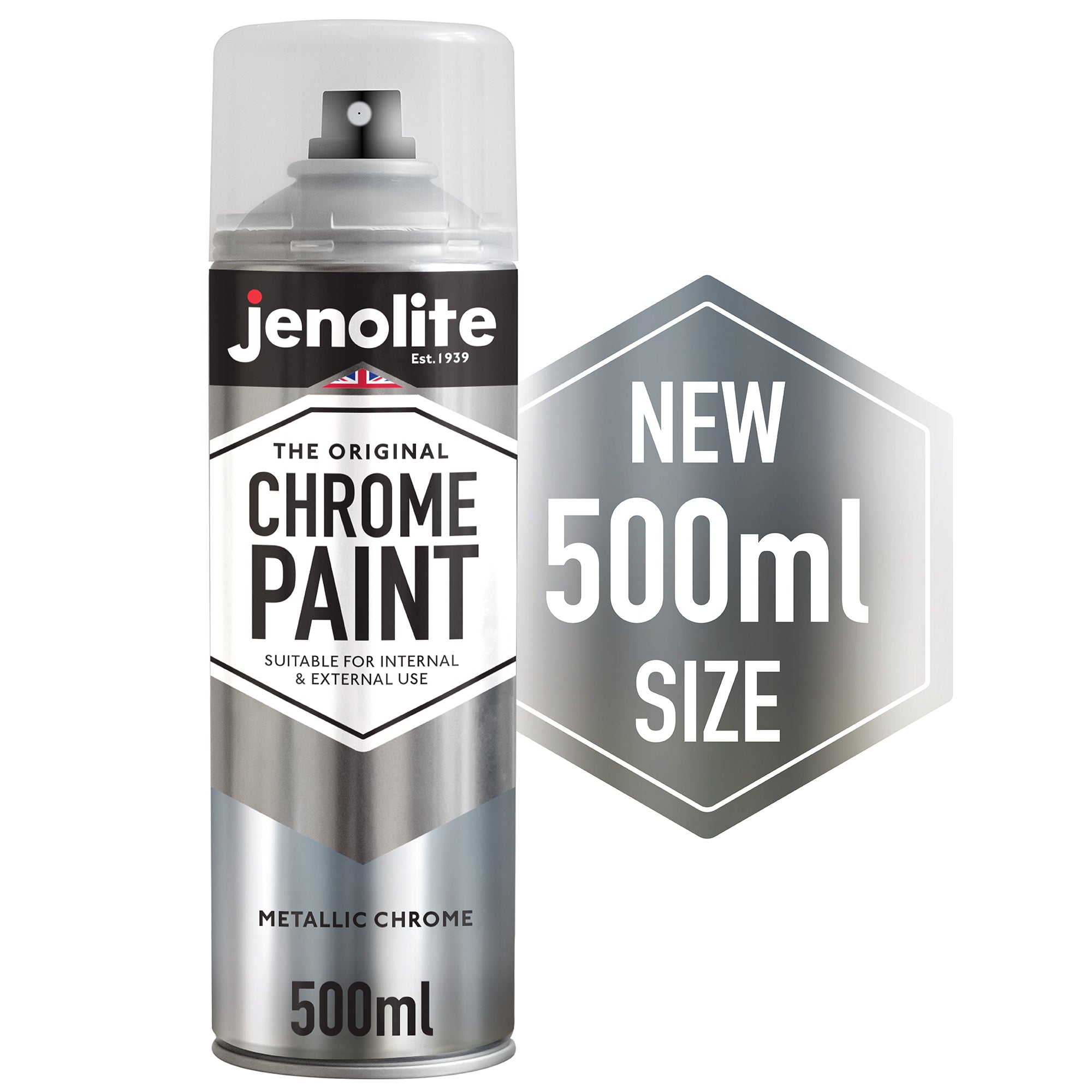
CHROME PAINT | 400ML | AEROSOL SPRAY PAINT
DESCRIPTION
-
PREMIUM CHROME SPRAY PAINT: Top-tier metallic chrome spray paint that delivers a stunning, mirror-like silver sheen, suitable for indoor and outdoor projects alike.
-
MULTI-SURFACE: This adaptable chrome repair paint adheres seamlessly to a range of materials such as metal, plastic, wood, stone, glass, and rigid plastics, making it perfect for vehicle touch-ups, creative projects, and more while designed to grip firmly without peeling.
-
ANTI-CORROSION FORMULA: Engineered to withstand rust, UV rays, and harsh weather, this chrome coating excels in both interior and exterior settings, offering a long lasting and highly durable finish.
-
HEAT TOLERANT: Capable of handling temperatures reaching 90°C, this reflective metallic spray paint is great for automobiles, motorcycles, radiators, decorative items, reflective surfaces, artwork borders, and beyond.
-
SHINY METALLIC SHEEN: Produces a captivating, high-gloss metallic silver chrome appearance that's reflective and eye-catching.
Discover Also:
Real World Considerations for British Conditions
Classic and modern vehicles on UK roads encounter a unique mix of challenges. Salt spread on motorways and A-roads during winter accelerates rust on any unprotected or poorly prepared metal. Choosing a chrome paint for auto parts with proven corrosion resistance, then sealing it properly, reduces the chance of early failure.
Many owners also use these finishes on project cars, custom builds and period restorations where originality or budget rules out full replating. The results look sharp in photos and at shows when the preparation and application steps receive proper attention.
Parts that see frequent handling or stone impact may need more frequent maintenance or touch-ups. Lower front trim, for example, often benefits from extra clear coat layers or even a slightly more robust alternative finish in those zones.
Frequently Asked Questions About Chrome Paint for Auto Parts
Can chrome paint for auto parts be used on plastic bumpers or trim?
Many chrome paint formulations for auto parts adhere well to rigid plastics once the surface has been thoroughly cleaned and lightly abraded to provide a mechanical key. Flexible bumpers and trim pieces often benefit from a dedicated flexible primer to prevent cracking as the material expands and contracts with temperature changes. Testing the chosen product on a small, inconspicuous area first helps confirm compatibility and avoids disappointment on visible sections. Success with any surface ultimately traces back to the same careful preparation steps that apply across different materials.
How long does a typical chrome paint finish last on exterior vehicle parts?
The lifespan of a chrome paint finish on exterior auto parts varies according to how well the surface was prepared and the level of exposure to weather and road conditions. When rust has been properly stabilised beforehand and the paint sealed with a clear protective layer, the finish typically maintains its appearance through multiple seasons of regular use in the UK. Areas subject to constant stone chips or heavy handling may require occasional touch-ups to keep the bright look intact. Regular gentle washing helps remove salt and grime that could otherwise accelerate wear.
Is chrome paint suitable for parts near the engine or exhaust?
Chrome paint for auto parts generally suits engine bay dress-up items such as valve covers or air cleaner lids where temperatures stay within moderate limits. Components exposed to sustained high heat from exhaust systems or turbos usually need coatings specifically rated for those conditions to avoid discolouration or breakdown. Checking the product guidance on maximum temperature tolerance provides clarity before application. Many vehicle owners successfully refresh non-critical engine bay accents with standard chrome paint options when the heat exposure remains limited.
Should chrome paint go directly over existing chrome plating?
Applying chrome paint directly over existing chrome plating often leads to poor adhesion because the smooth surface offers little for the new coating to grip. Light abrasion combined with thorough degreasing creates a better bonding surface, though complete removal of old plating sometimes gives more reliable long-term results on heavily worn parts. Any underlying rust should be addressed with quality rust converter products before painting begins to prevent future lifting.
What causes chrome paint to peel or lose shine quickly on cars?
Peeling or rapid loss of shine usually stems from inadequate surface cleaning, applying over active rust or skipping essential priming steps on bare metal. Heavy application in one go can trap solvents and create weak spots that fail when exposed to moisture and temperature swings common on UK roads. Using too few thin coats or failing to allow proper drying time between layers also contributes to early problems.
Read Also:



