


Chrome paint application offers a practical way to bring a bright, reflective finish to metal items without the cost or complexity of traditional plating. People search for this because they want that clean, modern shine on car parts, tools, furniture, railings or household fixtures, and they need reliable methods that work in real conditions.
The process rewards careful work at every stage, from surface prep to the final layers, and delivers results that hold up indoors or out when done properly. Variations such as chrome effect paint or metallic silver aerosol all aim for the same high-gloss, light-reflecting outcome that makes older items look fresh again. One product that stands out for consistent performance in UK conditions is the high-quality chrome paint aerosol available from established metal treatment specialists.
Understanding Chrome Paint for High-Shine Finishes

Chrome paint creates a metallic silver coating that reflects light to give a mirror-like appearance on suitable surfaces. It uses fine metallic pigments suspended in a fast-drying carrier, allowing light to bounce back evenly when the surface underneath is smooth, and the coats sit flat. This differs from ordinary silver paint because the particles align during application to produce stronger reflection and a cooler, more chrome-like tone.
Many users choose it for restoration work because it updates the look of dull or weathered metal quickly and without specialised equipment. It bonds to properly prepared metal, some plastics, wood, and rigid composites, giving a decorative yet functional layer that resists everyday handling. The finish also helps dirt and moisture sit on the surface rather than soak in, which supports longer-lasting brightness compared with untreated metal.
The key to strong results lies in how light interacts with the dried film. Any texture, dust or uneven thickness scatters light and reduces the clean reflection people expect. That is why preparation and application technique matter more than the paint itself in most cases.
Getting the Surface Ready for Chrome Paint Application in the UK
Surface preparation determines how much shine the finished job will show. Any dirt, grease, old paint flakes or rust will show through or prevent even adhesion, so start by cleaning thoroughly with a degreaser or panel wipe. Remove loose rust or flaking material with a wire brush or abrasive pad, then wipe the area clean.
For metal that already shows rust, many people first apply a product from the rust converter collection to stabilise the surface and create a paintable base. This step stops further corrosion and gives the chrome layer something solid to grip. Lightly sand the cleaned surface with fine grit paper to smooth out imperfections, then wipe away all dust with a tack cloth or lint-free cloth dampened with isopropyl alcohol. A truly smooth base lets each subsequent coat sit flat, which directly improves how much light reflects back.
Work in a well-ventilated space and wear appropriate gloves and eye protection. Test the cleaner on a small hidden area first if the item has any delicate coating. Taking time here avoids later disappointment, because no amount of extra paint layers can fully hide poor preparation.
Step-by-Step Chrome Paint Application Process
Begin by shaking the chrome paint aerosol can vigorously for at least two minutes so the metallic particles mix evenly. This helps avoid patchy colour or weak reflection in some areas. Spray a test pattern on scrap material or cardboard to check the spray pattern and distance.
Hold the can roughly 20 to 30 centimetres from the surface and apply light, overlapping passes in smooth, continuous motions. Keep the can moving while spraying to prevent runs or heavy spots. Apply the first coat as a light mist rather than a wet layer. Allow it to dry to the touch according to the product guidance before adding the next coat.
Build the finish with several thin coats instead of one thick application. Thin layers let each one level properly, and the metallic flakes settle without creating texture that dulls the shine. Most projects need two to three coats for solid coverage and good reflection, though decorative pieces sometimes achieve the desired look with fewer passes. Between coats, inspect the surface under good lighting for any missed spots or imperfections.
If the item has complex curves or recessed areas, angle the spray to reach them evenly. Work in moderate temperatures away from direct sunlight or high humidity, as these conditions can affect how the coat flows and dries. Once the final coat is on, leave the item undisturbed for full curing before handling or fitting back into place.
Achieving Maximum Shiny Results: Pro Tips
Several small adjustments make a noticeable difference to the final reflection. Always work in thin passes and resist the urge to build up thickness quickly. Excess paint creates an orange-peel texture that scatters light instead of reflecting it cleanly.
Temperature and airflow matter. A steady room temperature with gentle ventilation helps the coat dry evenly without trapping moisture. If conditions feel damp, allow extra drying time between coats. Some users lightly sand between coats with very fine paper and wipe clean to remove any nibs, then continue with the next thin layer for even smoother results.
Distance and speed of movement affect the finish too. Too close and the paint can pool or run. Too far and it dries before it reaches the surface, producing a dry, powdery look with less shine. Practise on a spare panel until the technique feels natural. Many experienced users also recommend a gloss black base coat on certain projects because it deepens the reflection and makes the chrome layer appear brighter and more mirror-like once applied over it. Products from the primers collection or the best metal primer collection often support this approach well. Finally, avoid touching the surface while it cures. Finger marks or dust settling on a tacky coat are difficult to remove without affecting the final appearance.
Suitable Surfaces and Projects for Chrome Paint
Chrome paint works well on many rigid materials once they are clean and smooth. Bare or primed metal such as steel, aluminium and cast iron takes the coating reliably and shows strong reflection. Automotive trim, wheel accents, bike frames, tools, machinery guards and garden ornaments are common choices because the finish refreshes their appearance without expensive replating.
Some plastics and rigid composites also accept the paint after light abrasion and cleaning, though flexible items may not hold the coating long term. Wood and certain ceramics can receive it when first sealed or primed appropriately. The finish suits both interior pieces like lamp bases or furniture legs and exterior items such as railings or gates, provided a protective clear layer follows where extra durability is needed.
Projects that benefit most tend to have straightforward shapes or accessible surfaces. Intricate or highly detailed items still work but require extra care during spraying to reach all angles evenly. Many restoration jobs draw on items from the automotive collection or project kits collection for coordinated results on vehicles, garden furniture, and household metalwork.
Protecting Your Shiny Chrome Finish Long-Term
A fresh chrome paint layer looks striking, yet it benefits from a clear protective topcoat in many situations. A suitable clear lacquer adds a barrier against scratches, UV exposure, moisture and everyday wear while remaining transparent so the reflective quality underneath stays visible. Choose a product formulated for metallic finishes to reduce the chance of any clouding or loss of depth.
Apply the clear layer only after the chrome paint has fully cured. Use the same light, even technique as the colour coats. One or two thin passes are usually enough to add meaningful protection without building up a heavy film that could affect appearance. The Rust Shield range is frequently chosen for this purpose on metal surfaces.
Regular maintenance helps preserve the shine. Wipe the surface with a soft, damp cloth and mild soap when it gathers dust or fingerprints. Avoid abrasive pads or harsh chemical cleaners that could scratch the finish or remove the protective layer. Periodic inspection for chips or wear allows small touch-ups before problems spread. With sensible care, the bright reflective look remains attractive for a long time on both indoor and outdoor items.
Why Jenolite Chrome Paint Delivers Superior Shiny Results
Jenolite has earned its place as a trusted UK name in metal treatment and protection over many years. Their chrome paint aerosol is formulated specifically to produce a bright, reflective silver finish that suits both decorative and functional metalwork. The product adheres well to properly prepared surfaces and offers good resistance to weather and everyday use, making it a practical choice for restorers and DIY users across the country.
CHROME PAINT | 400ML | AEROSOL SPRAY PAINT
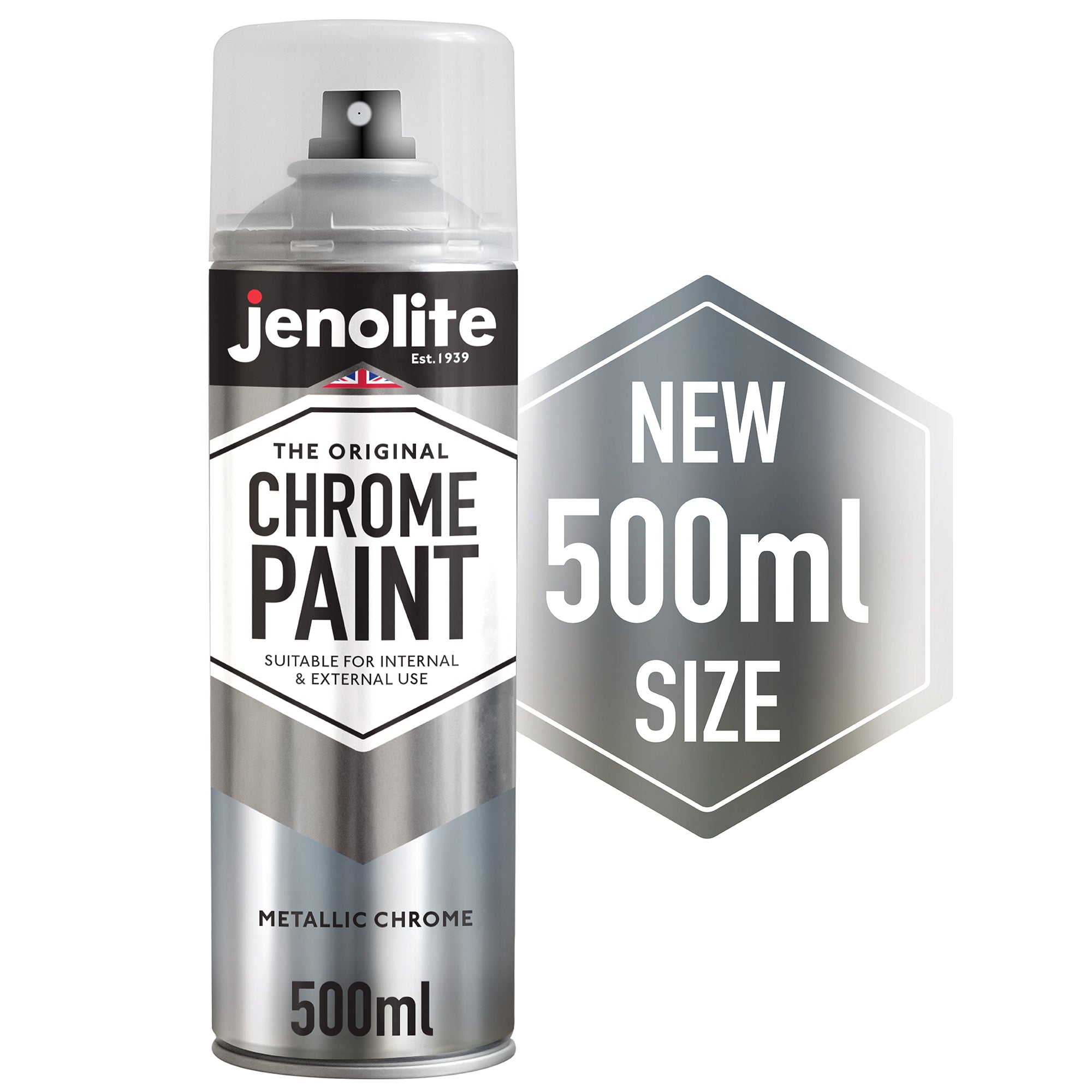
CHROME PAINT | 400ML | AEROSOL SPRAY PAINT
DESCRIPTION
-
PREMIUM CHROME SPRAY PAINT: Top-tier metallic chrome spray paint that delivers a stunning, mirror-like silver sheen, suitable for indoor and outdoor projects alike.
-
MULTI-SURFACE: This adaptable chrome repair paint adheres seamlessly to a range of materials such as metal, plastic, wood, stone, glass, and rigid plastics, making it perfect for vehicle touch-ups, creative projects, and more while designed to grip firmly without peeling.
-
ANTI-CORROSION FORMULA: Engineered to withstand rust, UV rays, and harsh weather, this chrome coating excels in both interior and exterior settings, offering a long lasting and highly durable finish.
-
HEAT TOLERANT: Capable of handling temperatures reaching 90°C, this reflective metallic spray paint is great for automobiles, motorcycles, radiators, decorative items, reflective surfaces, artwork borders, and beyond.
-
SHINY METALLIC SHEEN: Produces a captivating, high-gloss metallic silver chrome appearance that's reflective and eye-catching.
Discover Also:
Frequently Asked Questions
How long should I allow between coats during chrome paint application?
Allow each coat to reach a proper touch-dry state before applying the next one, as this supports even settling of the metallic particles for stronger light reflection and a smoother overall film. In typical conditions this means following the guidance on the product for drying intervals, though cooler or more humid UK weather often benefits from a little extra time to prevent lifting or uneven texture. Building the finish gradually with several thin coats rather than rushing produces better long-term shiny results because it reduces the chance of runs or trapped moisture that can dull the final appearance. Once the last coat is complete, leave the item for full curing before any handling, fitting or addition of a protective layer so the reflective quality sets properly.
What base coat works best underneath chrome paint for maximum brightness?
A smooth gloss black base often delivers the strongest mirror-like reflection because it creates a deep, even foundation that lets the metallic flakes in the chrome layer align and bounce light back more effectively. This approach builds on thorough surface preparation where any imperfections have already been smoothed away, helping the top coats sit flat without scattering light. Some projects achieve good results with direct application on clean, prepared metal, yet the gloss black layer tends to enhance depth and brightness especially on automotive trim or decorative items where maximum shine is the goal. The base also improves adhesion for the subsequent chrome paint application, contributing to a more durable and consistent finish over time.
Can I use chrome paint on outdoor metal items in the UK?
Chrome paint suits many outdoor metal applications when the surface receives proper cleaning, rust treatment if needed and a clear protective topcoat afterwards to guard against moisture, salt and temperature changes common in UK conditions. Preparation remains the foundation for lasting shiny results, as any remaining corrosion or rough texture will affect both appearance and longevity once exposed to weather. Adding a transparent lacquer formulated for metal finishes helps maintain the reflective quality while adding a barrier against everyday wear and environmental factors. Regular gentle cleaning with mild soap and soft cloths further supports the brightness by removing dirt before it can dull the surface.
How do I avoid a dull or patchy finish with chrome paint?
Dull or patchy outcomes usually trace back to inadequate surface cleaning, insufficient mixing of the aerosol or applying coats too heavily or too quickly, all of which prevent the metallic particles from creating an even reflective layer. Following the full preparation steps of degreasing, light sanding and dust removal creates the smooth base that allows light to reflect cleanly rather than scatter. Shaking the can thoroughly and using light, overlapping passes at the correct distance helps build consistent coverage without texture or dry spray that reduces shine. Working in moderate temperatures with good ventilation and inspecting under bright light between coats catches any issues early so adjustments can be made before the finish sets.
Is it possible to touch up small areas later without the repair showing?
Small touch-ups can blend well when the surrounding area is first cleaned, and the edges of the existing finish are lightly abraded to help the new paint feather in smoothly. Matching the original technique of thin coats and allowing proper drying between layers keeps the repair consistent with the surrounding reflection and colour. For best results, the touch-up should use the same number of passes as the original job and be applied in similar conditions so the metallic finish aligns visually. Larger damaged sections generally look more uniform when the whole area is lightly prepared and resprayed rather than spot-treated, preserving the overall shiny appearance.



