
Best Car Rust Treatment in the UK (2026)

Rust on cars spreads quickly in the UK because of rain, road salt and damp winters. Drivers look for reliable solutions that halt corrosion and restore metal surfaces without major repairs. The best car rust treatment in the UK keeps vehicles safe and maintains their value.
Regular maintenance with the best rust remover for cars helps prevent corrosion from spreading across exposed panels and underbodies. Many motorists also rely on the best UK rust converter for cars to stabilise existing rust before applying the best rust treatment products for long-term protection. For added durability, a quality best rust treatment spray or best rust treatment paint can shield vulnerable areas from harsh UK weather conditions.
Discover Our Best Car Rust Treatment in the UK - Jenolite
Why Does Effective Car Rust Treatment Matter For Uk Vehicles?

British weather and salted roads create ideal conditions for rust to form on bodywork, chassis and underbody panels. Early treatment prevents small spots from becoming structural problems.
Many drivers notice rust first around wheel arches, sills and doors after winter. A quality rust converter stops the process by changing active rust into a stable layer ready for paint or further protection. This approach saves time and money compared with full panel replacement.
Proper preparation and application make the difference. Clean loose debris first, then apply the treatment so it bonds properly. Regular checks help catch issues before they worsen.
After the first section on why treatment matters, the rust converter stands out as a key option for many UK motorists.
How To Apply Car Rust Treatment For Best Results?
Start with thorough cleaning. Remove dirt, grease and loose rust using a wire brush or pressure washer. Dry the area completely.
Apply the chosen product in thin, even coats. For aerosol options, hold the can upright and spray from about 20 cm away. Allow each coat to react fully before adding more.
Once treated, many people follow with a protective paint or clear lacquer. This seals the surface against moisture and oxygen. Cavity waxes work well inside box sections and doors where water collects.
Follow manufacturer guidance on drying times and overcoating. Good ventilation helps during application, especially with aerosols.
The process feels straightforward once you see how the product works on the metal.
For drivers looking to go further with prevention and restoration, Jenolite’s car rust treatment guides provide practical advice on protecting vulnerable areas and maintaining long-term corrosion resistance.
Best Car Rust Treatment in the UK (2026)
1. Jenolite - Best Car Rust Treatment in the UK
Car rust treatment range from Jenolite brings together a full selection of solutions developed in Britain to handle rust on cars, vans and classic vehicles across UK roads. The collection features rust converters that chemically change active corrosion into a stable, hard layer ready for painting, rust removers in liquid, gel and thick non-drip formulas that dissolve rust down to clean metal, and protective sprays including clear metal lacquers and waxoil aerosols that form flexible barriers against moisture, salt and road grime.
These products work together for complete protection, from treating visible spots on body panels and wheel arches to reaching hidden cavities and underbody areas where water collects. Drivers appreciate the easy application methods, whether using aerosols with extension nozzles, trigger sprays or brush-on liquids that suit DIY jobs or professional workshops. The formulas deliver strong adhesion, fast reaction times and compatibility with topcoats, giving a clean professional finish that stands up to British weather. Many users report smooth results on restored vehicles and everyday cars alike, with options that suit different surfaces and levels of corrosion.
The range stands out for its versatility and reliability in UK conditions, helping motorists stop rust in its tracks and keep vehicles looking and performing their best.
RUST CONVERTER EPOXY AEROSOL | 500ML | TURNS RUST INTO READY TO PAINT SURFACE

RUST CONVERTER EPOXY AEROSOL | 500ML | TURNS RUST INTO READY TO PAINT SURFACE
DESCRIPTION
-
RUST CONVERTER SPRAY: JENOLITE Rust Converter Epoxy Aerosol serves as an effective rust remedy for metallic areas, swiftly transforming corrosion into a solid base suitable for coating.
-
FAST ACTING & SIMPLE TO USE: This rust converter aerosol interacts with corrosion to form a durable substance in just 15 minutes. Apply it directly to rusty spots for quick and effective corrosion control and avoidance. After hardening, the darkened layer can remain untouched or be covered with various water-based or oil-based coatings.
-
EPOXY BASED RUST CONVERTER: Its sophisticated blend eliminates and alters rust while serving as a barrier to stop its recurrence. Perfect as a rust primer for metallic items.
-
AUTOMOTIVE USE & MORE: Great for iron-containing metal areas, it's an excellent rust transformer and remedy for automobiles (like cars, trucks, motorcycles), equipment, devices, outdoor fences, furnishings, and beyond. Eliminates corrosion in hidden spots.
-
LONG-TERM RUST PROTECTION: Forms shielding layers that eradicate rust and guard against moisture, air, CO2, and corrosive elements for enduring defense against oxidation.
-
EASY TO USE: Just apply straight onto corrosion and observe the transformation into a paint-ready dark violet or black layer. Impervious to humidity, oxygen, and CO2; post-treatment, the area can be coated without requiring an undercoat.
-
COVERAGE: Roughly 2.5m² coverage from a 500ml container.
RUST CONVERTER LIQUID TRIGGER SPRAY | 500G & 1 LITRE

RUST CONVERTER LIQUID TRIGGER SPRAY | 500G & 1 LITRE
DESCRIPTION
-
QUICK-REACTING RUST TRANSFORMER: JENOLITE Rust Converter is a rapid, water-based solution that chemically alters rust into a solid foundation, stopping further corrosion by forming a shield against moisture, air, and carbon dioxide.
-
PRIMED FOR PAINTING: After treatment, it changes rust into a surface ready for direct painting with most current paints, eliminating the primer requirement.
-
ENDURING SAFEGUARD: It repels humidity, oxygen, and carbon dioxide, delivering sustained defense to the applied regions.
-
SIMPLE APPLICATION: Effortless to apply. Just spray onto rusty spots and see it convert to a black/purple paintable layer. Skip rinsing or wiping; allow to dry, and the formerly corroded spot is set for coating.
-
OPTION TO LEAVE AS-IS OR OVERCOAT: Once used, it may stay untreated or be finished with water-based or oil-based paints.
-
STRAIGHTFORWARD PROCESS: Fast-working rust neutralizer that bonds with rust to produce a durable compound in just 15 minutes.
-
COVERAGE: Roughly 6 to 8 square meters per liter.
-
MADE IN BRITAIN
RUST CONVERTER LIQUID | 150ML, 500ML, 1 LITRE, 5 LITRE

RUST CONVERTER LIQUID | 150ML, 500ML, 1 LITRE, 5 LITRE
DESCRIPTION
-
QUICK-REACTING RUST TRANSFORMER: JENOLITE Rust Converter features a rapid-action, water-based formula that chemically alters rust into a secure base, halting additional corrosion by forming a shield against moisture, air, and CO2.
-
PREPARED FOR COATING: After application, it changes rust into a surface primed for painting, allowing direct application of most contemporary paints without requiring an undercoat.
-
DURABLE DEFENSE: Blocks moisture, oxygen, and carbon dioxide, offering extended safeguarding for the processed regions.
-
SIMPLE APPLICATION: Straightforward to apply, just brush or spray it straight onto corroded spots and observe as it activates, converting rust to a paint-ready dark violet or black layer. No rinsing or cleaning needed; allow it to air dry, and the formerly rusty spot is set for coating.
-
SUITABLE TO REMAIN EXPOSED OR COATED: Following treatment, it may stay uncovered or be overpainted using paints that are water- or oil-based.
-
STRAIGHTFORWARD PROCESS: Fast-reacting rust transformer that interacts with corrosion to produce a steady substance in about 15 minutes. Applicable via brush or spray for uniform distribution across broad areas.
-
AREA COVERAGE: Offered in spray and liquid versions. Roughly 6 to 8 square meters per liter.
-
MADE IN BRITAIN
RUST REMOVER THICK LIQUID | NON-DRIP FORMULA | 150ML, 500ML, 1 LITRE, 5 LITRE
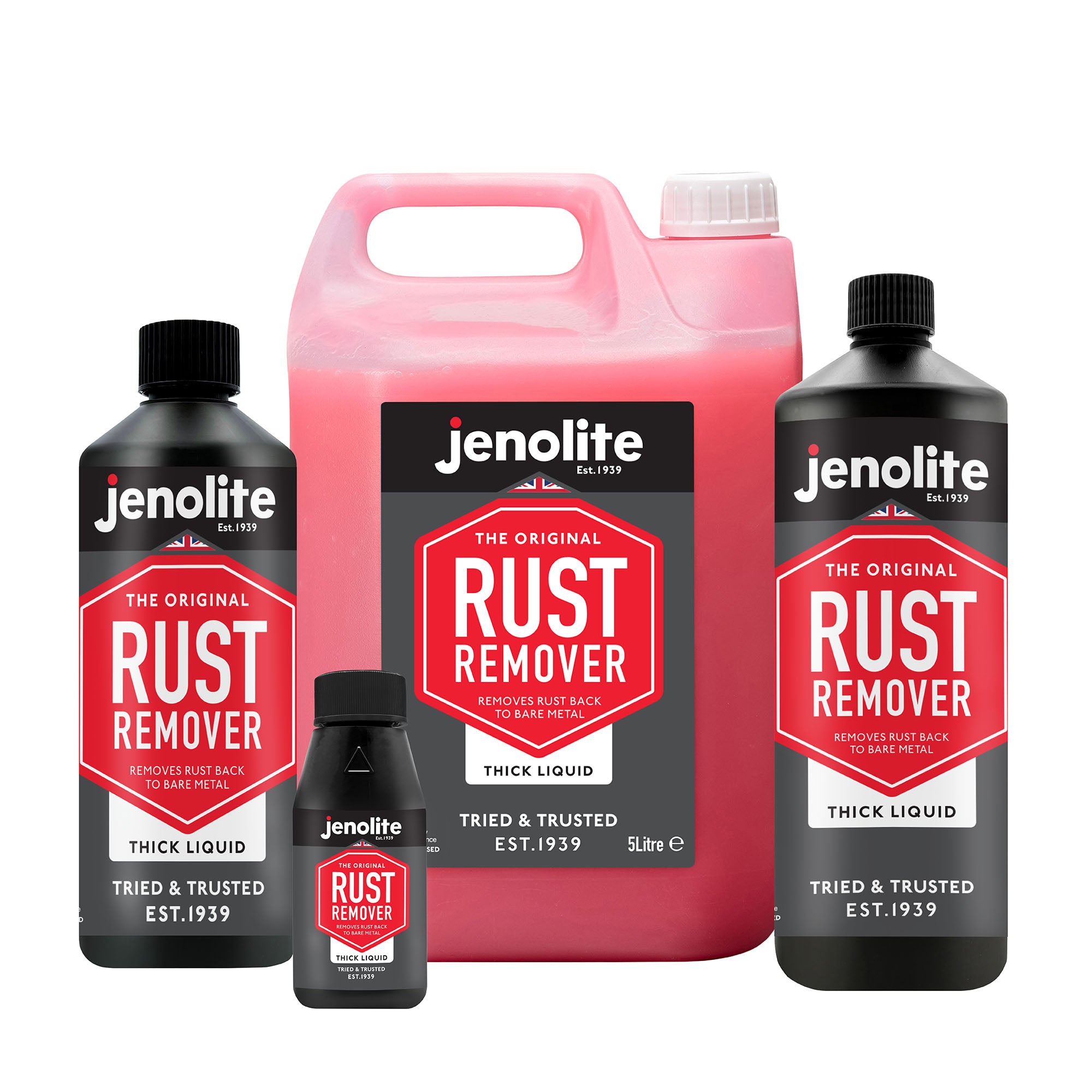
RUST REMOVER THICK LIQUID | NON-DRIP FORMULA | 150ML, 500ML, 1 LITRE, 5 LITRE
DESCRIPTION
-
ELIMINATES RUST QUICKLY: JENOLITE Thick Liquid Rust Remover - A potent and rapid rust dissolver, perfect for stripping corrosion down to clean metal, prepared for priming within half an hour.
-
RAPID PERFORMANCE: This viscous solution interacts chemically with corrosion, simplifying its elimination and conditioning the affected metal. Prepares the area for coating by chemically breaking down rust for straightforward removal.
-
STAY-PUT COMPOSITION: The dense, drip-resistant mixture allows precise application to targeted spots, even on upright areas, guaranteeing it acts solely on intended zones.
-
PERFECT FOR APPLICATION ON: Vehicles, panel repairs, undercarriages, wheel wells, equipment, bicycles, marine vessels, recreational vehicles, fencing, outdoor seating, and more.
-
AREA COVERAGE: Roughly 4 square meters per liter
-
PRODUCED IN THE UK
ORIGINAL RUST REMOVER LIQUID TRIGGER SPRAY | 500ML & 1 LITRE
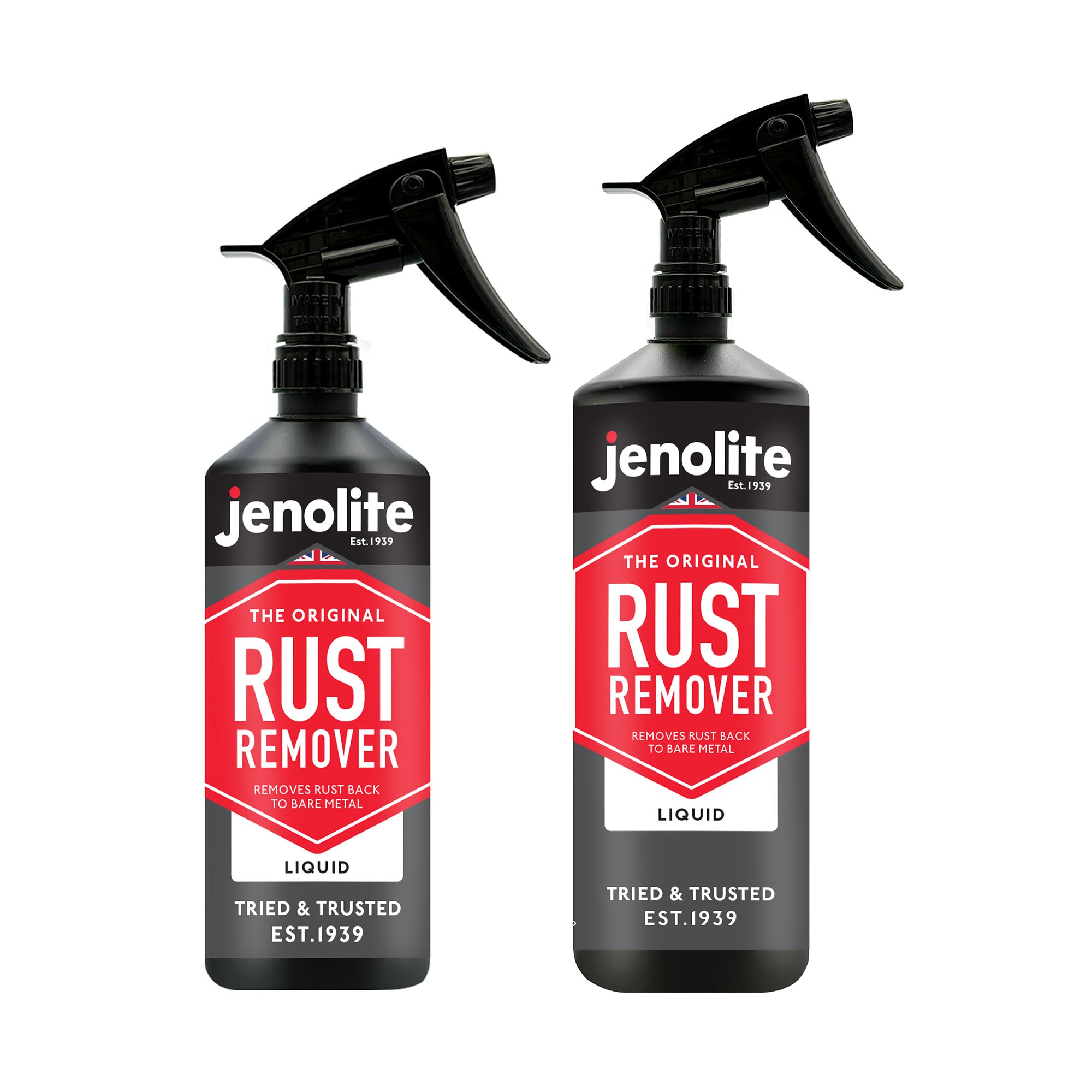
ORIGINAL RUST REMOVER LIQUID TRIGGER SPRAY | 500ML & 1 LITRE
DESCRIPTION
-
ELIMINATES RUST QUICKLY: This rapid-action remover breaks down rust effectively, exposing clean metal that's prepared for priming.
-
QUICK RESULTS: It chemically interacts with rust for straightforward elimination. The surface is priming-ready within 30 minutes.
-
PERFECT FOR APPLICATION ON: Great for vehicles, body repairs, undercarriages, wheel wells, equipment, bicycles, boat hulls, yacht bottoms, trailer understructures, outdoor entrances, and patio sets, among others.
-
CLEARS OXIDE LAYERS: Ideal for eliminating thin oxide coatings that remain on metal after abrasive blasting like sand or grit methods.
-
USAGE: As with every JENOLITE item, this Rust Remover is user-friendly. Just apply the spray for full surface coverage on rusty areas. Let it penetrate the corrosion while agitating with a wire brush or drill-mounted brush. Maintain the reaction by preventing dryness and reapplying when needed.
-
AREA COVERAGE: Roughly 8 square meters per liter.
-
PRODUCED IN THE UK.
ORIGINAL RUST REMOVER LIQUID | 500ML, 1 LITRE, 5 LITRE
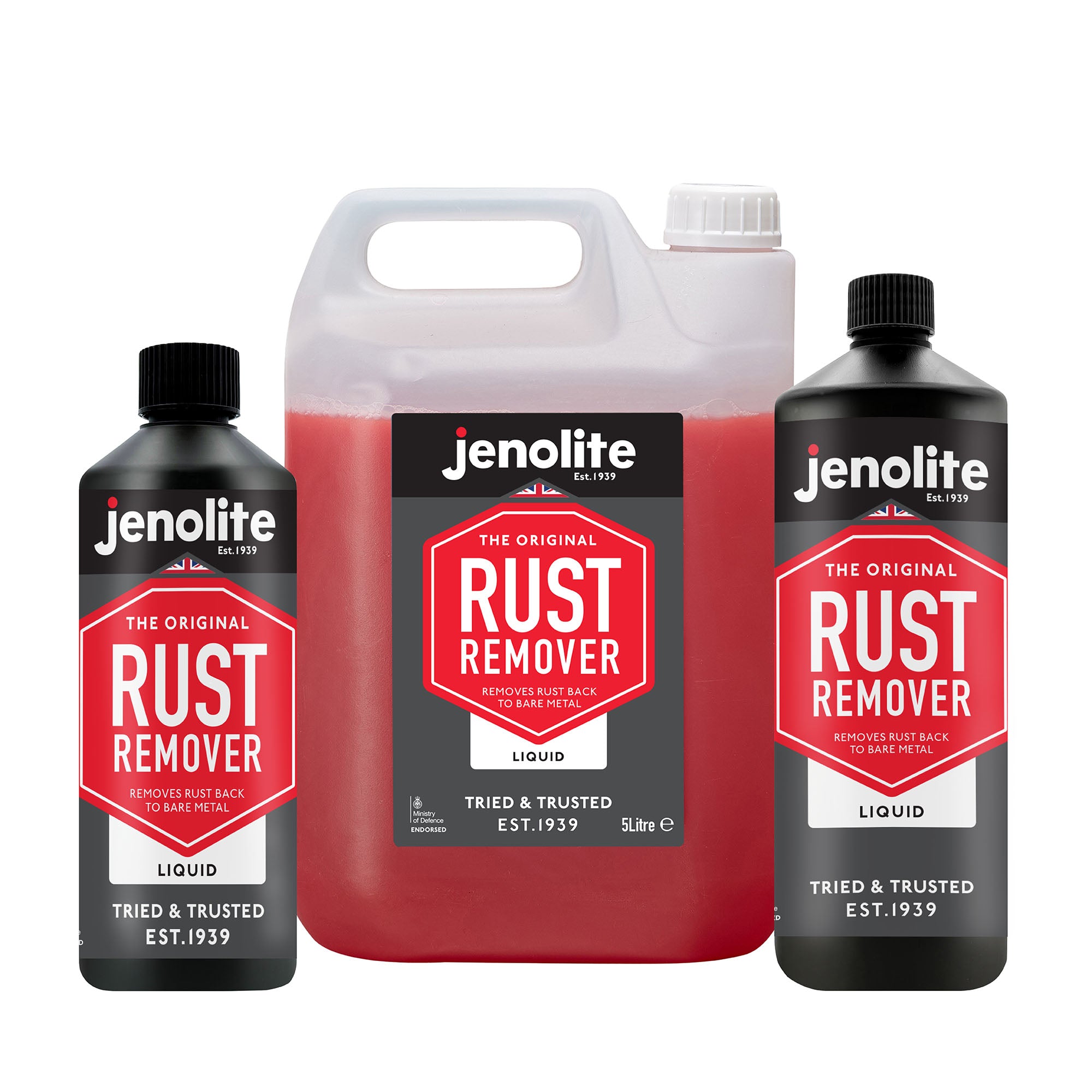
ORIGINAL RUST REMOVER LIQUID | 500ML, 1 LITRE, 5 LITRE
DESCRIPTION
-
QUICKLY ELIMINATES RUST: Since 1939, JENOLITE Original Liquid Rust Remover has been trusted by experts. This rapid formula eradicates rust, exposing clean metal that's primed for coating.
-
RAPID PERFORMANCE: It chemically interacts with rust for effortless elimination. Surfaces are prepped for priming within half an hour.
-
PERFECT FOR: Excellent for stripping rust from instruments, compact metallic items, or hard-to-reach spots like enclosed sections and hollow parts. Suitable for vehicles, panel repairs, undercarriages, wheel wells, equipment, bicycles, vessels, trailers, fences, outdoor seating, and more.
-
ELIMINATES SURFACE OXIDES: Effective for clearing minor oxide layers remaining on metals post-blasting with shot or grit.
-
USAGE METHOD: This smooth, user-friendly liquid rust remover can be sprayed, brushed, or used for dipping.
-
AREA COVERAGE: About 8 square meters per liter
-
PRODUCED IN THE UK
NON-HAZARDOUS RUST REMOVER LIQUID | 1 LITRE, 5 LITRE
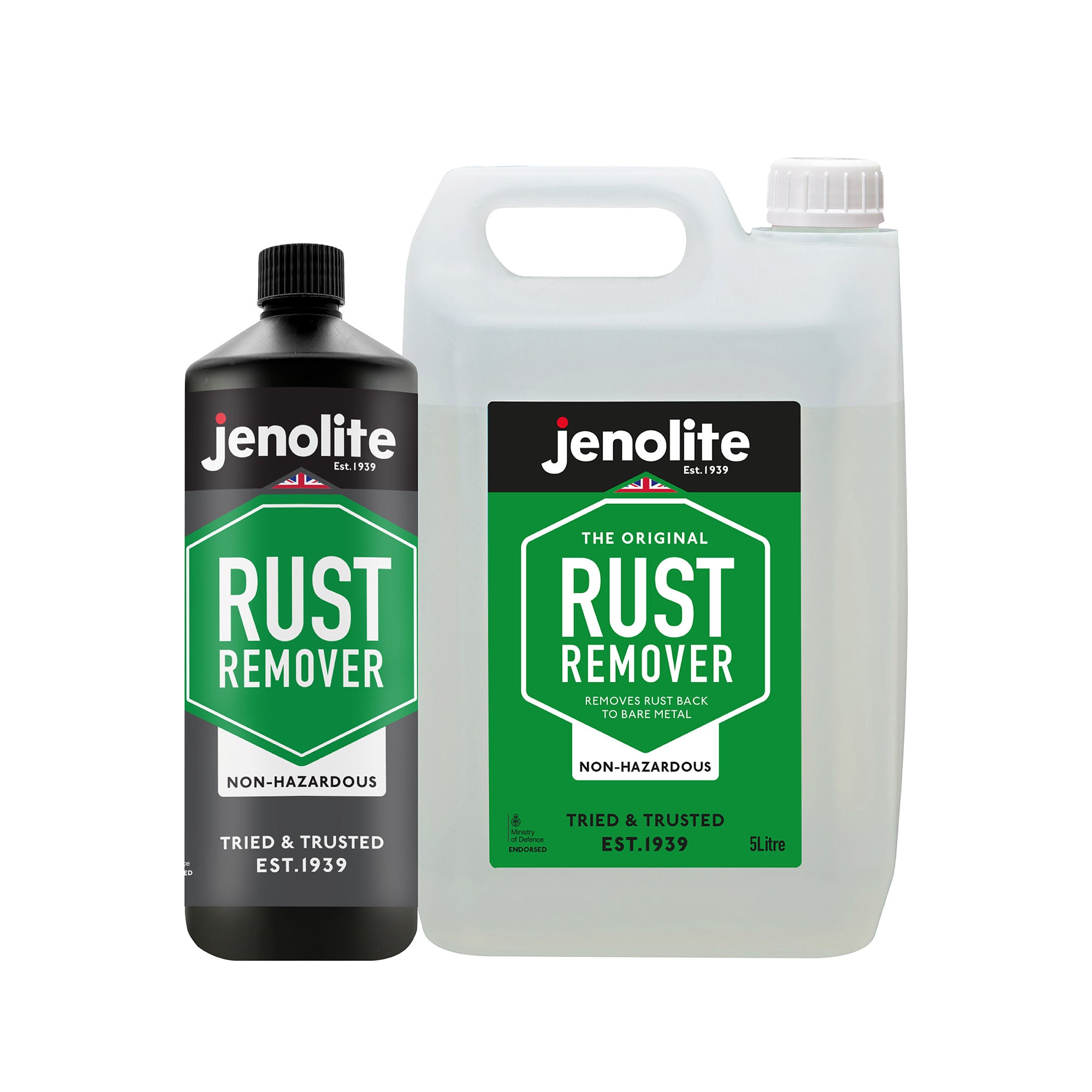
NON-HAZARDOUS RUST REMOVER LIQUID | 1 LITRE, 5 LITRE
DESCRIPTION
-
NON HAZARDOUS RUST REMOVER: PH neutral, water-based rust remover that works without scrubbing or sanding, restoring rusted tools, vehicle parts and cookware to like-new condition
-
SAFE ALTERNATIVE: Tackles rust removal jobs quickly and more safely than alternative chemicals as it does not require the use of any protective equipment, gloves or eyewear, due to its non-hazardous formula
-
USE ON: Softer metals such as chrome, copper, brass and aluminium, unlike many harsh alternatives
-
FUEL TANKS: Safe for use on rusty fuel tanks - simply pour in and leave to work. Turn, tank every few hours until all rust is removed
-
EASY TO USE: Simply pour the required amount into a plastic container and immerse small items, or for large items, cover the surface with strong paper towels soaked in Jenolite and place plastic sheeting on top, then leave to work. Heavily rusted items can be left until rust free (24hrs+)
-
REUSABLE: Non-toxic and bio-degradable formula means you can remove rust from your metal items time after time, whilst being kinder to the environment
-
MADE IN BRITAIN
RUST REMOVER CONCENTRATED GEL | 40ML, 1 LITRE, 5 LITRE
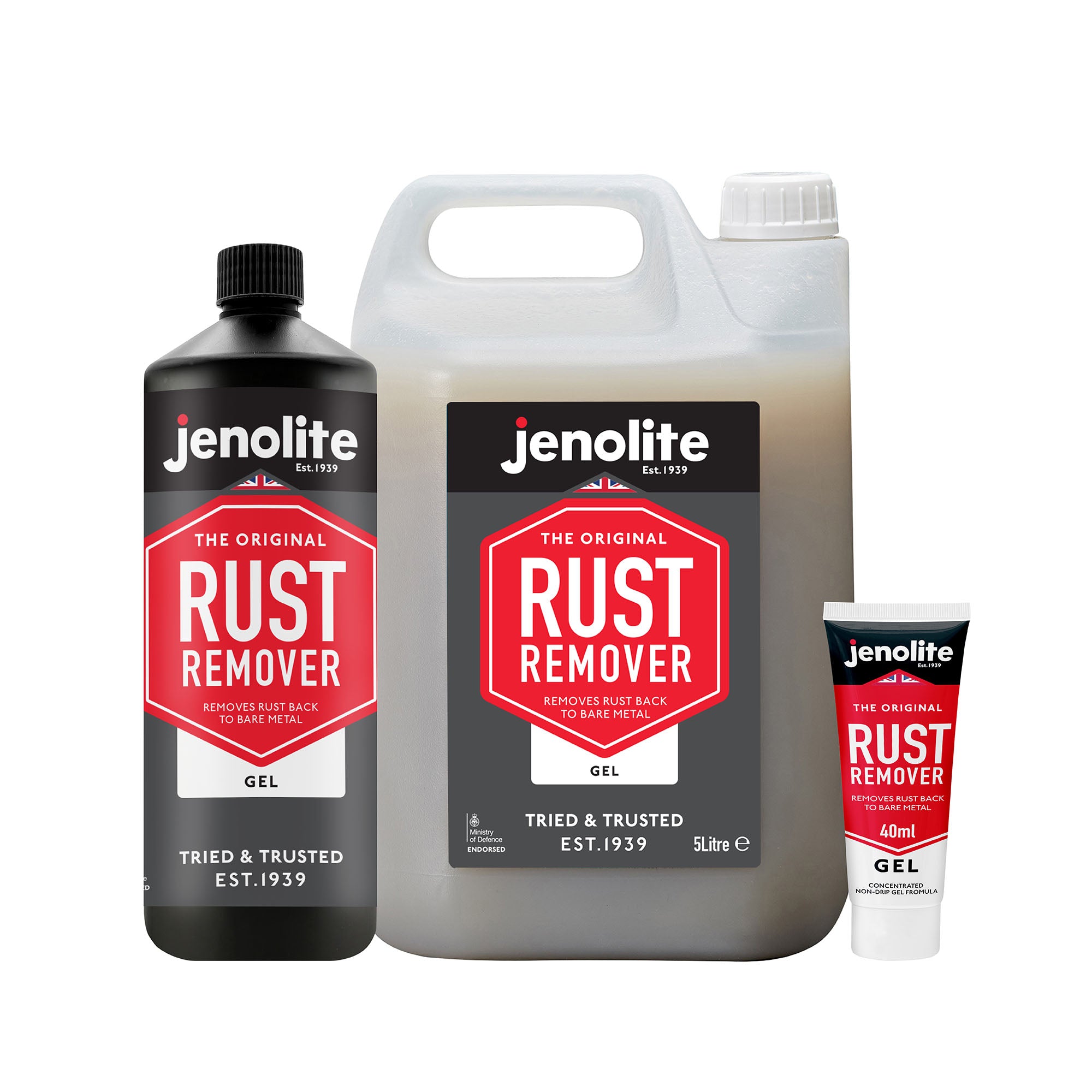
RUST REMOVER CONCENTRATED GEL | 40ML, 1 LITRE, 5 LITRE
DESCRIPTION
-
RUST REMOVER JELLY: JENOLITE Rust Remover Concentrated Gel - this reliable and proven formula offers the perfect fix for tackling stubborn rust issues on any metal made from iron or steel. It's great for addressing minor rust spots on vehicles like paint chips, plus on bicycles, home devices, instruments, and outdoor gear.
-
CONCENTRATED FORMULA REMOVES RUST FAST: Quick-working rust remover that obliterates corrosion, exposing clean metal prepared for priming. It can also strip away the thin oxide layer from sandblasting, delivering a pristine, even surface set for priming and coating.
-
FAST ACTING: It chemically interacts with rust to simplify its elimination. Priming-ready in less than an hour.
-
NON-DRIP GEL FORMULA: Apply it using a brush; the drip-resistant composition prevents running, making it suitable for upright areas.
-
IDEAL FOR USE ON: Car rust patches, panels, undercarriage, wheel wells, implements, cycles, vessels, trailers, fences, patio sets, and more.
-
COVERAGE: Roughly 2 square meters per liter.
-
MADE IN BRITAIN
Discover Also:
2. Bilt Hamber Hydrate-80 and Dynax Range

Bilt Hamber Hydrate-80 and Dynax range offers a trusted system for car rust treatment favoured by many UK drivers and enthusiasts. The Hydrate-80 converter works by killing rust on contact and turning it into a protective barrier that bonds firmly to the metal surface. It suits light surface rust or more established spots on bodywork, sills and undercarriages. Once applied it leaves a durable black finish that prepares the area for primer and paint or can stand alone in some cases.
The Dynax products complement this with cavity and underbody waxes that creep into seams, box sections and hidden panels to displace moisture and block future corrosion. These waxes stay flexible through temperature changes and provide ongoing defence against road salt and damp conditions common in Britain. Application involves simple cleaning followed by direct spray or brush use, making the process straightforward for both weekend mechanics and professionals. The combination allows full coverage from visible panels down to structural areas that often go untreated.
Users value the way the range tackles rust at the source while adding long-term protection that keeps vehicles solid and reliable. The products integrate well into restoration projects or routine maintenance, delivering consistent results that help preserve car value and safety on UK roads.
-
Key features include electrochemical rust conversion, deep penetration into seams and cavities, flexible wax films that resist cracking.
-
Facts and information highlight proven performance against moisture and salt in British driving conditions, with strong adhesion on clean or lightly corroded steel.
3. Lanoguard Underbody and Chassis Protection

Lanoguard underbody and chassis protection uses a lanolin-based formula developed in Britain to create a soft, self-healing barrier that repels water and salt. The clear or black sprays apply easily to cleaned underbodies, suspension parts, sills and wheel arches, forming a flexible layer that stays active and does not harden or crack over time. Many drivers choose the DIY kits for quick coverage on cars, vans and motorhomes.
The product reaches into seams and hidden spots thanks to its creeping action and extension nozzles, protecting areas where traditional coatings might fail. Annual top-ups keep the protection fresh, and the clear version lets owners inspect the metal underneath without removing the coating. It works on both new and older vehicles, suiting preventive care or repairs after rust appears. Application in damp conditions is possible, adding convenience for UK users facing unpredictable weather.
The system stands out for its ease and effectiveness in everyday British motoring, helping vehicles stay free from advancing corrosion while maintaining a clean appearance. Owners often pair it with basic preparation steps for best results, making it a practical choice that supports long vehicle life without complicated processes.
-
Key features include self-healing properties, water-repellent lanolin base, suitability for brush or spray application.
-
Facts and information show reliable performance in harsh UK weather, with flexible coverage that adapts to vehicle movement.
4. Hammerite Kurust Rust Converter

Hammerite Kurust rust converter delivers a straightforward solution for treating rust on car panels, doors and wheel arches. The liquid formula reacts with corrosion to create a stable blue-black surface that stops further spread and accepts paint within hours. The non-drip gel version makes vertical application simple, suiting spot repairs on chips or small areas without mess.
Many mechanics and DIY users keep it handy for quick fixes on everyday vehicles or restoration work. It applies directly to lightly rusted metal after basic cleaning, bonding tightly to form a primer-like layer. The product integrates well with Hammerite paints for a seamless finish that matches factory standards. Its fast action helps drivers address rust early before it affects structural parts.
The converter remains a reliable option across Britain because of its proven track record on automotive metal. It simplifies repairs for those who want effective results without specialist tools, supporting both small touch-ups and larger panel work.
-
Key features include colour-change indicator for active conversion, compatibility with topcoats, non-drip gel for vertical surfaces.
-
Facts and information confirm strong bonding on car bodywork and suitability for direct-to-rust use in UK conditions.
5. Rustbuster FE-123 Rust Converter

Rustbuster FE-123 rust converter provides thick molecular action that penetrates deep into pitted and corroded metal on car chassis and floor pans. Developed in Britain, it turns rust into a hard protective barrier that blocks oxygen and moisture while preparing the surface for epoxy mastics or paints. The consistency suits vertical and overhead applications without running.
Restoration specialists and owners of older vehicles rely on it for thorough treatment of heavy corrosion. Simple preparation with a wire brush allows the product to work effectively, creating a stable base that lasts through British winters. It suits both spot repairs and full underbody projects.
The formula delivers reliable results that help extend the life of classic and daily cars alike. Many users appreciate the depth of protection it offers in hard-to-reach areas where water collects.
-
Key features include thick non-drip texture, deep penetration into rust, strong barrier formation ready for overcoating.
-
Facts and information demonstrate effectiveness on heavily corroded automotive surfaces common in the UK.
6. Neutrarust 661 Rust Converter

Neutrarust 661 rust converter offers a water-based option that neutralises active corrosion and leaves a black primer-ready surface on car panels and underbody sections. The low-odour formula suits indoor or workshop use while delivering effective protection. Brush or spray application makes it accessible for many UK motorists.
The product works well on vertical surfaces and provides good coverage for everyday repairs. It forms a stable layer that accepts most paints, completing repairs with a professional look. Drivers value its straightforward use for maintaining vehicles exposed to road salt.
-
Key features include water-based composition, neutralising action on rust, compatibility with standard paints.
-
Facts and information support its role in everyday car maintenance across Britain.
7. Dinitrol Cavity Wax and Underbody Coatings

Dinitrol cavity wax and underbody coatings deliver professional-grade protection popular with UK garages and fleet operators. The waxes creep into box sections, doors and seams to displace trapped moisture and prevent corrosion from starting. High penetration ensures coverage in hidden areas that cause many rust issues.
The range suits both new vehicles and older ones needing extra defence against British road conditions. Many classic car owners choose it for preventive maintenance that keeps chassis and panels sound. Application with specialist tools gives even results that last.
-
Key features include deep creeping action, wax-based moisture displacement, compatibility with existing underseals.
-
Facts and information show widespread use in British workshops for reliable vehicle protection.
8. Hammerite Waxoyl Underbody Seal

Hammerite Waxoyl underbody seal forms a tough yet flexible coating that guards against stone chips, salt and moisture on car underbodies. The established formula applies with a sprayer or brush after cleaning, creating a barrier that stands up to UK driving demands. It suits DIY enthusiasts and professional jobs alike.
The product integrates corrosion inhibitors that support long service life on treated surfaces. Many drivers use it as part of routine maintenance to protect suspension and chassis components.
-
Key features include abrasion resistance, flexible film, direct application over prepared metal.
-
Facts and information confirm its place in the Hammerite range for automotive protection in Britain.
9. Bilt Hamber Dynax-UC Clear Underbody Wax

Bilt Hamber Dynax UC clear underbody wax delivers high level corrosion protection without obscuring the metal or painted surfaces beneath. This transparent formulation creates a thin yet effective shield that creeps into seams and adheres strongly, making it ideal for visible chassis parts, suspension components and lower body panels where appearance remains important. It shares the deep penetration and moisture displacing characteristics of the wider Dynax range while offering the practical advantage of allowing owners to monitor the condition of treated areas over time.
The product performs consistently through the temperature swings experienced in Britain and maintains its protective qualities against road chemicals and damp. Enthusiasts restoring or maintaining vehicles often select the clear variant for areas that remain on show, combining effective long term defence with a clean, non intrusive finish. Aerosol application with extension nozzles facilitates thorough coverage in cavities and awkward spots, supporting both preventive care and remedial work on cars that see regular use on salted winter roads.
-
Key features include clear protective film, strong adhesion, and chemical resistance.
-
Facts and information highlight its design for visible components while maintaining full corrosion protection.
10. Hammerite Direct to Rust Metal Paint

Hammerite Direct to Rust Metal Paint offers a practical all in one solution for finishing rust treated areas or applying protective colour to lightly corroded car surfaces. The formula bonds directly to prepared rust, functioning as primer, undercoat and topcoat in a single product that delivers both decorative appeal and ongoing corrosion resistance. Available in a selection of gloss and satin finishes along with various colours, it enables neat, factory style repairs on body panels, doors and other visible components.
Application by brush or roller suits DIY users tackling spot jobs, and the quick drying properties allow efficient project completion. UK drivers value how it simplifies the final stage of rust repair work, producing a hard wearing surface that withstands weathering and minor impacts. When used following proper surface preparation and rust conversion, it helps restore a smart appearance to affected areas while adding a layer of protection suited to British conditions. Its convenience and proven performance keep it popular for both small touch ups and larger panel refreshes.
-
Key features include direct-to-rust application, durable gloss levels, wide colour selection.
-
Facts and information support its effectiveness for finishing car rust repairs across the UK.
11. Granville Rust Cure Heavy Duty Rust Converter
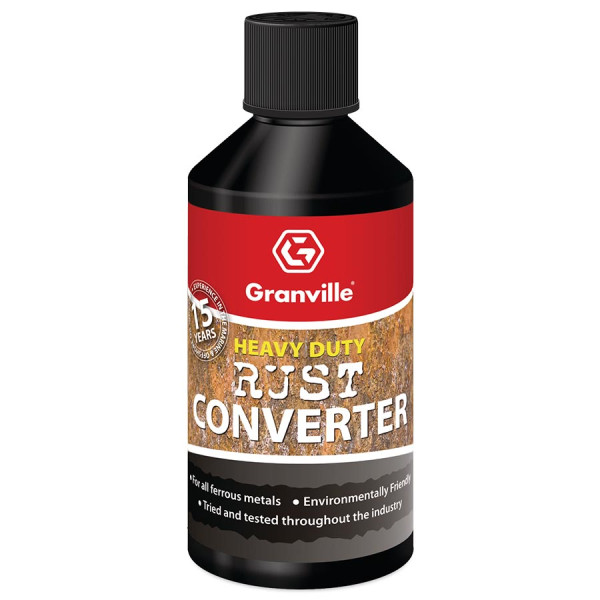
Granville Rust Cure Heavy Duty Rust Converter is a specialist water based treatment produced by a British company with a strong reputation in professional and industrial sectors. It chemically transforms active rust on ferrous metals into an inert compound that seals the surface and prevents further oxidation from developing.
The formula finds use in the oil industry, marine environments and by military organisations such as the Ministry of Defence and NATO. UK motorists benefit from its ability to treat rust on vehicle chassis, underbodies and body panels exposed to road salt and damp winters. Application requires the surface to be free of loose rust and dirt before brushing or spraying the converter directly onto affected areas.
Once reacted it leaves a protective layer ready for painting or further treatment. Certain versions are acid free which reduces fumes during use in enclosed spaces such as garages. Many classic car restorers and commercial vehicle operators in Britain rely on it for thorough rust neutralisation before applying protective coatings or paints.
-
Key features
-
Water based formula available in acid free variants for lower odour application
-
Converts rust on ferrous metals and forms a sealing barrier against further corrosion
-
Suitable for brush or spray application on vehicle underbodies, marine and industrial surfaces
-
Accurate data and information
-
Used by the UK Ministry of Defence and NATO forces for demanding corrosion control
-
Employed extensively in oil industry and marine sectors for professional rust neutralisation
-
Leaves a stable base that accepts overcoating with paints or further protective treatments
12. Granville Underbody Seal Schutz Spray
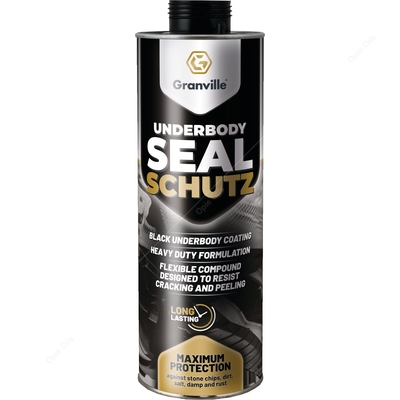
Granville Underbody Seal Schutz Spray provides robust all weather protection for vehicle undersides in typical UK driving conditions. The spray forms a durable flexible coating that guards against water ingress, road salt, grime and stone chip damage to sills, chassis sections and floor areas. It suits both cars and vans and adheres well once the underbody has been cleaned of loose material.
Application usually involves even spraying, often with extension nozzles to reach cavities and seams where moisture collects. Many workshops and home mechanics in Britain include it in annual maintenance programmes to help preserve structural integrity through repeated winter exposure. The coating supports longer term vehicle preservation by limiting the conditions that allow new corrosion to start in hidden areas commonly affected by British weather patterns.
-
Key features
-
Creates a flexible protective barrier against water, salt, grime and stone chips
-
Designed for underbody panels, sills and chassis on cars and vans
-
Suitable for spray application with extension nozzles for cavities and seams
-
Accurate data and information
-
Provides all weather durable protection suited to UK road conditions and seasonal changes
-
Used by professional workshops and DIY motorists for regular underbody maintenance
-
Helps reduce moisture retention in hidden vehicle areas exposed to road spray and damp
13. HMG Paints

Ferrozinc Rust Converter is a premium water thinnable product manufactured by HMG Paints in Manchester, United Kingdom under ISO 9001 standards and holding Made in Britain accreditation. It neutralises rust on metal surfaces and produces a stable foundation suitable for direct painting with minimal surface preparation in many cases. UK drivers use it for targeted treatment of corrosion on body panels, wheel arches and underbody components that arise from exposure to salted roads and persistent damp during British winters.
The single pack material is applied by brush or spray after loose rust and dirt have been removed. It reacts efficiently to transform corroded areas into a paint ready layer. Classic car restorers and professional workshops value its straightforward role in preparing metal for topcoats while offering interim protection against ongoing deterioration in typical UK conditions.
-
Key features
-
Water thinnable single pack formula for straightforward brush or spray application
-
Converts rust and creates a stable paint ready surface with minimal preparation
-
Suitable for automotive bodywork, underbody sections and industrial metal treatment
-
Accurate data and information
-
Manufactured in Manchester under ISO 9001 quality management and Made in Britain standards
-
Designed for efficient rust neutralisation on ferrous metals prior to overcoating
-
Supports restoration and maintenance work on vehicles exposed to UK winter road conditions
14. Holts

Holts is a long-established British automotive brand with decades of experience supplying practical car care solutions to UK motorists and workshops. Their rust converter range is designed for straightforward treatment of surface corrosion on body panels, wheel arches and chassis areas commonly affected by road salt during damp British winters.
The formula reacts with active rust to create a stable black layer that prepares the metal for painting or further protection without requiring heavy mechanical removal in many cases. Water based options provide lower odour during application, making them suitable for use in home garages or enclosed spaces.
Many owners of everyday vehicles and classic cars rely on these products for targeted spot repairs that help maintain appearance and slow the progression of corrosion. The range supports both quick maintenance tasks and more involved restoration work where early intervention prevents larger structural issues from developing over time.
-
Key features
-
Water based low odour formula suitable for garage and indoor application
-
Chemically converts surface rust into a stable black layer ready for overcoating
-
Designed for body panels, wheel arches and chassis spot treatment on cars and vans
-
Accurate data and information
-
Established UK brand with products formulated for typical British winter road conditions
-
Used widely for DIY and professional spot rust neutralisation on vehicles exposed to salt and moisture
-
Creates a reliable foundation for subsequent paint or protective coatings in maintenance and restoration
15. Tetrosyl

Tetrosyl is a major UK manufacturer of automotive chemicals headquartered in Greater Manchester and supplies a broad range of car care products through its well known CarPlan and associated lines. Their rust treatment and underbody protection products include converters that stabilise existing corrosion on ferrous metal surfaces as well as flexible sealants formulated to shield against water, salt and abrasion on vehicle undersides.
These solutions are developed with the demands of the British climate in mind, where frequent rainfall and winter road treatments accelerate rust formation on sills, floor pans, chassis rails and cavities. Professional workshops and home mechanics apply the products after basic surface cleaning to create durable barriers that help preserve structural integrity. The range supports both preventive application on newer vehicles and remedial work on older cars, contributing to longer term vehicle preservation and roadworthiness in conditions typical across the UK.
-
Key features
-
Includes rust converters and flexible underbody sealants for comprehensive protection
-
Suitable for ferrous metal surfaces on cars, vans and commercial vehicles
-
Formulated for application in cavities, seams and exposed underbody areas
-
Accurate data and information
-
Manufactured by a long standing UK company based in Greater Manchester
-
Products developed to address corrosion challenges from road salt and damp weather common in Britain
-
Used in both professional workshop environments and DIY maintenance routines for ongoing vehicle care
16. KBS Coatings RustSeal
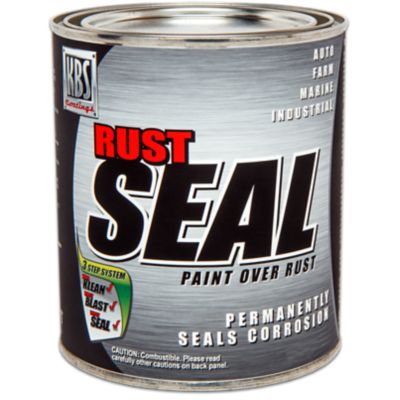
KBS Coatings is based in Valparaiso, Indiana, and builds rust control around a three step sequence rather than a single tin. The firm is known among hot rod and truck restorers for RustSeal, a one part moisture cure coating that bonds to cleaned and etched steel on frames, floor pans, tanks and suspension parts. Prep usually starts with KBS Klean to strip grease, then RustBlast to remove remaining oxide and leave a zinc phosphate etch, then RustSeal as the sealing coat.
The cured film is hard and low porosity, and the company positions it as a barrier that does not rely on sacrificial zinc. Kits exist for motorcycles, mid size chassis work and full frames. The same catalogue includes tank sealer, high heat engine coatings and a clear finish, so shops can stay inside one system from bare metal to topcoat. Manufacture is in the United States and the line is aimed at builders who want a documented process rather than a supermarket spray.
-
Key features: moisture cure single component film, three step clean etch seal process, use on frames floor pans tanks and lightly rusted steel, brush roller or spray application, companion tank sealer and high heat coatings.
-
Accurate data and information: headquarters in Valparaiso, Indiana. RustSeal is specified with heat resistance up to 600 F on the cured film. Coverage is commonly quoted around 50 square feet per quart depending on film build. The company markets the system to automotive, marine and industrial users across the United States.
17. Woolwax Undercoating
Woolwax is made by Kellsport Products in Fall River, Massachusetts, and is a thick lanolin undercoating rather than a paint or converter. The formula is built from wool grease and is sold without solvents in the coating itself. That chemistry is meant to cling to underbody steel, stay pliable through winter salt and close again after stone nick damage. Municipal fleets, fire departments and snow equipment operators are a core audience because ice control chemicals stay on chassis metal long after the storm.
The film can be sprayed in natural or black tint and is used on cars, trucks and trailers that see repeated brine. It is not a rust converter. Active scale still needs cleaning first. Owners treat it as a renewable barrier that is inspected and refreshed, which is why shops that specialise in winter belt vehicles keep it on the gun rather than treating it as a one time chassis paint.
-
Key features: solvent free lanolin film, self healing flexibility, cavity and underbody spray use, natural or black finish, designed for salt and ice control exposure.
-
Accurate data and information: manufactured in Fall River, Massachusetts, United States. Kellsport has supplied the product to municipal and snow removal fleets as well as retail installers. Protection is commonly described by applicators as a multi season film when coverage is complete and the vehicle is washed of packed salt.
18. CorrosionX Heavy Duty
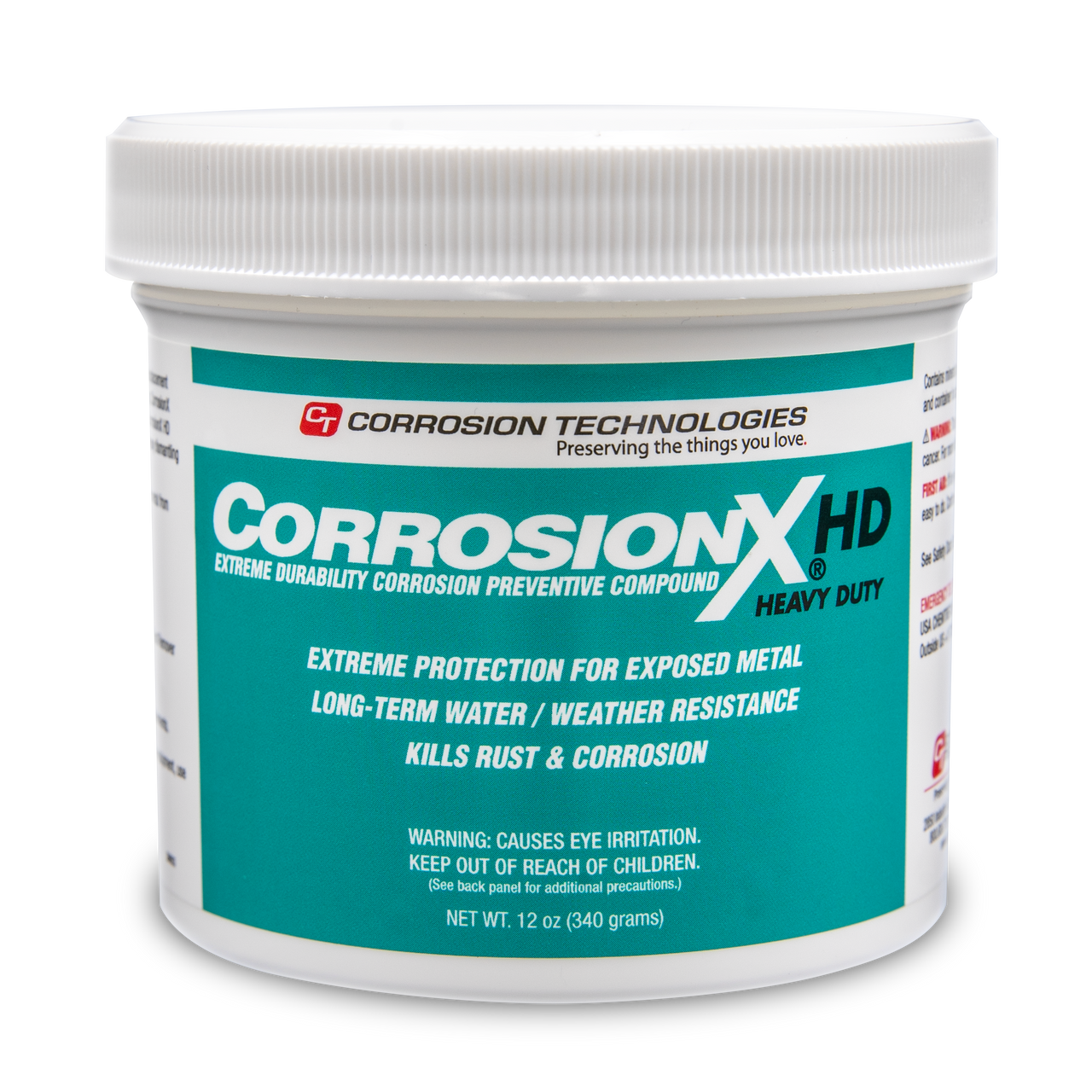
Corrosion Technologies is headquartered in Garland, Texas, and grew out of aviation work that began in 1988. CorrosionX uses a fluid thin film approach that wets metal, creeps into seams and leaves a protective layer that also lubricates. Heavy Duty is the thicker grade used on vehicle undersides, trailers, farm kit and marine fittings where a light aircraft film would not last. The same company supplies aviation, firearms and marine versions, and some products carry National Stock Numbers for United States government supply.
On cars the typical use is cleaned but not perfectly blasted steel, including surface rust that the fluid can wet through. It is not a decorative chassis paint and it is not a phosphoric converter. Shops choose it when they want a removable, inspectable film rather than a baked on shell. That aviation origin still shapes how the product is described: penetrate first, displace moisture, then keep a thin active barrier in place.
-
Key features: fluid thin film coating, moisture displacement, Heavy Duty grade for underbodies, related aviation and marine grades, spray or aerosol application into seams.
-
Accurate data and information: company founded in 1988 and based in Garland, Texas. Products are used in general aviation, marine and automotive maintenance. Selected Corrosion Technologies items are listed with National Stock Numbers through United States defence logistics channels.
19. Magnet Paint Chassis Saver

Chassis Saver is a single component, high solids chassis coating from Magnet Paint Company in the United States. It is written for truck and auto frames that still carry tightly bound rust after wire brushing. The film moisture cures into a hard, glaze like layer that the maker compares with a powder or baked finish, yet no separate hardener is mixed in. The coating is intended to isolate steel from air and water so remaining oxide cannot keep growing. Fleet history is part of the story.
The product has been used on heavy trucks and snow equipment, and literature cites United States military and Ohio Department of Transportation attention for vehicles that live in salt and liquid calcium chloride. It is sold as both primer and finish on frames, floor pans, inner wings and engine bays. Smooth new steel needs a scratch profile because the coating bites best on a rough face.
-
Key features: high solids moisture cure chassis paint, direct use over tight rust after brushing, no separate catalyst, fuel oil salt and chemical resistance claims, several black finishes.
-
Accurate data and information: Magnet Paint has published Chassis Saver as a VOC compliant single component coating for automotive and commercial fleet refinish. Company literature cites field use on snow and ice vehicles and notes U.S. military and Ohio DOT interest in corrosion reduction on treated equipment.
20. Master Series Mastercoat
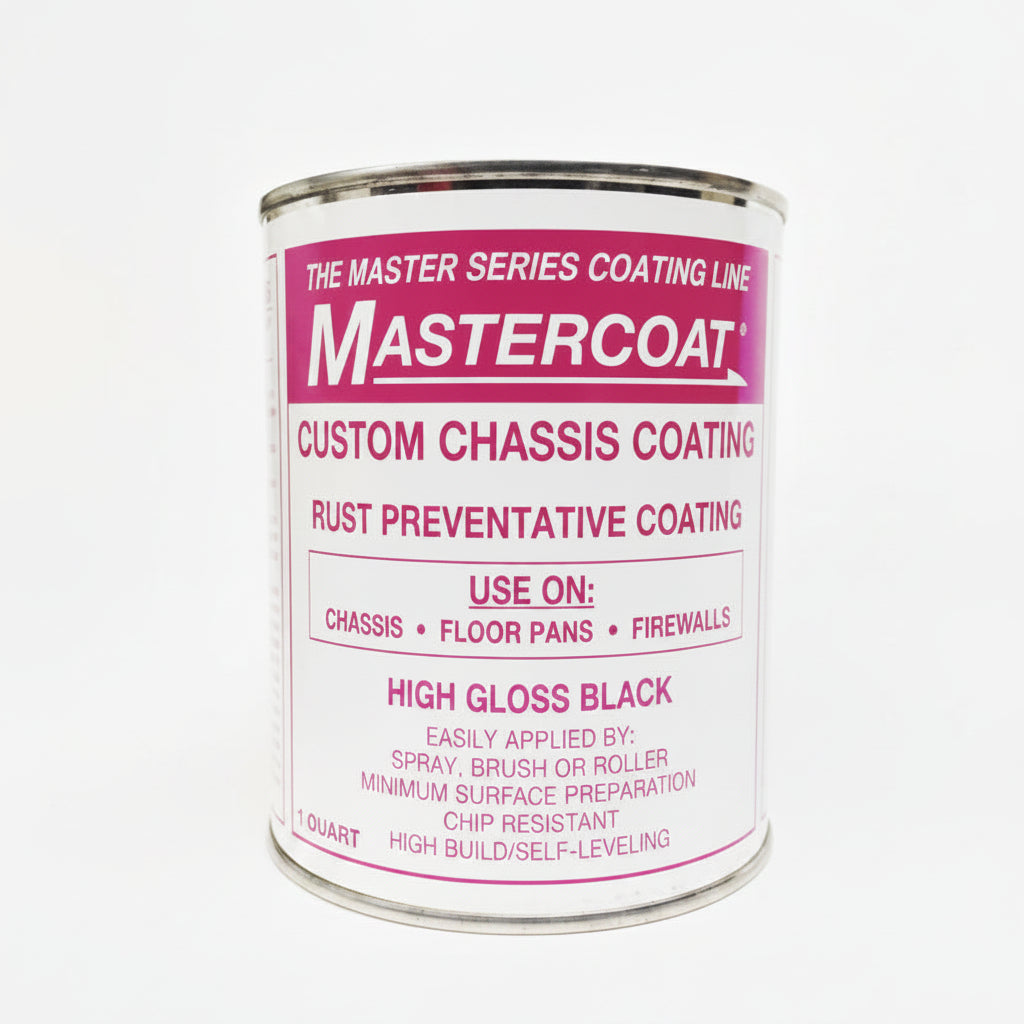
Master Series Coatings, sold under the No More Rust name, is a United States restoration line built around rust sealing and chassis finishing rather than a hardware store converter. Mastercoat Permanent Rust Sealer is aimed at pitted steel that still has tight oxide after cleaning. A companion Extreme grade is sold for deeper pits that need filling before a finish coat.
Mastercoat AG111 is the chip resistant chassis finish, originally associated with harsh transit and industrial settings and later used on vehicle undersides that take salt and stone. The company argues that a sealed, UV stable system should stop rust from travelling past a scratch, which is why restorers use the sealer and the chassis black as a pair. This is workshop chemistry for frame off or rotisserie work, not a five minute aerosol for one blister. Surface prep and film build are treated as part of the specification.
-
Key features: permanent rust sealer for pitted steel, Extreme grade for deep pits, AG111 chip resistant chassis finish, UV stable top system, restoration and industrial use.
-
Accurate data and information: the maker publishes salt spray performance for the Mastercoat system at 14,000 hours in its own technical claims. The line is sold to classic restorers and fabricators in the United States who want a sealer plus chassis finish rather than a single moisture cure black.
Common Causes Of Car Rust In The Uk Climate
Road salt used in winter accelerates corrosion on underbody components. Water collects in seams and cavities where it stays hidden until damage appears. Older cars without modern galvanising face higher risk.
Coastal areas see faster rust because of salt air. Even modern vehicles benefit from extra protection in these conditions.
Choosing The Right Product For Your Car
Match the treatment to the job. Converters suit active rust spots while cavity waxes protect hidden areas. Consider how easy the product is to apply and whether you want a visible or clear finish.
Test a small area first to check compatibility with existing paint.
Preventing Future Rust After Treatment
Keep the underbody clean and check drains in doors and sills. Touch up any chips promptly. Annual inspections catch new spots early.
How to Choose the Best Car Rust Treatment for Your Car in the UK
UK drivers face particular challenges from damp winters and salted roads that speed up corrosion on bodywork and structural areas. The right choice often starts with understanding the type of rust present and the conditions the vehicle encounters most often. Many motorists select solutions from the rust converter collection when they need to stabilise active corrosion quickly before moving on to longer-term protection.
Several practical points help narrow down the options. The severity of the rust makes a difference, as light surface spots respond well to conversion treatments while deeper pitting may require more thorough preparation first. Location on the vehicle also matters, since exposed panels need different handling compared with hidden sections that trap moisture. Ease of application plays a role too, especially for those carrying out work at home versus in a workshop setting. Compatibility with existing paint or planned topcoats is another factor, as some formulas create a ready surface while others focus purely on stopping the spread.
Drivers in coastal regions or those who cover higher mileage tend to prioritise products that offer strong resistance to salt and moisture over extended periods. Checking the finish required, whether a paintable layer or a rust shield, helps match the product to the job. Taking time to match these details to the specific vehicle usually leads to more reliable outcomes through the changing UK seasons.
Best Car Rust Treatment for Specific Areas: Wheel Arches, Sills, Underbody and Chassis
Different parts of a car experience rust in distinct ways because of how water, salt and debris collect. Wheel arches often see the first signs after winter because they catch spray from the road, so treatments that form a flexible seal after conversion tend to perform well here. Sills and lower body sections face similar exposure plus the risk of trapped moisture in seams, making products that penetrate and displace water particularly useful.
Underbody and chassis areas present their own demands. These zones stay wet for longer and receive constant abrasion from road grit, so thicker or creeping formulas that reach into box sections and cavities provide better defence. Many UK vehicles benefit from combining surface treatment on visible rust with the rust protection. Classic cars and everyday models alike show improved longevity when the treatment suits the exact location rather than using a single approach across the whole vehicle.
Application technique also varies by area. Vertical surfaces such as door edges or arches may need non-drip versions, while horizontal underbody work can use sprays with extension nozzles for better reach. Matching the product texture and protective qualities to each zone helps maintain structural integrity through repeated UK winter cycles.
Will rust fail an MOT in the UK?
Rust on a car is an MOT issue when it weakens a prescribed area. That usually means metal close to suspension mounts, steering points, seatbelt anchors or other load-bearing structure. Light surface rust on a non-structural panel is a different matter. A tester is looking at strength, sharp edges and holes, not every brown mark on a wing.
Chassis rust treatment sits in the middle of that check. Sills, jacking points, floor pans and chassis rails take the salt and water first. Once the metal is thin or holed, a coating cannot put strength back. A rust converter can stop active corrosion on sound steel and leave a stable, dark layer ready for paint or wax. It does not repair rotten metal.
Testers still inspect under fresh coatings. A thick black film over flaking scale can look tidy and still fail if the steel behind it has gone. The safer sequence is clean, treat, then protect.
Common MOT rust spots on UK cars include:
-
Outer and inner sills
-
Wheel arches and arch lips
-
Jacking points and nearby floor edges
-
Chassis rails and crossmembers
-
Suspension turrets and subframe mounts
Surface bloom after winter is often treatable. Bubbling paint, soft metal and holes through a box section are repair jobs first. After sound metal is left, motor care products such as hollow section cavity wax reach the voids water uses. A car rust proofing kit groups converter and cavity wax for that inside-and-out job.
Sharp, corroded edges can fail even when the panel still looks attached. That is why loose scale is cleared before any rust treatment goes on. The same logic applies after welding. New steel still needs a rust converter primer or a compatible primer, then a flexible barrier, or the joint starts again from the cut edge. A follow-up coat from the best underbody rust protection keeps salt off the repaired face.
Rust converter vs rust remover vs underseal vs cavity wax
These four jobs are not the same. Mixing them up is how rust gets sealed in and kept wet.
A rust converter reacts with iron oxide and turns it into a stable compound. The metal stays in place. The finish goes dark and accepts most paints. That is the usual choice for light to moderate rust on panels, arches and rails where full stripping is awkward. Rust converter liquid suits brush work on larger patches. A rust converter epoxy aerosol suits spots and edges.
A rust remover dissolves the oxide so it can be wiped or rinsed away. Bare metal is left. That suits pitted steel, parts you can take off, and any area where the metal must be seen before a structural call is made. Thick rust remover stays put on upright sills. Rust remover gel is useful on chips. Original rust remover liquid works for brushing, spraying or dipping smaller parts. A spray-on rust remover reaches seams a brush misses.
Underseal is the outer skin. It sits on the underbody and fights stone chips, grit and road spray. It is a barrier, not a rust killer. Anti-stonechip bodywork protection is the flexible coat used on sills, lower panels and exposed chassis faces after the rust itself has been treated.
Cavity wax is the inner film. Doors, box sections and chassis rails trap water you cannot see. Hollow section cavity wax creeps along seams with an extension straw. Waxoil is the related outer wax used on underbodies and arches when a clear, flexible film is wanted.
A simple match-up:
-
Active rust on sound steel: converter from automotive rust converter options
-
Heavy scale that must come off: remover from the rust remover range
-
Hidden box sections and door bottoms: cavity wax
-
Exposed underbody after treatment: waxoil or underbody coating from rust protection
-
Lower body chips and salt spray: anti-stonechip coating
Chassis rust treatment usually uses more than one of these. Loose rust is cleared. Remaining oxide is converted or removed. Then cavity wax goes inside and a flexible coat goes outside. Painting over a converted patch follows the same order used in how to paint over rust. A rust converter primer stage is what gives later rust treatment paint something solid to hold.
Latest News In 2026
Car rust treatment in 2026 is less about one miracle tin and more about matching the layer to the metal. Formulas now dry into flexible films that move with a chassis instead of cracking on the first cold morning. That matters on UK cars that see wet roads, then a heated garage, then salt again.
Chassis rust treatment has also shifted toward two-stage systems. A converter or remover still handles the oxide you can see. A creeping wax then deals with the seams you cannot. Aerosol heads and longer straws are built for sills, door bottoms and rail ends, which is where winter water sits.
Makers have also split finishes more clearly. Clear wax and rust shield style lacquers leave the metal visible so later checks stay easy. Black stonechip and bitumen-style coats hide the underside and take grit. Both have a place. The choice is whether the owner needs to watch the steel or wants a tougher outer skin.
Modern galvanised panels still rust at cut edges, seam sealer breaks and stone chips. Older uncoated classics still need full inner wax. The 2026 ranges in project kits and automotive rust converter collections reflect that split. Fast-reacting converters sit next to cavity wax and underbody coats rather than replacing them.
Winter timing has stayed practical. Treatment still bonds best on dry metal. The change is product flexibility after that first coat, so a late autumn job is less likely to split when the temperature swings. The best underbody coating and wax oil spray guides now treat those top-up layers as part of ordinary motor care, not a one-off restoration trick. An anti rust primer still sits between converted steel and colour when the panel will be painted.
FAQ
What is the main difference between a rust converter and a rust remover?
A rust converter chemically transforms existing rust into a stable compound that stops further corrosion and creates a good base for painting. In contrast, a rust remover dissolves and lifts the rust away to reveal clean bare metal underneath. Both approaches work well depending on how much rust is present and whether you prefer to treat it in place or remove it completely before protection.
Can I apply car rust treatment myself or should I use a professional?
Many drivers successfully apply car rust treatment at home using aerosols, brushes and basic preparation tools. The process involves cleaning the area thoroughly and following the product instructions carefully for the best bond. Larger scale jobs on the underbody or chassis often benefit from professional equipment such as lifts for easier access and more even coverage.
How long does treated rust stay protected in UK weather?
Treated rust stays protected for several years when you prepare the surface properly and apply suitable topcoats or cavity waxes afterwards. The rust converter creates a stable layer that resists moisture and road salt common in British conditions. Regular inspection and touch ups help maintain that protection over time.
Does car rust treatment work on painted surfaces?
Car rust treatment works best when applied directly to bare or lightly rusted metal after removing loose paint and debris. Some products can blend into the edges of sound painted areas for seamless repairs. Always ensure the surface is clean and dry so the treatment bonds effectively with the metal.
Why is cavity wax an important part of comprehensive car rust treatment?
Cavity wax reaches inside box sections, doors and hidden panels where water often collects unnoticed. It displaces moisture and forms a flexible barrier that prevents new rust from starting in these vulnerable spots. Using cavity wax together with surface rust treatment gives more complete protection across the whole vehicle.
What is the main difference between a rust converter and a rust remover?
A rust converter relies on a chemical reaction that changes active iron oxide into a stable, dark compound, which bonds to the metal and stops further corrosion from developing. This creates a surface that accepts paint or additional coatings without the need to strip every trace of rust away. A rust remover, by contrast, breaks down and lifts the corrosion through acidic or chelating action to expose clean bare metal underneath. The distinction matters most when access is limited or when preserving as much original material as possible is the priority.
Can I apply car rust treatment myself or should I use a professional?
Surface-level work on accessible panels can be carried out successfully at home with thorough cleaning and the right application tools. Jobs that involve reaching into chassis sections or treating large underbody areas often require specialist equipment such as lifts and targeted sprayers to achieve consistent coverage. Safety considerations, including proper ventilation when using solvent-based products and protection from overspray, also influence the decision for extensive work. Experience in recognising hidden moisture traps and knowing when additional protective layers are needed can affect the long-term success of DIY efforts.
How long does treated rust stay protected in UK weather?
The effective lifespan depends heavily on how well the surface was prepared before treatment and whether follow-up protective coatings or waxes were applied over the top. Repeated exposure to road salt and prolonged dampness tests any barrier more severely than occasional moisture, so regular removal of salt deposits helps preserve the layer. Periodic checks for new spots or wear in high-exposure zones allow timely touch-ups before corrosion restarts. Combining surface treatment with products that reach enclosed spaces supports more consistent defence through winter cycles. These maintenance habits directly affect how often reapplication becomes necessary on vehicles used in British conditions.
Does car rust treatment work on painted surfaces?
Most treatments bond most effectively to bare metal or areas where loose paint and rust have already been removed. Some formulas can be blended carefully into the edges of sound paintwork to seal the repair without causing lifting or bubbling in the surrounding finish. Testing compatibility on a small hidden section first reduces the risk of unexpected reactions with existing coatings. Feathering the edges smoothly and allowing full drying before any overcoating improves the appearance and durability of the repair. Careful preparation around painted areas supports seamless integration with the original finish.
Why is cavity wax an important part of comprehensive car rust treatment?
Cavity wax penetrates deep into box sections, door cavities and chassis rails where surface treatments cannot reach effectively. It displaces trapped moisture and leaves a flexible film that continues to guard against condensation and salt that enters through small openings. This internal protection complements work carried out on visible panels by addressing the hidden starting points of structural corrosion that are common in UK vehicles. Without it, water retained in enclosed spaces can remain in contact with metal for extended periods and accelerate damage from within.
Can rust treatment hide damage from an MOT tester?
No. An MOT look at corrosion is about remaining metal thickness and whether a mount or rail can still take load. A converter, wax or underseal changes the surface, not the strength of steel that has already gone thin. Testers can lift fresh coatings, tap suspect spots and fail sharp edges even when the finish looks new. Chassis rust treatment is useful after the structure is sound, because it slows the next attack on the same joint. Hiding scale under a black coat only delays the same advisory or fail at the next test.
What is chassis rust treatment?
Chassis rust treatment is the combined work on the car’s load-bearing steel, not a single product name. It covers rails, sills, outriggers, floor edges and the hollow sections that feed those parts. A rust restorer stage handles the oxide that is already there. Protection then splits in two: inner cavity wax for trapped moisture and an outer flexible coat for grit. The aim is to keep water and salt off steel that still has its original thickness.
Can I treat rust on a damp underbody in winter?
Most converters, removers and waxes bond poorly to wet, salty film. Water dilutes the reaction and stops wax from clinging to the steel. A winter underbody wash that clears packed mud from arches and rail ends comes before any metal treatment. Once the surface is dry to the touch, a rust converter trigger spray can still be used on cold days because it does not need workshop heat to start the colour change. Wax and stonechip coats wait until the converted layer has dried through, not just gone dull on top.
Does galvanised steel still need rust treatment?
Factory zinc slows rust on intact skin, but it is thin at cut edges, spot welds and stone-chip craters. Those breaks expose ordinary steel to the same road salt as an older chassis. A UK automotive rust converter is for the rusty steel in the wound, not for bright zinc that is still intact. After the oxide is stable, a local rust shield or primer seals the break so the surrounding galvanising is not undercut from the chip.
What happens if underseal goes over active rust?
Live rust keeps drawing in moisture. A thick outer coat then holds that damp against the steel and makes later inspection harder. Scale also gives the underseal a weak base, so the film lifts in sheets after a few winters. Active rust is turned with a converter or lifted with a heavy duty rust remover first. Anti-stonechip schutz or a similar underbody coat is the weather skin that goes on last, over stable metal.
Can rust treatment go on brake lines or exhausts?
Standard body and chassis products are made for ferrous panels that stay relatively cool. Brake pipes, fuel lines and exhausts face heat, pressure and different metals, including coated steel and stainless sections. A converter or wax on a hot exhaust bakes off or smokes. A coating on a brake line can hide pitting that should be a replacement decision. Those parts stay with line-specific cleaners and factory-style coatings, while motor care rust products stay on sills, rails and floors.
Should rust be treated before or after welding?
Welding needs clean, solid steel at the joint. Heavy scale and converter residue both interfere with the weld pool, so rotten metal is cut out first. After the new section is in, the heat-affected edge and the old steel around it are the next rust risk. That border is where a rust converter epoxy aerosol or an anti rust primer seals the repair. Cavity wax through nearby drain holes then protects the inside of the new box so the weld is not attacked from behind.
How often does cavity wax need a top-up after chassis rust treatment?
The first injection is the full coat along the sill, rail or door. Later visits are checks, not a full strip. Wax thins at drain holes, stone-chip scars and places where a pressure washer has cut the film. An annual look with a torch at those exits shows whether the sheen is still wet-looking or has gone dry and dusty. A short top-up through the same holes refreshes the hollow section cavity wax without repeating the whole car rust proofing kit process.
Will a rust converter work on aluminium panels?
A rust converter is built for iron oxide on steel and iron. Aluminium makes a different white or grey corrosion product, so the same chemistry does not form that dark, paint-ready layer. Alloy wings, doors and covers need alloy-safe cleaners and coatings instead. Where a steel repair sits next to aluminium, the converter stays on the steel only, with masking so overspray does not mark the alloy. Rust treatment paint on the steel side still follows after the converter has cured.
Read Also:
Discover Our Best Car Rust Treatment in the UK - Jenolite



