
Best Plastic Primer in UK (2026)

Plastic surfaces can be tricky to paint without the right preparation, which is why a quality plastic primer makes all the difference. Whether you are refreshing garden furniture, restoring car bumpers or updating models and planters, the best plastic primer in UK creates a strong bond that prevents peeling and delivers a smooth, lasting finish.
Plastic primers work best when paired with the correct topcoat and surface treatment, especially for mixed-material projects. If you are also painting metal fixtures or trims, choosing the best metal primer spray paint in the UK or the best metal primer in the UK can improve adhesion and durability. For decorative finishes, many DIY enthusiasts combine primers with the best chrome spray paint or use the best chrome paint for plastic to achieve a polished look. To help prevent corrosion on exposed surfaces, applying the best UK anti-rust paint spray adds extra long-term protection.
Discover Our Best Plastic Primer in UK - Jenolite
Understanding Plastic Primers and Their Importance

Plastic primer prepares hard-to-paint surfaces so topcoats adhere properly and last longer. Many UK homeowners and professionals rely on these primers for projects exposed to weather, such as outdoor furniture or vehicle trim, because untreated plastic often repels paint. A good plastic primer fills minor imperfections, improves coverage and creates a durable base that stands up to daily wear. Choosing the right one depends on the type of plastic, the environment and the topcoat you plan to use.
High-performance plastic primer options help achieve professional-looking results without specialist equipment.
Key Factors to Consider When Selecting a Plastic Primer in the UK
Focus on formulas that bond to common plastics such as polypropylene, PVC, ABS and fibreglass. Quick-drying aerosols suit most DIY tasks, while high-build versions work well for filling small scratches. Look for products made for both indoor and outdoor applications, especially in the UK’s variable climate. Compatibility with your chosen topcoat matters too, as some primers pair best with acrylic or enamel paints.
The primers collection from Jenolite includes versatile options that complement their plastic primer range.
Best Plastic Primers in the UK (2026)
1. Jenolite - Best Plastic Primer in UK
Jenolite Plastic Primer delivers strong performance across a wide range of plastic surfaces that many find difficult to paint. The aerosol range features a modern acrylic formulation developed to bond exceptionally well to materials such as polypropylene, polyethylene, PVC, ABS, fibreglass, resin and vinyl plastics. This versatility makes the primers ideal for everyday UK projects including garden furniture, planters, pots, car bumpers, trim pieces and plastic models.
Suitable for interior and exterior applications, the primers create a smooth and durable base that helps topcoats stick firmly and resist peeling over time. The spray format allows for quick and even application with minimal effort, while the quick drying nature supports efficient workflows for both DIY enthusiasts and professionals. As a brand based in Britain, Jenolite emphasises quality surface preparation that simplifies challenging tasks and produces reliable, professional looking results.
The range stands out for its superior adhesion on hard to paint plastics, consistent coverage and a finish that pairs effectively with various topcoat types. Many users appreciate how it transforms worn or faded items into refreshed pieces that withstand daily use and the British climate.
PLASTIC PRIMER AEROSOL | 400ML

PLASTIC PRIMER AEROSOL | 400ML
DESCRIPTION
-
PLASTIC PRIMER: JENOLITE Plastic Primer Aerosol is a specially formulated primer paint, that has fantastic bonding properties to almost all types of plastic and prepares for top coating.
-
SUPERIOR ADHESION: Fantastic bonding properties for hard-to-paint surfaces. Using a modern acrylic formulation it enables fantastic adhesion to the smoothest of surfaces and provides a very durable finish.
-
INTERIOR & EXTERIOR USE: Developed for interior and exterior use. Wide range of uses and ideal for use on plastic garden furniture, planters, pots, plastic models, and most other hard plastic surfaces.
-
FOR MOST PLASTICS: Suitable for use on most types of plastic including polypropylene, resin, PVC, fibreglass and vinyl plastics.
-
FAST & EASY TO USE: Simple to use, quick drying and leaves smooth surface ready for topcoat.
-
MADE IN BRITAIN
ANTI-RUST PRIMER SPRAY PAINT | 400ML | METAL PRIMER

ANTI-RUST PRIMER SPRAY PAINT | 400ML | METAL PRIMER
DESCRIPTION
-
HIGH-QUALITY ANTI-RUST PRIMER: JENOLITE Anti-Rust Primer Spray Paint delivers premium metal protection, extending the durability of your metal items and structures.
-
COMBATS RUST AND CORROSION: Featuring elevated zinc levels, this primer spray is engineered to aggressively tackle rust, making it an excellent complement to our lineup of rust removers, converters, and Directorust spray paint.
-
ENHANCES BONDING: This primer for metals boosts surface grip to create an optimal base for top-coating, compatible with both water-based and oil-based paint finishes.
-
VEHICLE AND EQUIPMENT APPLICATIONS: Thanks to its exceptional anti-corrosion capabilities, it's perfect as a primer spray for automobiles, trucks, motorcycles, plus garden tools, industrial gear, and bicycles.
-
PRODUCED IN THE UK
PRIMER FILLER | 400ML AEROSOL SPRAY PAINT

PRIMER FILLER | 400ML AEROSOL SPRAY PAINT
DESCRIPTION
-
HIGH FILL PRIMER: Ideal for filling small surface imperfections to ensure a smooth surface ready for top-coating.
-
SMOOTH FINISH: Apply several coats to build up a totally smooth finish.
-
MULTI-SURFACE PRIMER: With a tough acrylic formula, this product is suitable for priming metal, wood and plastic prior to top-coating.
-
READY TO OVERCOAT IN 24HRS: Quick drying formulation, allows top coat after 24hrs.
-
COMPATIBLE TOPCOATS: Compatible with cellulose, acrylic and P/u-alkyd and epoxy.
-
MADE IN BRITAIN
UNIVERSAL ETCH PRIMER | 400ML AEROSOL SPRAY PAINT

UNIVERSAL ETCH PRIMER | 400ML AEROSOL SPRAY PAINT
DESCRIPTION
-
SELF ETCHING PRIMER: Specialist etch primer for metal, plastic, and difficult-to-paint surfaces.
-
MULTI-SURFACE: Suitable for aluminium, stainless steel, galvanised metal, rigid plastics, and previously painted surfaces.
-
TOPCOAT READY: Aerosol spray ensures a smooth, even coat with minimal effort. Creates the perfect surface for application of topcoat.
-
QUICK & SIMPLE APPLICATION: Easy to apply spray can, helping the user to achieve a smooth even finish.
-
MADE IN BRITAIN
Discover Also:
2. Rust-Oleum Plastic Primer

Rust-Oleum Plastic Primer stands out as a reliable aerosol option for preparing plastic surfaces ahead of painting. The formula creates a tight bond that works effectively on common plastics including polypropylene, resin, PVC, fibreglass and vinyl. This makes it a practical choice for refreshing items like patio furniture, garden planters, storage boxes and household accessories that see regular use in the UK. The primer helps topcoats apply more smoothly and last longer by forming a stable foundation that reduces the chance of flaking or lifting.
Many users select this primer because of its straightforward application straight from the can, which allows for quick coverage on both large and detailed areas. The matt finish helps conceal minor imperfections on the plastic while providing a receptive surface for a variety of follow on paints. It performs well in both indoor and outdoor settings, offering flexibility for projects exposed to the variable British weather. Some prefer a simple clean of the surface beforehand to maximise results, yet the primer itself remains forgiving on most plastics.
Its consistent performance has made it a familiar name in UK workshops and homes where plastic restoration is common. The product supports durable finishes that keep projects looking fresh for longer. Overall it delivers dependable adhesion that simplifies the painting process and contributes to high quality outcomes without requiring specialist tools.
Key features
-
Strong bonding to hard to paint plastics
-
Matt finish suitable for wide range of topcoats
-
Versatile for interior and exterior projects
-
Convenient aerosol application
Facts and information
-
Popular for garden furniture and household plastic items
-
Helps achieve smooth professional looking results
-
Supports lasting paint adhesion on common plastics
3. Simoniz Grey Plastic Primer

Simoniz Grey Plastic Primer offers a solid choice for creating an effective base layer on various plastic materials. The aerosol formula bonds well to fibreglass, polystyrene, PVC and other rigid plastics often found in automotive trim, models and general repairs. The grey shade provides good coverage that masks small surface flaws while preparing the area for topcoats. Many UK users rely on it for motorbike panels, household items and hobby projects where a reliable foundation matters.
The primer applies easily and produces an even surface that accepts paints smoothly. Its design focuses on straightforward use that suits both casual DIY tasks and more involved restoration work. The product performs consistently in typical UK conditions, helping to deliver finishes that resist everyday wear. Some appreciate the grey tone because it blends well under lighter topcoats and reduces the need for extra coats.
Over time this primer has gained a following among restorers who value its balance of ease and effectiveness. It contributes to long lasting paint jobs by promoting strong initial adhesion on surfaces that usually challenge standard primers. The overall result is a practical solution that streamlines plastic painting projects and supports neat, durable outcomes.
Key features
-
Effective adhesion on rigid plastics
-
Grey colour that hides minor imperfections
-
Creates smooth base for topcoats
-
Suitable for automotive and hobby use
Facts and information
-
Commonly used on motorbike parts and household plastics
-
Delivers even coverage for lasting finishes
-
Favoured by UK restorers and modellers
4. U-POL Plastic Primer Adhesion Promoter

U-POL Plastic Primer Adhesion Promoter excels at preparing difficult plastic substrates for painting, adhesives or sealants. The fast drying spray targets thermoplastic olefins and other challenging plastics, making it useful for automotive repairs, custom work and restoration projects across the UK. It forms a clear layer that enhances bonding without altering the surface appearance noticeably. Professionals and serious DIY users often turn to it when dealing with plastics that typically resist paint.
The formula applies evenly and prepares surfaces quickly, allowing projects to move forward without long waits. Many find it particularly effective on vehicle bumpers, mirrors and interior trim where strong adhesion is essential. The promoter works across a broad range of plastics and supports various topcoats. Its reliability helps minimise issues such as lifting or peeling that can occur on untreated plastics.
This product has earned a reputation in the UK for tackling tricky materials with confidence. It provides a dependable base that contributes to professional results in workshops and garages. The straightforward spray format adds convenience while delivering consistent performance on demanding surfaces.
Key features
-
Universal adhesion across many plastics
-
Fast drying spray application
-
Transparent finish that preserves surface look
-
Ideal for automotive and restoration tasks
Facts and information
-
Suited to thermoplastic olefins and similar materials
-
Supports strong bonding for paints and sealants
-
Popular with UK professionals handling vehicle parts
5. Hycote Plastic Primer

Hycote Plastic Primer bonds effectively to rigid plastics such as GRP, PVC and polyurethane. The aerosol delivers a smooth professional finish with good coverage that prepares surfaces for topcoats. It suits models, bumpers and other plastic components where reliable adhesion makes a difference. Many UK modellers and restorers choose it for its consistent spray pattern and dependable results in light professional or DIY settings.
The primer creates a receptive layer that reduces the need for extensive sanding in many cases. Its formulation focuses on practical performance that holds up during regular handling or exposure. The product applies with ease and supports clean outcomes on both textured and smooth plastics. Some users value its versatility for hobby projects and small scale repairs around the home or workshop.
This primer continues to serve as a go to option for those seeking straightforward preparation on plastic items. It contributes to durable finishes that maintain their appearance over time. The overall ease of use and solid performance make it a practical addition to any painting toolkit.
Key features
-
Targeted bonding for rigid plastics
-
Smooth finish that aids topcoat application
-
Practical aerosol format
-
Suitable for models and automotive parts
Facts and information
-
Favoured by UK modellers and light restorers
-
Provides consistent coverage on common plastics
-
Supports reliable results on everyday projects
6. Paint Factory Plastic Primer Spray Paint

Paint Factory Plastic Primer Spray Paint prepares plastic surfaces with a matt base that improves paint hold. The aerosol offers simple application for garden items, furniture and general household plastics. It creates a solid foundation that helps topcoats perform better in typical UK conditions. Many choose it for quick refreshes of outdoor pieces or interior updates where ease matters.
The formula delivers even coverage that bonds well to common plastics without complicated steps. Users appreciate the straightforward spray that covers surfaces efficiently. The primer supports a range of follow on paints and contributes to finishes that look neat and last. It remains a convenient option for home users tackling plastic projects of various sizes.
This primer provides dependable preparation that simplifies the painting process. It helps achieve better adhesion on surfaces that often prove tricky. The practical design makes it suitable for regular DIY needs around the home.
Key features
-
Matt finish designed for plastic adhesion
-
Easy aerosol use for home projects
-
Compatible with various topcoats
-
Practical for garden and furniture items
Facts and information
-
Selected for quick outdoor plastic refreshes
-
Offers solid coverage for everyday tasks
-
Supports lasting paint results on common plastics
7. The Aerosol Expert Plastic Primer

The Aerosol Expert Plastic Primer provides strong adhesion to most plastics including PP, ABS and PVC. The fast drying aerosol creates a reliable base for topcoats and works for both indoor and outdoor projects. Its straightforward spray makes it accessible for hobbyists and professionals alike. Many users select it for its consistent performance on textured or smooth plastics found in models and furniture.
The formula applies cleanly and supports even finishes that enhance the final appearance. It handles a variety of repair and refresh tasks with ease. Some appreciate how it simplifies preparation on items that receive regular handling. The primer contributes to durable outcomes that stand up in UK environments.
This product remains popular for its balance of convenience and effectiveness. It delivers clean results that meet expectations for home and workshop projects. The overall reliability makes it a useful choice for plastic painting needs.
Key features
-
Strong bonding on common plastic types
-
Quick drying aerosol convenience
-
Versatile for repair and refresh work
-
Suitable for interior and exterior use
Facts and information
-
Favoured for consistent results on varied plastics
-
Supports clean finishes on models and furniture
-
Practical for hobby and small scale tasks
8. NextGrip Spray Primer for Plastic

NextGrip Spray Primer for Plastic targets car parts and other plastics with focused adhesion properties. The formula works on bumpers, mirrors and PVC surfaces while building a solid base for paint. It appeals to users seeking targeted performance on automotive and hard plastics. Many apply it for repairs on exterior trim and accessories where factory like results matter.
The aerosol format allows precise application that covers surfaces effectively. It supports strong bonding that helps topcoats adhere well. Some choose it for its suitability on PET and similar materials common in vehicles. The primer aids in achieving refreshed appearances that blend with existing parts.
This primer provides practical help for specific plastic projects in the UK. It contributes to neat outcomes on items exposed to weather or daily use. The specialised approach makes it valuable for targeted restoration work.
Key features
-
Specialised adhesion for vehicle plastics
-
Effective on bumpers and mirrors
-
Aerosol for precise control
-
Supports factory style finishes
Facts and information
-
Useful for exterior trim repairs
-
Helps refresh automotive plastic parts
-
Delivers targeted results on hard plastics
9. Halfords Plastic Pre-Primer

Halfords Plastic Pre-Primer improves paint adhesion on plastic surfaces with a clear formula that prepares items for topcoating. The compact aerosol suits quick jobs on car trim, models and household plastics. It provides a practical solution for UK drivers and DIYers needing reliable preparation. Many use it for convenient touch ups or small projects where speed counts.
The promoter applies easily and creates a receptive layer without adding visible colour. It works across a broad range of plastics and supports strong bonds with follow on paints. Some value its availability and straightforward use for everyday tasks. The primer helps achieve better coverage and durability on treated surfaces.
This pre-primer serves as a handy option widely accessible across the UK. It simplifies the painting process for plastic items and contributes to neat final results. Its compact design fits well into home toolkits.
Key features
-
Clear adhesion promoter for plastics
-
Simple spray application
-
Broad compatibility with plastic types
-
Designed for use before colour coats
Facts and information
-
Convenient for car trim and household items
-
Supports strong paint bonds on plastics
-
Practical choice for quick DIY jobs
10. Promatic Plastic Primer Aerosol

Promatic Plastic Primer Aerosol delivers solid adhesion and a smooth base for plastic surfaces. The aerosol suits general DIY and restoration work where quick preparation is important. It offers dependable performance on a range of plastics used in homes and workshops. Many select it for hobby projects and small repairs that require a reliable foundation.
The formula applies with ease and supports even coverage that prepares surfaces well for topcoats. It handles interior tasks and light exterior use effectively. Some appreciate its consistent results on standard plastic items. The primer contributes to finishes that look professional and hold up over time.
This aerosol remains a practical choice for those tackling plastic painting in the UK. It provides straightforward preparation that fits into busy schedules. The overall effectiveness makes it suitable for regular use in garages and homes.
Key features
-
Effective bonding for standard plastics
-
Fast drying aerosol convenience
-
Suitable for interior and light exterior
-
Practical for DIY and repairs
Facts and information
-
Chosen for hobby and small scale work
-
Provides foundation for lasting finishes
-
Supports dependable results on common plastics
11. SEM Plastic Adhesion Promoter 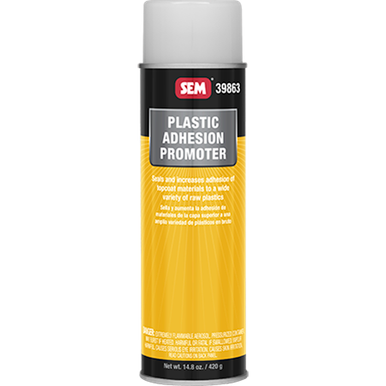
SEM Products, based in Charlotte, North Carolina, makes Plastic Adhesion Promoter for collision and plastic refinish work. Part 39863 is a 20 oz clear aerosol, with matching gallon and cone quart packs for shops that spray it through a gun. The formula is aimed at raw olefin plastics such as TPO and polypropylene, where ordinary primers often fail to key. SEM positions the product as OEM recommended and compatible with most refinish topcoats after a short flash.
Typical use is one light coat on a cleaned panel, then a wait of about 15 minutes before primer or colour. The same family includes related SEM promoters for interior plastics. Body shops use it on bumpers, trim tabs and flexible parts after a plastic cleaner such as SEM Solve or Plastic and Leather Prep.
-
Key features: clear film, olefin focused formula, aerosol plus bulk pack sizes, one light coat application, compatible with most refinish systems.
-
Accurate data and information: 20 oz aerosol part 39863, also gallon 39861 and cone quart 39864, flash time about 15 minutes, clear appearance, marketed for olefin based plastics, 5 year shelf life stated on related SEM adhesion promoter sheets.
12. SEM XXX Adhesion Promoter
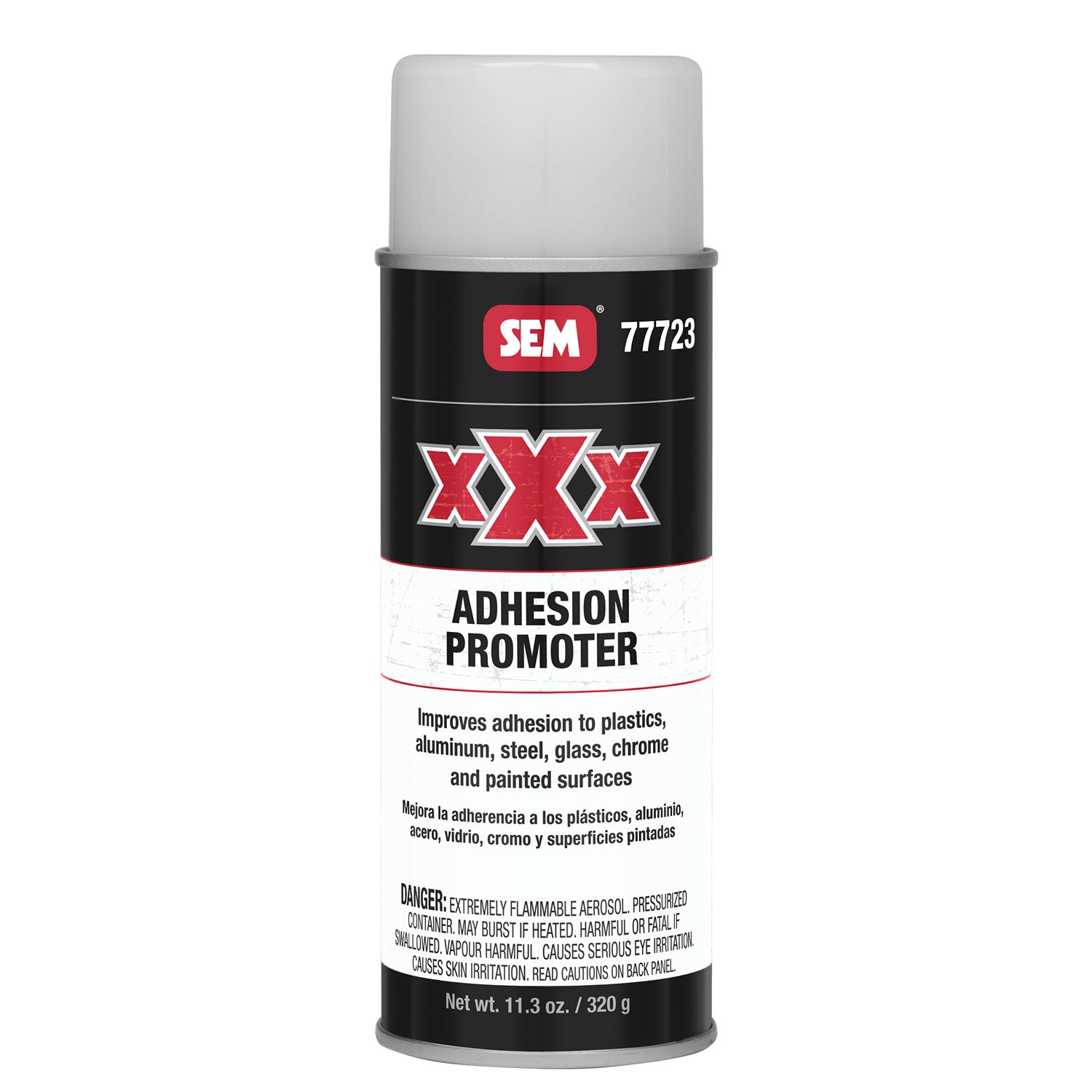
SEM XXX Adhesion Promoter is a separate SEM line sold as 16 oz aerosol 77723, plus gallon and cone quart options. It is also clear and is specified for olefin based plastics that need a stronger bond before paint, adhesives or repair materials. Application notes call for two coats with about five minutes flash between coats. Trade listings quote a VOC figure around 685 g/L and a density near 0.73 g/cm³ at 20°C.
The product is described as OEM recommended and suitable for most refinish topcoats. SEM is a United States refinish specialist, so this can is more common in collision centres than on consumer hardware shelves. Prep still starts with a plastic cleaner and a dry, contamination free surface.
-
Key features: two coat process, five minute intercoat flash, clear finish, olefin plastic focus, available in aerosol and bulk.
-
Accurate data and information: 16 oz aerosol part 77723, VOC listed at 685.4 g/L on trade sheets, density about 0.72652 g/cm³ at 20°C, flash point cited near -103°C, country of origin listed as US on distributor data.
13. Transtar Mul-TIE Adhesion Promoter 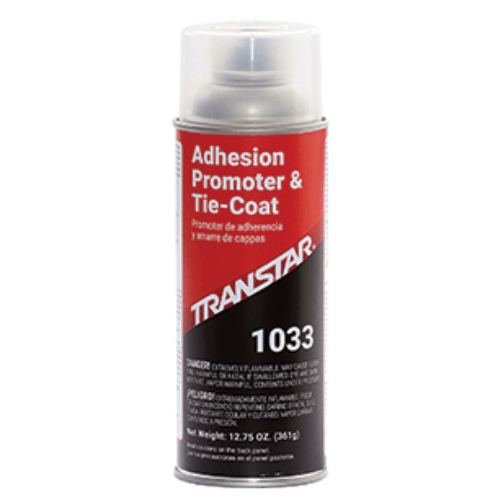
Transtar Autobody Technologies in Brighton, Michigan sells Mul-TIE as a ready to use adhesion promoter and tie coat. Aerosol 1033 is a 16 oz pack, with gallon and quart options for spray guns. The amber film is written for problem plastics such as TPO and polypropylene, and it can also sit under primer on flexible or rigid plastic, or act as a tie coat between primer and colour.
Data sheets list raw rigid plastics such as SMC and BMC, flexible ABD and PPO, and soft PUR among suitable substrates, plus aluminium and steel when used as a tie coat. Standard advice is two coats with 5 to 10 minutes flash, then 20 to 30 minutes before topcoat, with a recoat window up to 24 hours. Shelf life is listed at three years.
-
Key features: ready to use, amber clear film, plastic and metal tie coat use, two coat aerosol process, no mixing required.
-
Accurate data and information: 16 oz aerosol part 1033, gallon 1031 and quart 1034, dry time 20 to 30 minutes before topcoat, VOC actual about 4.78 lb/gal or 573 g/L on older sheets, 3 year shelf life.
14. Transtar Adhesion Primer
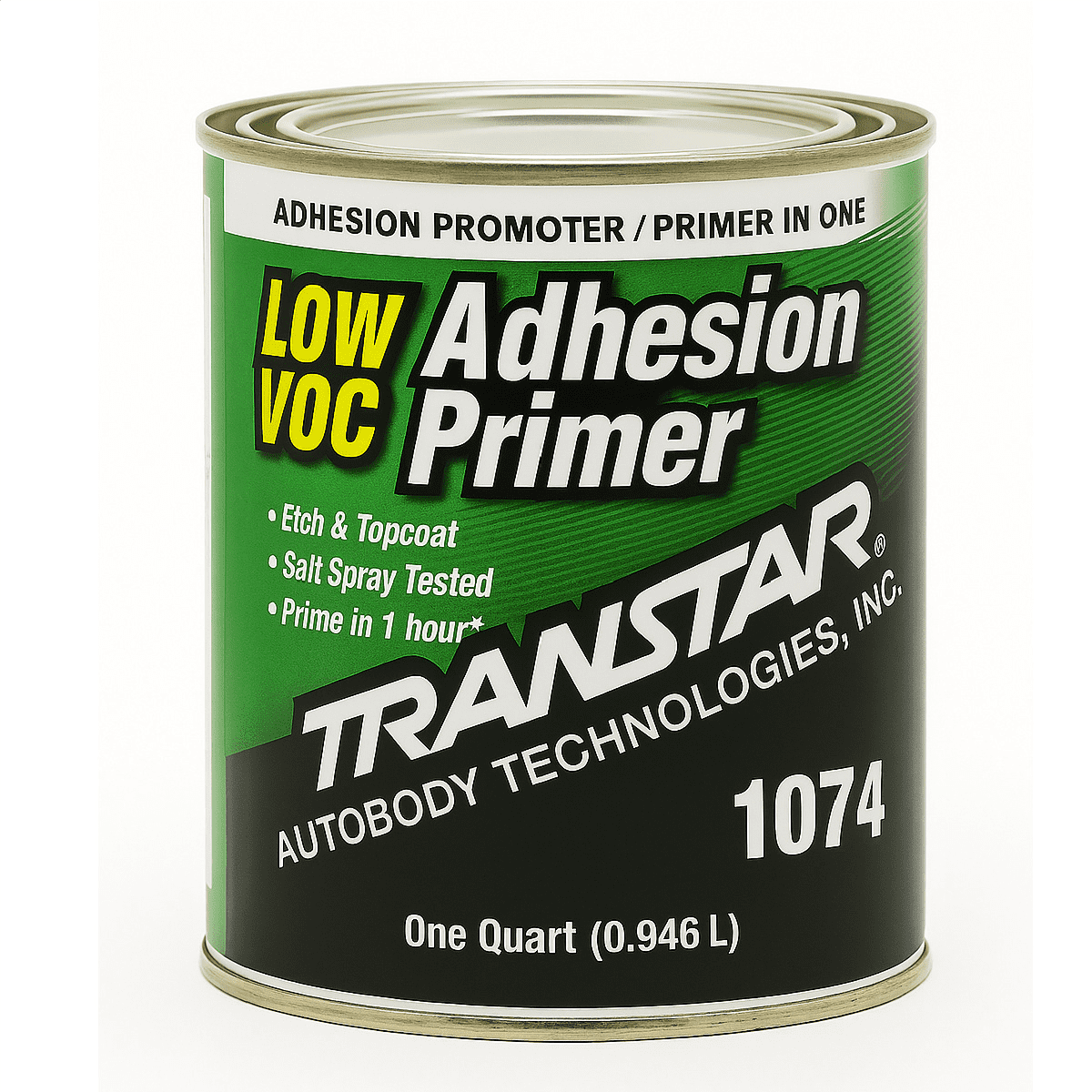
Transtar Adhesion Primer combines promoter and primer in one 1K, non sanding product for TPO and RIM bumpers. It is sold in quarts as white 1074, gray 1084 and black 1094 rather than as a clear mist coat. The company says the single step can cut prep time on raw or previously primed plastic parts.
Film build is low, about 0.2 to 0.4 mils, with ready to spray solids around 22% and coverage near 422 ft² per gallon at 0.5 mil. Topcoat time is about 30 minutes, or five minutes if force dried at 120°F. Solvent basecoats can go on wet on wet, while waterborne colour needs a 2K sealer first. Headquarters are in Brighton, Michigan.
-
Key features: 1K non sanding primer plus promoter, three colours, TPO and RIM focus, ready to spray, low film build.
-
Accurate data and information: quart packs 1074 white, 1084 gray, 1094 black, 22% RTS solids, weight about 7.67 lb/gal, topcoat after 30 minutes, force dry 5 minutes at 120°F, coverage about 422 ft²/gal at 0.5 mil.
15. SprayMax 1K Plastic Adhesion Promoter

SprayMax 1K Plastic Adhesion Promoter is sold in the United States through Peter Kwasny, Inc. in Dallas, Texas. Current US sheets describe a transparent 1K elastic primer that can go onto degreased, uncoated plastic without prior sanding. The material base is special resins or chlorinated polyolefins depending on the version.
Listed substrates include PP/EPDM, ABS, SAN, PC, PA, PUR-RIM, R-TPU, PPO, PBT, flexible PUR foam and UP-GF. Dry film thickness is only about 0.08 to 0.2 mil from one or two light coats. Coverage on newer US data is about 32 to 43 sq ft per aerosol at 0.12 mil. Flash between coats is around five minutes, with overcoating after a short final flash at 68°F. Some versions note suitability around radar sensors when the vehicle maker allows it.
-
Key features: transparent 1K film, optional no sand process, very thin dry film, fast flash, overcoatable with common fillers and topcoats.
-
Accurate data and information: US net weight about 11.1 oz on part 3680227, solids about 5% by weight, EPA/CARB category Polyolefin Adhesion Promoters, PAP limit 2.5, application window 64°F to 77°F at 40 to 60% humidity.
16. Dupli-Color Adhesion Promoter
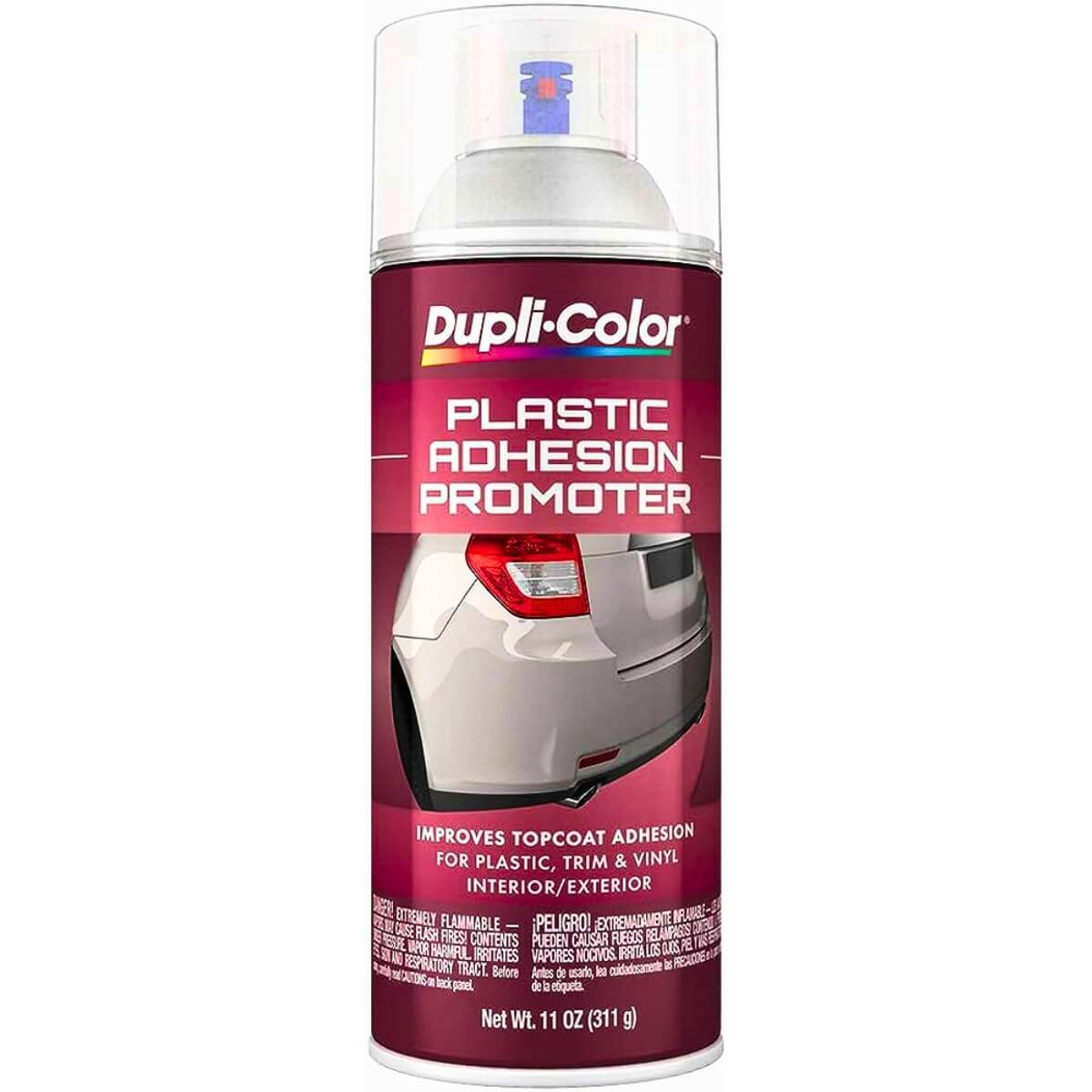
Dupli-Color Adhesion Promoter CP199 is an 11 oz clear aerosol aimed at DIY and light workshop work in the United States. The lacquer style primer is sold for enamel and lacquer topcoats on plastic, chrome, metal and fibreglass, indoors or outdoors. Product data gives coverage of about 12 to 14 square feet per can. Directions call for 2 to 3 light coats from 8 to 10 inches, with 2 to 3 minutes between coats, then colour within 10 minutes of the last promoter coat.
Touch dry is listed at 20 minutes and handle time at one hour. Application is specified between 60°F and about 92°F or 95°F with humidity under 60 to 70%. The can uses the EZ Touch fan spray nozzle. Dupli-Color is a well known US aerosol brand rather than a collision house line.
-
Key features: 11 oz clear aerosol, fan nozzle, interior and exterior use, plastic and chrome adhesion, short recoat window into colour.
-
Accurate data and information: SKU CP199, UPC 026916341990, fill weight 11 oz, case pack 6, coverage 12 to 14 sq ft, touch dry 20 minutes, handle 1 hour, paint type listed as lacquer.
17. Rust Kutter Rust Converter

Rust Kutter is a US acid based rust converter sold in quart spray bottles and gallon containers for farm, fence and light industrial steel. After loose scale is removed, the liquid is sprayed, brushed or rolled on remaining rust and left to react into a darkened, more stable layer that can be painted.
Independent comparison tests have grouped it with other mid market converters rather than with the best known supermarket aerosols. It is used on equipment, railings and vehicles when a simple liquid treatment is preferred to a full soak tank. Because it is acid based, gloves, eye protection and ventilation are standard. It does not restore metal that has already lost section thickness. Like other converters, it works best on tight rust that still has a sound substrate underneath.
-
Key features: acid based liquid converter, spray bottle or gallon, brush roll or spray application, intended for remaining rust after scale removal, paintable converted film.
-
Accurate data and information: commonly sold in 1 quart spray and 1 gallon sizes in the US farm and hardware channel. Appears in side by side converter tests alongside water based primers. Aimed at practical outdoor steel rather than antique tool restoration baths.
18. FDC Rust Converter Ultra
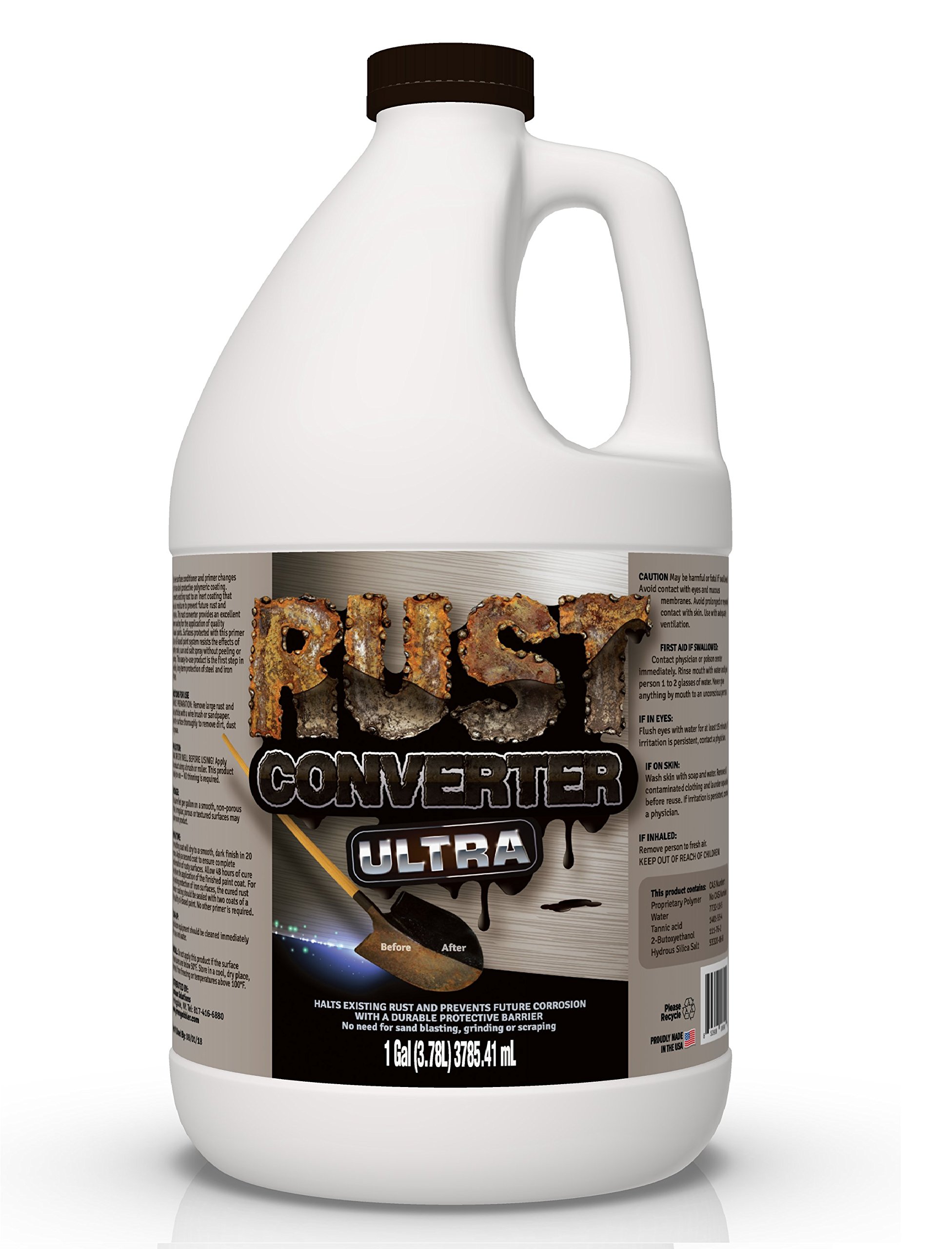
FDC Rust Converter Ultra is a US water based rust converter sold mainly in gallon containers for larger repair jobs. It is brushed, rolled or sprayed onto prepared rust so the chemistry can turn iron oxide into a darker, more stable film that accepts paint. Review tests have placed it in the same group as other water based converter primers used on automotive, household and outdoor metal.
It is not a household name on every shelf, which keeps it in the specialist rather than best seller tier. Prep still matters. Flaking rust and loose paint need to come off first or the film can sit on debris instead of on sound metal. Cure and overcoating follow the label for temperature and humidity. It is chosen when a project needs more volume than a small aerosol can supply.
-
Key features: water based converter, gallon format, brush roll or spray, for light to moderate rust on ferrous metal, paint ready converted surface.
-
Accurate data and information: listed in US product comparisons of water based converters. Sold in 1 gallon size for bigger surfaces. Used on mixed DIY and light trade work rather than as a national mass market spray.
19. VHT Rust Converter
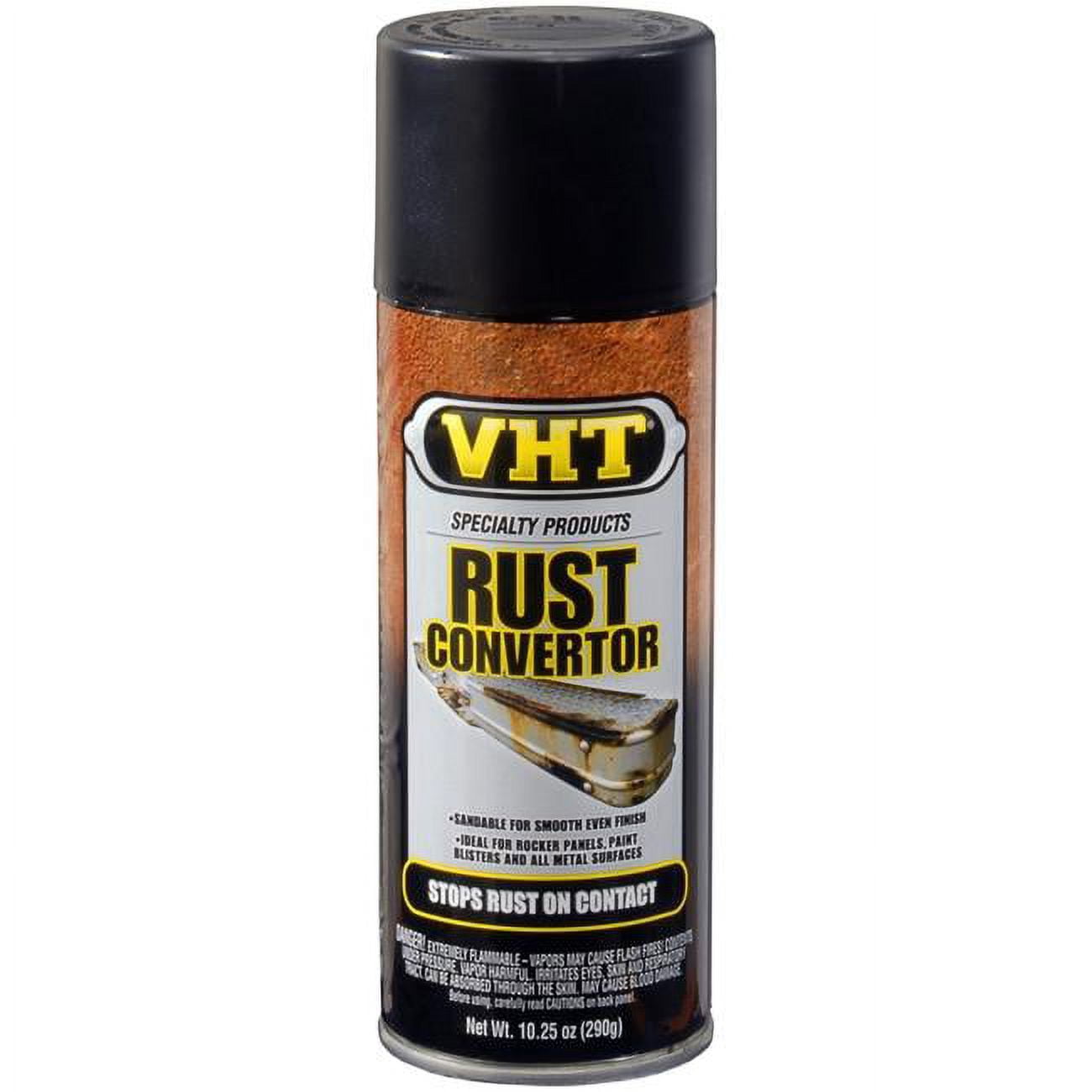
VHT Rust Converter is an aerosol from the US high heat coatings brand, aimed at small automotive and workshop spots rather than whole chassis baths. The spray is applied to prepared rust, reacts into a dark film, and is then topcoated. It shows up in restorer comparison videos beside other aerosols, which puts it in the niche performance coating aisle instead of the everyday cleaner aisle.
Coverage per can is modest, so it suits brackets, panels and local repairs. Shake time, spray distance and flash between coats follow standard aerosol practice. It is a converter, so rust is stabilised in place rather than washed away to bare steel. Heat resistance claims sit with the wider VHT range, which is why some engine bay and exhaust adjacent steel jobs use it before a compatible topcoat.
-
Key features: aerosol rust converter, small area automotive use, dark converted film, compatible with many topcoats, part of a US high temperature coatings line.
-
Accurate data and information: sold through US auto parts channels as a specialty spray. Typically used for spot conversion rather than immersion of tools or marine stain removal on gelcoat.
20. CRC Rust Converter
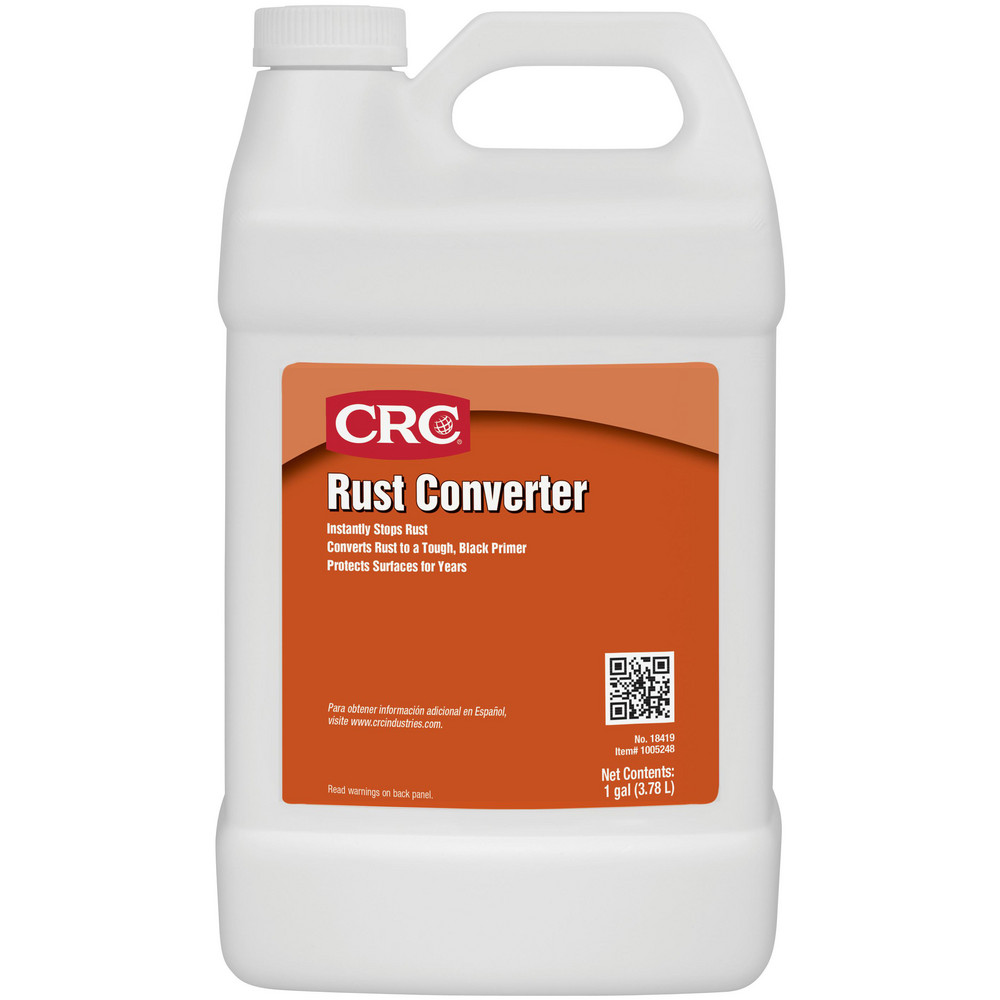
CRC Rust Converter is made by CRC Industries in Warminster, Pennsylvania. The fast drying coating is applied to lightly rusted or prepared ferrous metal and reacts into a tough black primer layer that seals out moisture. Aerosol and bulk liquid packs exist for tight spots and larger steel. Loose rust and paint are removed first.
Light even coats are applied, then the film is left to cure, often around two hours, before primer or paint. The current formula is described as free of tannic acid. Typical jobs include vehicles, trailers, railings, tanks and plant steel. CRC also markets soak removers in other lines, so this SKU is the convert and seal option rather than the dunk and rinse option. It stays a trade and automotive chemical rather than a supermarket rust stain wipe.
-
Key features: fast drying converter coating, aerosol or liquid, turns rust to a black primer film, no wash off step, paintable after cure.
-
Accurate data and information: CRC Industries is based in Warminster, Pennsylvania. Cure guidance is commonly about 2 hours before overcoating. Positioned for light rust and prepared metal on vehicles, equipment and structures in the US industrial and automotive market.
How to Properly Apply Plastic Primer for Best Results?
Clean the plastic surface thoroughly to remove grease, dust and wax before spraying. Shake the can well and apply light, even coats from the recommended distance. Allow adequate drying time between coats and before adding your topcoat. Light sanding on very smooth plastics can improve grip without damaging the surface. Following these steps helps the primer perform at its best and extends the life of your painted project.
Common Uses for Plastic Primers Around the Home and Workshop
Plastic primers prove useful for reviving garden furniture, refreshing car bumpers and trim, painting models and updating planters or pots. They also help with interior projects such as kitchen cupboards or storage boxes made of plastic. In workshops, these primers support custom work on fibreglass parts or vinyl items. Their versatility makes them a staple for many UK restorers and hobbyists.
How to Paint Plastic Garden Furniture in the UK
Faded chairs, tables and planters sit outside through wet winters and bright summers, so paint often lifts unless the plastic has a dedicated base. A plastic primer aerosol is the layer many outdoor pieces receive first because polypropylene and PVC shed ordinary household paint.
Garden furniture is usually moulded from polypropylene, polyethylene or hard PVC. Those plastics have a slick, low-energy surface. Rain, sunscreen, bird mess and mould-release oil from the factory sit on that surface and block adhesion. UV also chalks the top skin. A coat that looks fine in week one can peel in sheets after a few damp nights.
Grease is the main reason a new colour fails. Warm soapy water lifts dirt. A rinse removes the film. A wipe with isopropyl alcohol or a plastic-safe degreaser takes off wax and sunscreen that soap misses. The piece needs to be fully dry. Moisture trapped in joints shows up later as bubbles. Algae and mildew on shaded chairs come off with a mild outdoor cleaner and a soft brush. Harsh solvents can craze some plastics, so a small hidden test patch is the safe check.
Sanding is not always required. On very shiny tabletops a light scuff with fine grit gives the first coat more tooth. Dust from that scuff has to come off before spraying. Deep scratches are a different job. A primer filler builds a flatter face on scuffed plastic, wood slats or mixed frames after the plastic-specific base is in place.
Thin, even passes beat one heavy wet coat. Overspray in a breeze wastes product and leaves a sandy texture. A still, dry day suits UK gardens better than a humid evening. The primer needs time to flash off before a second pass. A smooth, even film is the goal, not a thick build.
Topcoats that sit well on primed garden plastic. Once the base is ready, colour choice depends on the look of the set.
-
A DIRECTOPLAST gloss spray paint is a plastic-focused finish used on furniture, trim and household plastics when a glossy colour is the plan.
-
A chalky garden paint suits planters, ornaments and furniture that need a matt outdoor colour on wood, metal, hard plastic, stone or ceramic.
-
A garden spray paint reaches woven and shaped pieces where a brush leaves marks.
-
A metallic refresh on pots or model details often follows a dark, smooth base and a chrome paint for plastic system.
Acrylic and enamel topcoats both work when they match the primer system. A flexible outdoor colour copes better with chairs that flex when someone sits down. Mixed garden sets: plastic seats, metal frames
Many patio sets join plastic slats to steel or aluminium legs. Plastic wants a plastic primer. Bare or rusty metal wants a different base. An anti rust primer or a metal primer belongs on the ferrous parts. Rust treatment products deal with loose corrosion on legs before any colour goes on. A DIRECTORUST multi surface spray paint is the finish many mixed outdoor pieces receive after each material has the right prep.
British weather and cure time. Touch-dry is not fully cured. Overnight dew on a half-cured coat dulls the sheen and weakens the bond. A covered porch or garage bay keeps the piece dry while solvents leave the film. Full weather exposure waits until the topcoat has hardened through.
Best Primer for Polypropylene, PVC, ABS and Other Hard Plastics
Not every “plastic paint” sticks to every plastic. Polypropylene and polyethylene are the awkward ones. PVC, ABS, fibreglass, resin and vinyl are easier, but they still reject a standard wood or wall primer.
PP is used in garden chairs, storage boxes, bumper covers and many moulded household goods. The surface energy is low. Water beads on it. Paint wants to do the same. A plastic primer contains adhesion promoters that wet that surface and lock a thin film in place. Without that film, colour coats peel in sheets.
PE (polyethylene) behaves in a similar way. Both often need a cleaner, a light key and a primer made for low-energy plastics. The plastic primer range is built around those slick mouldings rather than around porous wood.
A simple way to tell plastics apart
-
Recycling marks on the underside: PP (5), PE (2 or 4), PVC (3), ABS often unmarked or marked ABS.
-
Feel: PP and PE feel waxy and flex. ABS feels harder and sounds sharper when tapped.
-
Automotive bumpers: many UK covers are PP or TPO blends. Interior trim is often ABS.
-
Window frames and some planters: rigid PVC or uPVC.
-
Models and kits: polystyrene, ABS or resin.
When the mark is missing, a small test patch of primer in a hidden spot shows whether the bond is sound after a light scratch test.
Which primer type matches which plastic
-
Polypropylene / PE: patio chairs, crates, some bumpers. A dedicated plastic primer is the usual base.
-
PVC / uPVC: frames, pipes, planters. A plastic primer for smooth vinyl is the usual base.
-
ABS: trim, dash parts, models. Plastic primer or an etch coat on rigid parts.
-
Fibreglass / GRP: panels, boxes, boats. Plastic primer, then filler if the surface is uneven.
-
Resin / vinyl: ornaments, models. Thin plastic primer coats.
A universal etch primer is the multi-surface option used on aluminium, galvanised metal, stainless steel, rigid plastics and old paint. It is not a swap for a PP-specific base on the slickest garden chairs. A paints and primers range keeps both jobs in one place when a project mixes metal brackets with plastic panels.
A clear adhesion promoter is a thin, almost invisible bond layer. A grey or white plastic primer hides scratches and gives a uniform colour under pale topcoats. Grey sits well under medium and dark colours. White helps bright yellows and reds cover in fewer coats. Both still need a clean, dry face.
Bumper covers flex. A brittle film cracks on impact. Thin coats and a flexible topcoat matter more here than on a rigid planter. Faded black trim that only needs colour brought back is often a dressing job rather than a full respray. Back to Black bumper and trim is the restorer used on exterior plastics and rubber when the factory black is dull, not when a new colour is the plan.
Hobby plastics are small and detailed. Light coats avoid flooding panel lines. Resin can hold mould-release. A wash and a full dry come before primer. Chrome-effect details on kits follow the same clean-and-prime path as larger trim when the finish is a chrome spray paint over a smooth base.
High-build filler levels scratches. It does not replace the adhesion layer on raw PP. The usual order on damaged rigid plastic is clean, plastic primer, then filler if the surface is uneven, then topcoat. Repair and seal products belong on cracks and holes, not on a sound but shiny chair.
Solvent primers flash slowly in a cold UK garage. The film can stay soft and pick up dust. A warmer, dry space gives a tighter bond. Condensation on cold plastic under a warm spray is another peel trigger. The can and the part both benefit from sitting at room temperature first.
Rust Remover Spray vs Rust Converter: Which Should You Use?
A rust remover spray and a rust converter spray both treat corrosion on iron and steel. They do different jobs. The wrong choice wastes time and leaves weak metal under the next coat. Rust treatment products fall into these two groups, so the first decision is the end result you want.
Rust remover spray dissolves iron oxide. The rust turns dark grey, then wipes or brushes away. Bare metal is left behind. That surface still needs a primer or paint the same day, or flash rust can start again in damp air. Remover spray suits tools, brackets, small parts, and panels you want stripped clean before a full refinish. A rust remover concentrated gel holds on stone chips and tight spots where liquid would run. A rust remover thick liquid stays put on upright gates, sills, and chassis rails.
Rust converter spray does not strip the oxide off. It reacts with tight rust and turns it into a dark, stable film. That film blocks moisture, air, and carbon dioxide. Many converters then act as a base for paint. Converter spray suits large areas that are hard to grind, such as frames, railings, and underbody sections that will be painted anyway. An automotive rust converter is the usual pick when the metal is still sound but already stained.
A longer comparison of rust remover vs rust converter walks through extent of rust, access, and finish. The short version is simple.
Choose a rust remover spray when:
-
You want clean, bare metal
-
The part is small enough to work with a brush after spraying
-
You plan a full prime and paint system
-
Rust is loose, flaky, or sitting on tools and hardware
-
You need to check metal thickness after the oxide is gone
Choose a rust converter spray when:
-
You will paint the area and do not need a bright metal finish
-
The rust is tight and the steel behind it is still strong
-
The surface is large, awkward, or already on the vehicle
-
You want a sealed film without rinsing
-
Access is limited to a spray nozzle or aerosol
Neither product rebuilds holed or paper-thin steel. Flaky scale still comes off with a wire brush first. Oil and grease still come off before any chemical goes on. Converter will not react well on paint. Remover is not made for aluminium, brass, or zinc-coated steel.
After a remover, paints and primers go on once the metal is dry and grey. After a converter, many users go straight to a topcoat once the film has darkened and cured. Direct to metal paint is the finish people use when they want colour and protection in fewer coats.
If the job mixes both needs, treat the worst pits with remover, dry the metal, then convert any stain that remains in seams. That sequence is common on older bodywork where some rust is loose and some is only a stain.
Best Rust Remover Spray for Cars, Wheel Arches and Undercarriages
Cars in the UK pick up rust where water, salt, and grit sit. Wheel arches, sills, jacking points, floor pans, and chassis rails stay wet after rain. A spray reaches those shapes better than a tub of soak. The format still has to match the job: strip to bare steel, or lock the rust and coat it.
Wheel arches and outer sills often show surface rust first. Loose flakes come off with a brush. Tight stain on sound steel is where a converter aerosol reaches lips and seams without a long soak. Visible panels that will be resprayed are different. Those areas usually get a remover so the filler and primer sit on clean metal. A
Undercarriages face stone chips and packed mud. A trigger spray covers rails and outriggers. An aerosol with a thin jet helps inside boxed sections once drain holes are clear. Active rust on the outside of a chassis often gets a converter so the next layer can bond. Inside doors, sills, and box sections, hollow section cavity wax is the coating people apply after the rust chemistry has done its work. On the outer underbody, Waxoil aerosol leaves a flexible film that sheds water. A bitumen undercoat is the thicker black layer used where stone strike is constant.
Motor care work on vans, trailers, and bikes follows the same split. Frames and swingarms that must look clean get remover. Hidden rails that will stay coated get converter, then wax. Motor care products cover those vehicle jobs in one place.
A typical underbody order looks like this:
-
Wash off salt and mud. Let the metal dry.
-
Knock off loose rust and old underseal that has lifted.
-
Degrease so the spray can touch the oxide.
-
Apply remover where you need bare steel, or converter where the rust will stay sealed.
-
Wait for the colour change and the stated dry time.
-
Prime bare metal with an anti rust primer.
-
Coat the underside. Use cavity wax in closed sections.
-
Keep brake parts, exhausts, and hot engine pieces clear of wax and bitumen.
A car rust proofing kit groups converter, cavity wax, and outer wax for that full pass. A complete rust removal and protection kit is the set people use when the first step is stripping oxide rather than converting it.
Do not spray rust chemistry on hot discs, pads, or exhaust. Mask clean paint. Test a hidden patch if the metal type is unclear. Alloy skins, stainless trim, and galvanised panels are not the same as mild steel. After treatment, clean and protect coatings are what keep road dirt from starting the rust cycle again.
Latest News In 2026
Jenolite published a run of rust guides through 2026 that sit alongside spray removers and converters. August pieces cover a heavy duty rust remover for thick scale on machinery and bodywork, plus the rust converter primer route when the next coat is paint.
Underbody writing from mid August looks at underbody coating after the rust layer is stable. The theme is the same across the 2026 posts: treat the oxide, then seal the metal against wet UK roads.
Earlier 2026 posts on a rust converter, rust treatment for metal, and rust treatment paint keep the same split between stripping rust and converting it. Directorust appears in those finish discussions as a direct-to-rust colour coat once loose scale is gone. Rust Shield clear metal lacquer is the clear film used when the metal should stay visible.
Frequently Asked Questions
What makes a plastic primer different from a standard primer?
A plastic primer contains special adhesion promoters formulated to bond strongly with smooth and non-porous plastic surfaces. Standard primers often struggle on materials like polypropylene and PVC because these plastics naturally repel paint. The right plastic primer creates a stable foundation that supports durable topcoats and helps prevent flaking or peeling over time.
Can I use plastic primer on outdoor garden furniture?
Plastic primer performs well on outdoor garden furniture made from common plastics such as polypropylene and PVC. It prepares the surface so paint adheres properly and stands up to the UK’s changeable weather conditions. This preparation leads to a longer-lasting finish that keeps garden items looking better for extended periods.
How long should I wait before applying topcoat over plastic primer?
Many plastic primers dry to the touch quickly and allow topcoat application within an hour under normal conditions. Checking the product instructions ensures the primer has set properly before the next layer goes on. Adequate drying time helps achieve the strongest bond and the smoothest possible final result.
Is sanding always necessary before using plastic primer?
Sanding is not always required when using modern plastic primer formulas. A good clean to remove any grease, dust or wax is frequently enough to achieve strong adhesion. On particularly glossy plastic surfaces, a light sanding may still offer improved grip if preferred.
What types of plastic benefit most from plastic primer?
Plastic primer works effectively on difficult plastics including polypropylene, polyethylene, ABS, PVC, fibreglass, resin and vinyl. These materials commonly appear in car trim, bumpers, garden planters, pots, models and household items. The primer helps transform these surfaces into ones that readily accept and hold paint finishes.
Does plastic primer work on flexible car bumpers?
Many bumper covers are polypropylene or TPO blends that bend in a car park bump and expand in summer heat. A plastic primer can grip that cover when the face is free of mould-release, traffic film and silicone dressings. The weak point is usually the colour coat, not the primer film, if the top layer is hard and brittle. Motor care refinish work on cladding often pairs a thin adhesion coat with a flexible finish so the stack moves with the cover. Stone-chip coatings on nearby metal sills are a separate layer and do not stand in for primer on the plastic itself.
Can plastic primer go over old paint that is already on plastic?
A sound old coating can accept a new adhesion layer after dirt and polish residue are gone. Soft, solvent-sensitive household paint can wrinkle if a hot aerosol soaks it. Factory bumper paint is usually more stable than a cheap craft spray from years earlier. Where the old film is chalking or lifting at edges, the new primer only bonds to that failing skin. Paints and primers systems treat a stable painted plastic more like a sealed surface than like raw PP.
Is grey or white plastic primer better under a bright colour?
Primer colour is an opacity choice, not an adhesion choice. White reflects more light through thin yellows and reds, so those shades look cleaner. Grey hides scuffs and suits charcoal, green and navy garden sets. A dark chrome paint effect often sits over a smooth dark base rather than over white, because the metallic flake reads brighter on a deep ground. Either pigmented primer still needs the same clean, dry plastic underneath.
Can uPVC window frames take the same primer as garden chairs?
Rigid uPVC is PVC with weather stabilisers and a very smooth extrusion skin. A primer that lists PVC or vinyl is the usual match, which is why uPVC primer guidance tracks the same low-energy problem as patio plastic. Frames also move with temperature and sit against rubber gaskets that can stain a fresh edge. Hardware is often metal, so locks and hinges follow a metal primer path rather than the plastic path.
Does primer filler replace a plastic primer on chairs and bumpers?
Primer filler is a high-build acrylic used to level scuffs on metal, wood and already keyed rigid plastic. It fills. It does not carry the same adhesion promoters that bite into raw polypropylene. On a scratched bumper the filler sits after the plastic bond coat, then it is sanded flat. Using filler alone on untreated PP leaves a thick layer that can still peel as one piece.
Can a metal rust primer be used on plastic garden furniture?
Anti rust primer formulas are aimed at iron and steel. Zinc-rich and oxide systems protect metal from moisture and oxygen. They do not raise the surface energy of PP in the same way a plastic adhesion coat does. On a mixed patio set the metal legs may need rust treatment and a metal primer while the seats stay on a plastic system. Crossing those products usually shows up as poor scratch resistance on the plastic, not as rust on the chair.
Does a rust remover spray work on deep pitting?
A rust remover spray can reach oxide in shallow pits if the liquid stays wet and a brush works it into the crater. Deep pitting still hides rust in the metal grain, so the first pass often leaves a brown stain at the bottom. Extra dwell time helps more than extra pressure. Once the pit is clean, the hollow is still there. Body filler or an epoxy repair sits in that void only after the steel is dry and stable. Spray chemistry treats rust. It does not replace lost thickness.
Will rust come back if you only spray and walk away?
A remover leaves bare metal, and bare metal reacts with air and water as soon as the surface is uncovered. A converter leaves a sealed film, but that film still scuffs, chalks, and lets salt in if nothing sits on top. Anti rust coatings are the weather layer after the rust spray has finished. Indoor tools last longer with a light oil or lacquer. Outdoor steel needs paint or wax. The spray stops the rust that is already there. It does not change the climate around the part.
Do you sand after a rust converter spray?
A converted film is meant to stay on the steel as a dark, bonded layer. Heavy grit cuts through that layer and opens fresh oxide. A light scuff is only useful if dust or a powdery high spot would stop direct to metal paint from keying. Wait until the film has cured, not only until it looks black. Soft converter still rolls off on abrasive paper and leaves streaks in the topcoat.
Can rust remover spray be used on motorbikes, trailers, and caravans?
Ferrous frames, trailer chassis, bike stands, and steel mounts respond the same way car steel does. Aluminium engines, cast wheels, stainless fasteners, and galvanised sheet do not. Overspray on rubber gaiters and brake lines is hard to remove, so those parts stay masked. After the rust step, hidden tube work often gets hollow section cavity wax, while painted body panels follow the same primer path as a car. Motor care products for those vehicles follow that split between open steel and closed sections.
What happens if the spray dries before the rust has changed colour?
The reaction needs a wet film. On a hot day or a vertical sill the liquid skins over, and the rust under that skin stays red. Re-wetting the same area restarts the process. Brushing every few minutes keeps the chemistry in contact with the oxide. A dry, sticky patch is not a finished job, even if some spots have already gone dark. Converter that dries without a colour shift usually means the rust was too loose, the surface was oily, or the coat was too thin.
Is rust converter spray the same as rust reformer spray?
The two names describe the same family of product. Both turn iron oxide into a stable, usually black or purple, paint-ready film. They are not rust remover sprays. The oxide stays on the metal in a changed form. Reformer and converter labels are interchangeable in most garage talk. The useful check is the finish: bare steel means remover, sealed dark film means converter or reformer.
Can you weld after using a rust remover spray?
Clean, dry steel from a remover can be welded once residue and moisture are gone. Converter films, cavity wax, and waxoil are not weld-through coatings. Those layers burn, smoke, and leave inclusions in the bead. Grind back to bright metal in the weld zone, then treat the heat-affected steel again after it cools. New weld scale is just more oxide. It needs the same rust step as the old panel.
How soon can you drive after spraying a wheel arch or underbody?
The chemical must finish reacting, and the next coat must skin over before road spray hits it. Converter and anti rust primer times differ by product and by how wet the air is. Wax and bitumen undercoat stay soft longer than paint. Wet wheel spray will cut channels through a coat that is only tacky. Overnight in a dry garage is the usual buffer after an underbody pass.
Does rust remover spray clean rust stains off concrete or paint?
Metal removers and converters target oxide bonded to steel. Brown marks on a driveway, a bath, or a painted wall are iron stains on another material. A rust stain remover is made for masonry, ceramic, and similar surfaces. A metal spray on concrete can etch the face or leave a pale ring. The same split applies to fabric and plastic trim. Stain on the surface is not the same as rust growing in the metal.
What belongs inside a sill compared with on the outside of a chassis?
Closed steel holds water that never sees sun. A thin cavity wax creeps along the inner face and reseals small scratches. The outer chassis takes grit and salt, so a thicker wax or bitumen film is the usual weather coat. The rust spray is the first chemistry in both places. Underbody rust protection then splits by location: creep wax inside the box, tougher film on the face that hits the road. Mixing those two coats in the wrong place leaves either a sticky outer mess or a dry inner seam.
Read Also:
Discover Our Best Plastic Primer in UK - Jenolite



